The Federal Government has reaffirmed that the implementation of Nigeria’s newly enacted tax laws will proceed as scheduled from January 1, dismissing concerns over alleged alterations in the gazetted versions of the legislation.
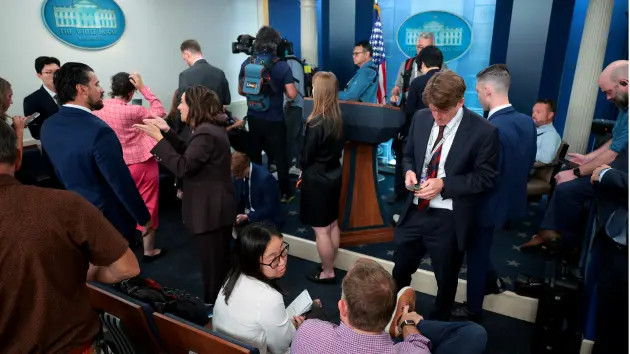
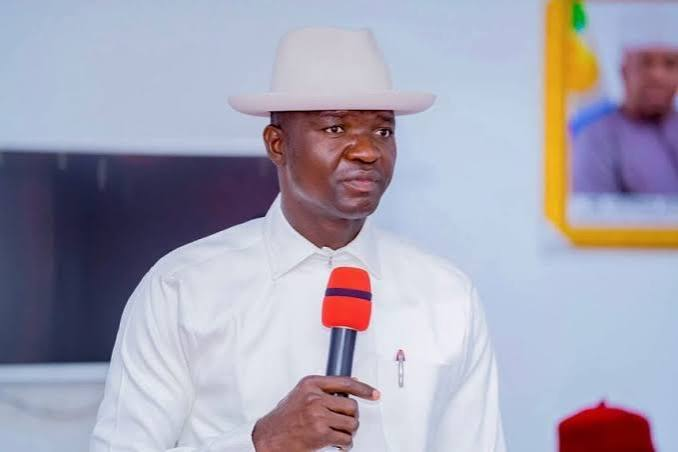
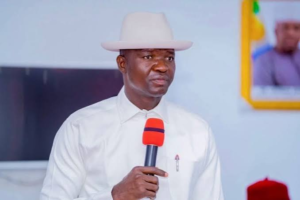
The Minister of Information and National Orientation, Mohammed Idris, stated this on Wednesday during a news conference in Abuja, stressing that the laws followed due process, including consultations, legislative deliberations, approvals and presidential assent.
According to Idris, there is only one authentic version of the tax laws the copy passed by the National Assembly and signed by President Bola Ahmed Tinubu.
“Government is going ahead with commencement of implementation, nothing has changed,” he said.
Addressing reports that the gazetted copy of the Nigeria Tax Administration Act may have been altered, Idris said the issue falls within the jurisdiction of the National Assembly, which has already initiated an investigation.
“As far as the government of Nigeria is concerned, there’s only one version of that tax document,” he said, adding that the executive would await the outcome of the legislative probe.
Idris spoke while reviewing the achievements and challenges of the Tinubu administration in 2025. His position was supported by Taiwo Oyedele, Chairman of the Presidential Fiscal Policy and Tax Reforms Committee, and Muhammad Nami, immediate past Executive Chairman of the Federal Inland Revenue Service (FIRS).
Oyedele warned against relying on documents circulating in the public space, noting that some were unauthenticated and had created confusion about the final version of the law. He explained that the only legally binding document is the harmonised copy certified by the Clerk of the National Assembly and transmitted to the President.
“Only the lawmakers can say authoritatively what was sent. Even I cannot say that I have it,” he said.
Clarifying the controversy surrounding Section 41(8), which allegedly introduced a 20 per cent deposit requirement, Oyedele said the provision was not contained in the final gazette but appeared in an earlier draft circulated prematurely.
“Some people decided to write the report of the committee before the committee had met, and it circulated everywhere,” he said, urging the public to allow lawmakers conclude their investigation.
In a separate statement, Nami cautioned against calls to discard the new tax framework, describing the reforms as the product of years of research and legislative work dating back to 2022. He said the appropriate response was a thorough investigation, restoration of due process and sanctions for anyone found to have compromised the gazetting process.
According to Nami, the reforms are designed to block revenue leakages, expand the tax base, fund economic growth, support debt servicing, strengthen security and deliver world-class infrastructure.
“Numerous provisions encourage governments to tax prosperity over poverty and fruits over seeds so SMEs can grow, create jobs and become taxpayers in the future,” he said.
However, Nami alleged that any alterations to the Tax Administration Act likely occurred at the point of gazetting by unidentified individuals, without the approval of either the Presidency or the National Assembly.
Following allegations raised by Abdulsamad Dasuki, a PDP lawmaker from Sokoto State, the Speaker of the House of Representatives, Abbas Tajudeen, constituted an investigative committee to probe claims that the gazetted tax laws differ from those passed by lawmakers. The committee, chaired by Aliyu Mukthar Betara, also includes Ahmed Idris Wase, James Abiodun Faleke, Fred Agbedi, Igarewey Iduma Enwo and Babajimi Benson.
President Tinubu had signed four landmark tax reform bills into law, described by the Federal Government as the most far-reaching overhaul of Nigeria’s tax system in decades. The laws, scheduled to take effect from January 1, 2026, include the Nigeria Tax Act, Nigeria Tax Administration Act, Nigeria Revenue Service (Establishment) Act, and Joint Revenue Board (Establishment) Act, all to operate under a unified authority known as the Nigeria Revenue Service.
According to the government, the reforms aim to simplify tax compliance, eliminate multiple and overlapping taxes, expand the tax base and modernise revenue collection across all tiers of government. Despite opposition from some lawmakers and governors—particularly from the northern region—and an earlier request by the National Economic Council (NEC) for the bills’ withdrawal, the President insisted that concerns be addressed through public hearings before the bills were eventually passed into law.