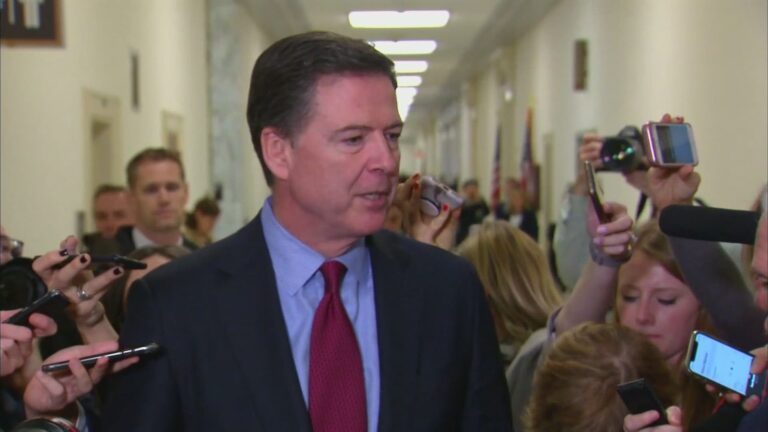
A federal magistrate judge sharply criticized the Justice Department on Wednesday over its handling of evidence in the criminal case against former FBI Director James Comey, calling prosecutors’ conduct “highly unusual” and suggestive of a rushed push to indict him while potentially infringing on his constitutional rights.
“We’re in a bit of a feeling of indict first, investigate second,” Magistrate Judge William Fitzpatrick said during a motions hearing in Alexandria, Virginia.
The scrutiny centers on four search warrants obtained in 2019 and 2020 targeting the devices and communications of Daniel Richman, a Columbia University law professor and longtime Comey associate whom Comey had previously used to communicate with the press.
Comey pleaded not guilty on Oct. 8 to one count of making false statements and one count of obstructing a congressional proceeding tied to his 2020 testimony before the Senate Judiciary Committee. His indictment has drawn accusations that President Donald Trump is using the Justice Department to pursue political adversaries. Vice President J.D. Vance has rejected that claim, insisting the prosecutions are “driven by law and not by politics.”
The charges were brought by Trump-appointed U.S. Attorney Lindsey Halligan, who took over the Eastern District of Virginia after Trump ousted her predecessor, Erik Siebert. Siebert had reportedly resisted pursuing cases against Comey and New York Attorney General Letitia James.
Career prosecutors in Washington had previously investigated Comey’s congressional statements during Trump’s first term and declined to bring charges. Under Trump’s second administration, however, investigators reopened the probe, focusing on whether Comey misled senators in 2020 when he reaffirmed earlier testimony denying he had authorized anyone at the FBI to leak information to reporters.
The indictment alleges Comey lied because he had, in fact, authorized Richman to discuss a past Clinton-related investigation with the media—an assertion Comey disputes.
After securing the indictment, prosecutors notified the judge overseeing the case that materials seized under the Richman warrants might include privileged communications. They asked the court to create a system to separate protected documents from those investigators could review.
Comey’s attorneys argue the government should never have accessed the materials in the first place, saying prosecutors may have violated Comey’s rights by reviewing privileged correspondence and by relying on evidence gathered years ago under warrants that are now “stale.”
Judge Fitzpatrick signaled support for those concerns, repeatedly pressing Assistant U.S. Attorney Tyler Lemons about what investigators reviewed and why the Justice Department failed to resolve privilege issues during the more than five years the government had the communications in its possession.
The judge is expected to rule on the defense motions in the coming weeks.