Hamas has issued what it called a “positive response” to international mediators regarding the latest U.S.-backed ceasefire and hostage release proposal, expressing a willingness to begin immediate negotiations. The group’s reply included proposed amendments, most notably a request for a formal U.S. guarantee that hostilities would not resume even if talks over a permanent truce stall.
According to a senior Palestinian official speaking to the BBC, Hamas has accepted the general outline of the plan but is seeking greater clarity on several key provisions.
Neither Israel nor the U.S. has officially responded to Hamas’s statement, though both have previously pushed back on similar demands. Earlier this week, U.S. President Donald Trump said Israel had agreed to the key terms of a proposed 60-day truce and urged Hamas to accept it, warning, “This offer won’t improve—only deteriorate.”
The proposed agreement reportedly involves the release of 10 Israeli hostages still alive and the return of 18 bodies in exchange for Palestinian detainees in Israeli prisons. It also includes a commitment to increased humanitarian aid flows under UN and Red Cross supervision. However, Hamas has rejected any further involvement by the Gaza Humanitarian Foundation (GHF), an entity backed by Israel and the U.S., in aid distribution.
Another major sticking point is Hamas’s demand for a full Israeli military withdrawal to pre-March positions. The current framework reportedly only provides for a phased, partial withdrawal.
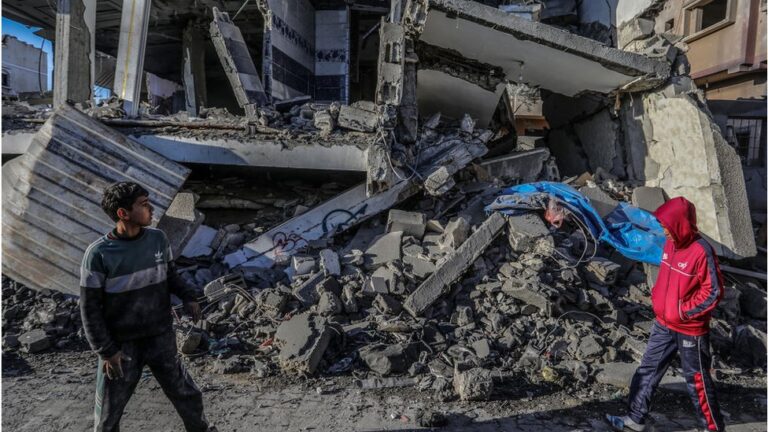
Despite Hamas’s announcement, Israeli airstrikes continued across the Gaza Strip on Friday. The Hamas-run health ministry reported at least 138 Palestinians killed in the past 24 hours, including 15 displaced individuals in makeshift shelters near Khan Younis.
“This ceasefire talk comes too late for my brother,” said 13-year-old Mayar al-Farr, mourning her sibling Mahmoud. “There should have been a ceasefire long ago.”
Adlar Mouamar, who lost his nephew Ashraf, added: “We just want this war to stop. We want the bloodshed to end.”
The Israeli military did not comment on specific strikes but reiterated that its operations aim to dismantle Hamas’s remaining military infrastructure.
Meanwhile, the International Committee of the Red Cross confirmed that one of its staff members was wounded by stray gunfire at its Rafah field hospital. Médecins Sans Frontières (Doctors Without Borders) reported the death of a former colleague while waiting in line for humanitarian aid in Khan Younis, stating that at least 16 people died in that incident.
“The deliberate deprivation of food and aid for over 100 days is pushing Gaza’s population to the brink,” said Aitor Zabalgogeazkoa, MSF’s emergency coordinator. “This carnage must stop immediately.”
The UN Human Rights Office reported that 509 civilians have been killed near GHF aid centers and another 104 near aid convoys. Spokeswoman Ravina Shamdasani said early findings suggest Israeli forces may have opened fire on civilians seeking assistance. The GHF denied the claims and criticized the UN for relying on what it called “unverifiable” data from Hamas-controlled sources.
As diplomatic efforts intensify, civilians across Gaza remain trapped between military operations and humanitarian collapse—waiting for a ceasefire that may still be far from certain.