Shock and horror might have been Serbians’ first reaction to two mass shootings in as many days earlier this month. But outrage swiftly followed.
Tens of thousands of people attended two protests in the capital, Belgrade, with smaller rallies in other cities around the country.
They marched under the banner “Serbia Against Violence” and called for an end to what they viewed as a culture of violence which led to the shootings at a school in Belgrade and, the next day, around Mladenovac, south of Serbia’s capital.
More protests will follow – and the government seems rattled. Senior figures have been talking down the numbers involved, as well as making plans for a “solidarity” rally of their own.
But there is one issue which both protesters and authorities seem to agree on: gun control.
“There is no pro-gun lobby in Serbia,” says Bojan Elek, the deputy director of the Belgrade Centre for Security Policy and an expert on firearms issues in the country.
“There is a national association of gun owners – but nothing close to what they’re doing in the US with the National Rifle Association (NRA).”
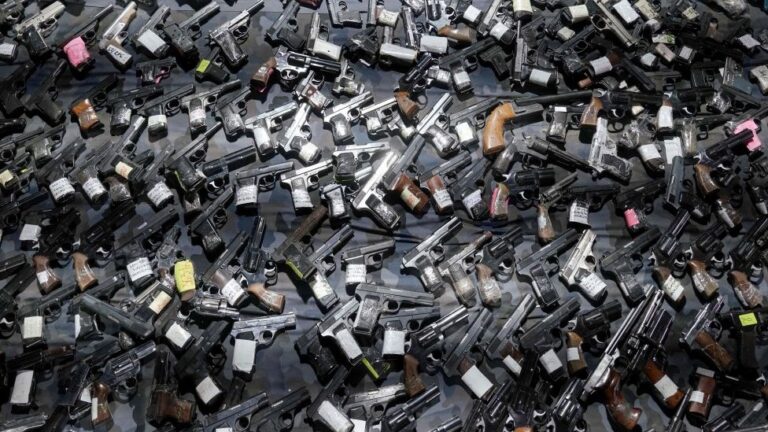
In the wake of the shootings, President Aleksandar Vucic swiftly announced what he called a “general disarmament” of the country. He declared a month-long amnesty for illegally-held weapons, with a warning of harsh consequences for anyone who held on to guns without a permit.
The president also has legally-held weapons in his sights. Mr Vucic has announced a moratorium on new weapons permits and a review of current gun licences.
All this would appear to be quite an undertaking in a country where the number of guns in circulation is, apparently, alarmingly high. In 2018, the Switzerland-based Small Arms Survey ranked Serbia third in the world for the number of weapons in private hands, with 39 guns per 100 people.
The public and political reaction to such a disarmament programme in the country which tops the list, the United States, can be imagined. In Serbia, says Bojan Elek, it has been a different matter.
The amnesty has been mostly positively accepted, he says, and by the second day of the amnesty, more guns and ammunition had been handed over than in the previous three amnesties put together.
“The number of illegal guns is definitely being reduced – even some weapons from World War II have been handed in. But we haven’t got a credible figure of how many there were to start with, so it’s hard to say how many are remaining.”
Given the government’s swift action to reduce the number of weapons in circulation and the lack of widespread objections to their proposals, the question is: why are tens of thousands of people still motivated to hit the streets in protest?
BBC