The licences of AIT/Ray Power FM, Silverbird TV Network, and 50 other radio and television stations have been revoked by the National Broadcasting Commission due to N2.6 billion in debt.
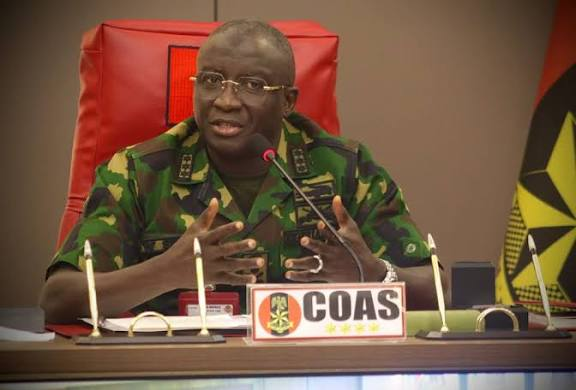
The impacted stations were ordered to shut down within the next 24 hours by Malam Balarabe Ilelah, Director-General of NBC, who made the announcement during a news conference on Friday in Abuja.
Ilelah instructed NBC offices nationwide to work with security agencies to guarantee prompt adherence to the mandate.
He explained that the commission published the list of licensees who were indebted to the NBC in national dailies in May and gave them two weeks to pay up or risk having their licenses revoked and frequencies withdrawn.
He stated, “Three months after the publication, some licensees are yet to pay their outstanding debts in contravention of the NBC Act CAP N11, Laws of the Federation of Nigeria, 2004, particularly Section 10 (a) of the third schedule of the Act.
“Given this development, the continued operation of the debtor stations is illegal and constitutes a threat to national security.
“Therefore, after due consideration, the NBC hereby announces the revocation of the licences of the under-listed stations and gives them 24 hours to shut down their operations.”
The DG listed those affected stations whose licenses were revoked including Africa Independent Television (AIT) and its sister radio station, Raypower FM and Silverbird Television.
Other affected stations are Rhythm FM (Silverbird Communications Ltd), Greetings FM (Greetings Media Ltd), Tao FM (Ovidi Communications Ltd), Zuma FM (Zuma FM Ltd), Crowther FM (Crowther Communications Ltd), WE FM (Kings Broadcasting Ltd), Linksman International ltd, Bomay Broadcasting Services Ltd, MITV (Murhi International Group Ltd), Classic FM (Pinkt Nigeria Ltd), Classic FM (Pinkt Nigeria Ltd), Classic TV (Pinkt Nigeria Ltd), Beat FM (Megalectrics LTD), Cooper Communications Ltd, Splash FM (West Midlands Ltd), Rock City FM (Boot Communications Ltd), Family FM (Kalaks Investments Nig. Ltd), Space FM (Creazioni Nig. Ltd), Radio Jeremi (Radio Jeremi ltd), Wave FM (South Atlantic Media Ltd), Kogi State Broadcasting Corporation, Kwara State Broadcasting Corporation, Niger State Broadcasting Corporation, Breeze FM (Bays Water ltd), Vibes FM (Vibes Communication ltd) and Family Love FM (Multimesh Broadcasting Co. ltd).
The rest are Gombe State Broadcasting Corporation, Lagos State Broadcasting Corporation, Osun State Broadcasting Corporation, Ogun State Broadcasting Corporation, Ondo State Broadcasting Corporation, Rivers State Broadcasting Corporation, Bayelsa State Broadcasting Corporation, Cross River State Broadcasting Corporation, Imo State Broadcasting Corporation, Anambra State Broadcasting Corporation, Borno State Broadcasting Corporation, Yobe State Broadcasting Corporation, Sokoto State Broadcasting Corporation, Zamfara State Broadcasting Corporation, Kebbi State Broadcasting Corporation, Jigawa State Broadcasting Corporation, Kaduna State Broadcasting Corporation, and Katsina State Broadcasting Corporation
He urged all broadcast stations, which had not renewed their licences for the current period to so within the next 30 days to avoid sanctions.
He also called on all Internet Protocol Television and other broadcast stations that were streaming online to register with the commission to avoid disconnection
In 2020, the Federal Government approved 60 per cent debt forgiveness for broadcast stations to cushion the effects of COVID-19 on the industry.
The Minister of Information and Culture, Lai Mohammed, had stated that many Nigerian radio and television stations remained indebted to the government to the tune of N7.8bn and that they were faced with the reality that their licences would not be renewed in view of their indebtedness.
Mohammed, however, said the criterion for enjoying the debt forgiveness was for debtor stations to pay 40 per cent of their existing debt within three months.
In it’s reaction, the Nigerian Guild of Editors expressed concern over the order to shut down the broadcast stations.
In a statement by its President, Mustapha Isah, and the General Secretary, Iyobosa Uwugiaren, the NGE said the action, if not reversed, would lead to the loss of thousands of jobs in a country where jobs were scarce.
The statement read in part, “The NGE is worried because media houses, which played and continue to play a key role in the nurturing and development of democracy can’t just be off air no matter the reasons.
“While the Guild is not against broadcast stations fulfilling their financial obligations to the NBC, we note that the current harsh operating environment that has crippled every sector in our nation was not taken into account by the NBC before its action.
“Currently, it is difficult for private stations to import broadcast equipment due to the high exchange rate. We are all aware of the high operational cost, including the cost of diesel to power their generating sets.”
In his reaction, the National Coordinator of Human Rights Writers Association of Nigeria, Emmanuel Onwubiko, stated that the plot against media houses had been a long-time agenda of the administration of the President, Muhammadu Buhari.
Also, Media Rights Agenda, MRS described the development as ill-advised, insensitive, and antithetical to the interests of the Nigerian public.
In a statement by its head of Legal Department, Ms Obioma Okonkwo, MRA said by the revocation of the broadcast licenses of so many stations for alleged non-payment of their licence fees, NBC was prioritizing its desire to make money off the broadcasters over the interest of citizens of the country.
Okonkwo claimed that the ultimate effect of NBC’s action is to deprive millions of Nigerians access to information as well as their rights and ability to freely express themselves through these stations.
She stated: “We are shocked by this naked display by the NBC of a lack of appreciation of its principal role which is to contribute to the emergence of a knowledge society. Rather, it has chosen to create an environment in which millions of Nigerians will wallow in ignorance, deprived of access to crucial information that they need to make critical decisions in their lives or to enhance their livelihoods.
“The action of the NBC has only worsened the prevailing lopsidedness in the broadcasting landscape in Nigeria which was already dominated by government-owned broadcasting stations but is now under the monopolistic control of Federal Government-owned stations, which will be almost unchallenged, with the result that citizens will now be fed unmitigated propaganda by these remaining stations”.
Okonkwo also accused NBC of being insensitive to the harsh economic environment under which the broadcast stations have operated over the last two and a half years, pointing out that the national economy has been ravaged by the COVID-19 pandemic itself and the measures taken by the government in response to the pandemic.
She called on NBC to reverse its decision in the public interest to avoid creating a society of predominantly ignorant citizens, even as she advised that the need to ensure that Nigerians are adequately informed through the media should supersede any other consideration by NBC.
She also advised the commission to liaise with the broadcasting stations to identify the challenges facing the industry and come up with realistic solutions to the identified challenges.
Similarly, the NUJ described the decision of the NBC to revoke the licenses of the broadcast stations nationwide over-indebtedness as a hasty decision, noting that it was ill advised.
National president of the NUJ, Chris Isiguzo, argued that NBC’s action was ill-timed and reckless.
“Although the director general of NBC, Malam Balarabe Shehu Ilelah claimed that this had no political motives, yet we insist that the action was ill timed and reckless,” he said.
He noted that the wholesale revocation of licences at this critical time of insecurity in the country appears to be a decision taken without careful prior deliberation, consultation or counsel.
He stated: “While we regret the inability of these broadcast stations to fulfill their obligations to NBC, in-view of dwindling resources, we caution against such large scale clampdown of broadcast stations in disregard to security issues and the attendant consequence. We cannot afford the unpleasant outcome of such media blackout at this time.
“We call on NBC to exercise more restraint on this issue in consideration of national security and allow for more dialogue and consultation to find a better way of dealing with the situation,” he added.
The NBC boss urged the stations to pay their fees before 24 hours to avert total disconnection
Similarly, the International Press Centre, Nigeria, condemned the revocation of licences of the alleged debtor broadcast stations by the NBC.
In a statement by its officer, Melody Lawal, the IPC urged the NBC to “exercise caution” and “exhaust engagement channels” before executing the order. It also warned the agency not to usurp the powers of the President and National Assembly, and to desist from serving as a revenue generation agency instead of its statutory role as a regulatory one.
The statement read in part, “The IPC holds that the sweeping revocation confirms its concern that the NBC exercises its powers arbitrarily without recourse to the public interest.
“It also confirms our worry that the NBC continuously constitutes itself as the accuser, the prosecutor and the judge in its own case.
“In this particular instance, the NBC has not only ordered the revocation of licences of many TV and radio stations, it has gone further to usurp the authority of the President and Commander-In-Chief and the National Assembly by directing security agents to move in and effect its order.
“The IPC calls on the NBC to exercise caution and ensure that it exhausts engagement channels before wielding a stick that may not only lead to thousands of job losses, but also shrink the information dissemination space.”
A lawyer, Kunle Adegoke, said the broadcasting industry was regulated by law, and was therefore required to be protected by the government to allow for freedom of expression.
He added that payment for licences could not be waived as long as it was a requirement of the broadcast stations by law, but added that where the clampdown on the stations was arbitrary, it was condemnable and unconstitutional.
Ada Peter