According to Sunday PUNCH, the Presidency, Ministries, Departments, and Agencies have set aside N13.2 billion in the 2022 budget proposal for refreshments, meals, food and catering materials, and sitting allowance.
In light of the country’s rising food inflation, N5.8 billion was set aside for refreshments and meals, N1.76 billion for food and catering materials, and N5.7 billion for sitting allowance.
The figure could be higher, according to sources, because the budgets of the Central Bank of Nigeria, the Nigeria Customs Service, the Independent National Electoral Commission, and a few other major agencies have not been made public.
The N260 million set aside for food by the Nigeria Police Force and the Nigeria Correctional Service, which feed detainees, is not included in the total.
About 38 revenue-generating agencies will share N2.2 billion in meals and refreshments, with the Presidency receiving the largest budget. The State House set aside N135.6 million for meals and refreshments, with a separate N245 million set aside for foodstuff, while the President’s Office set aside N30.6 million for refreshment and N301 million for foodstuff.
The Office of the Vice-President earmarked N156.6m for foodstuffs and N20m for refreshment while the Office of the Chief of Staff to the President will spend N17.6m for meals and refreshments. The Office of the Chief Security Officer earmarked N4.1m for the same purpose while the State House liaison office in Lagos earmarked N4m for both refreshments and foodstuffs.
The Presidential air fleet will also spend N160m for meals in 2022.
Collectively, the Presidency and the Presidential air fleet office will spend N1.074bn on food, refreshments, and catering materials.
Meanwhile, out of 38 revenue agencies, the Federal Inland Revenue Service tops the list with a budget of N550m. It is followed by the Nigeria Deposit Insurance Corporation, which plans to spend N520m on meals and refreshments.
Police formations across the country will spend N100m while the Presidential air fleet earmarked 38m. The Office of the Secretary to the Government of the Federation budgeted 60m for meals and refreshments.
Others include the National Agency for Food and Drug Administration and Control with N73.9m, the Nigerian Postal Service with N62.6m, the Standards Organisation of Nigeria with N59.2m, the Raw Materials Research and Development Council with N57.5m, the Federal Mortgage Bank of Nigeria with N50m and the Nigerian Communications Commission with N40m.
The Economic and Financial Crimes Commission and the Nigerian Financial Intelligence Unit earmarked N60.9m and N75m respectively while the Federal Ministry of Foreign Affairs headquarters will spend N110m on refreshments, the largest budget for refreshments among the ministries.
The Office of the Head of Service also earmarked N38.8m for refreshments.
In his Independence Day speech, the President, Major General Muhammadu Buhari (retd.), lamented the challenge of food shortage in the country, blaming middlemen for the development.
“To address this, I am hereby directing the Ministry of Agriculture and Rural Development to rehabilitate the National Food Reserve Agency and also work with security agencies, the Nigerian commodity exchange, and the National Assembly to find a lasting solution to these disruptive and unpatriotic hoarding activities,” he added.
Many Nigerians had blamed the high cost of food items on the spate of insecurity, which has chased many farmers away from their farms.
MDAs to spend N5.7bn on sitting allowance
Meanwhile, the Federal Government’s MDAs plan to spend N5.7bn on sitting allowance according to the analysis of the proposed 2022 budget.
This amount is more than the combined capital expenditure of the Office of the Head of Civil Service of the Federation (N2.57bn), Auditor General of the Federation (N218.97m), Police Service Commission (N232.15m), National Salaries, Incomes, and Wages Commission (N227.10m) and the Independent Corrupt Practices and other Related Offences Commission (N1.34bn).
The budget proposal showed that 368 MDAs have allocations for sitting allowance, with the top two being the Federal Mortgage Bank of Nigeria proposing N790.5m and the Federal Airports Authority of Nigeria proposing N359.9m.
The FIRS, National Social Investment Office, Nigerian Export and Import Bank, and the NCC budgeted N200m, N198m, N185.1m, and N180m respectively as their sitting allowances.
Others include Nigeria Extractive Industries Transparency Initiative with N83.9m, Oil and Gas Free Zone areas with N64.8m, Nigerian Postal Service with N61.1m, NAFDAC with N53.3m, and the Petroleum Products Pricing Regulatory Agency with N51.5m.
Others are the Standards Organisation of Nigeria with N50.6m, Nigerian Electricity Regulatory Commission with N48m, Federal Road Safety Corps with N47.8m, Nigerian Meteorological Agency with N43m, and Ministry of Women Affairs with N34m.
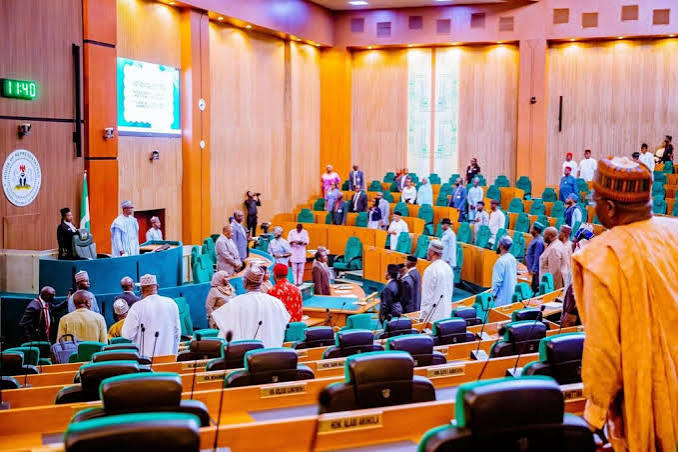
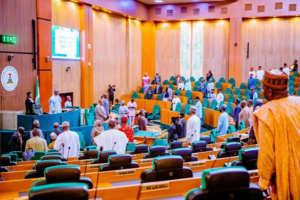
The President, Major General Muhammadu Buhari (retd.), had earlier this month presented N16.39tn as the 2022 budget proposal before a joint session of the National Assembly.
The budget deficit, estimated at N6.23tn, is slightly above the three percent limit stipulated in the Fiscal Responsibility Act 2007. The government plans to finance the deficit by borrowing N5tn from local and foreign sources.
Economists and other experts have continued to lament the spate of borrowing while asking governments at all levels to cut down on the high cost of governance.
Vice President Yemi Osinbajo had during the formal inauguration of the Sustainable Procurement, Environmental, and Social Standards Enhancement in Abuja recently stressed the need for Nigeria to reduce the cost of governance in the public sector and entrench transparency and accountability at all levels.
“Nigeria must make progress in reducing the high cost of governance in the public sector as well as strengthened by entrenching transparency and accountability at all levels of government, while issues relating to construction, rehabilitation, and extension of existing buildings, acquisition of land, purchase of laboratory equipment, disposal of reagents and samples amongst others must be addressed,” Osinbajo who was represented by Minister of State for Education Chukwuemeka Nwajiuba said.
Ada Peter