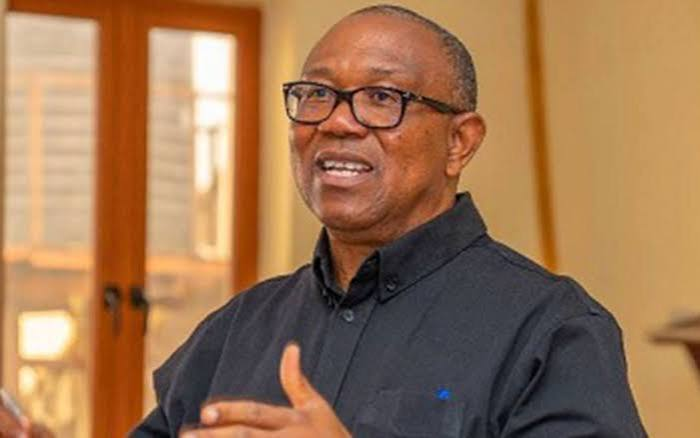
The Ministry of Marine and Blue Economy has dismissed comments by former Anambra State Governor, Peter Obi, over the Federal Government’s $1 billion approval for the modernisation of the Apapa and TinCan Island Ports in Lagos.
In a statement on Tuesday, Dr. Bolaji Akinola, media aide to the Minister of Marine and Blue Economy, Adegboyega Oyetola, described Obi’s remarks as “incorrect and misleading,” insisting that the Tinubu administration’s policies reflect a balanced and inclusive approach to port development across Nigeria.
Obi had earlier taken to X, criticising the heavy concentration of maritime projects in Lagos, warning that it undermines national growth.
“While any effort to improve efficiency and embrace technology in our maritime sector is commendable, such an initiative must be guided by accountability, transparency, and equity for all Nigerians,” he wrote, urging the Federal Government to prioritise ports in Warri, Port Harcourt, Calabar, and Onne to drive job creation and boost trade.
He further cited examples from countries such as Vietnam, Indonesia, South Africa, Egypt, Morocco, Algeria, and Ghana, which, according to him, decentralised port development to achieve balanced economic growth.
However, Akinola maintained that Obi’s statement did not reflect the current realities of port reforms being implemented across the nation. He explained that the government’s modernisation programme extends beyond Lagos, with comprehensive upgrades ongoing for ports in Warri, Port Harcourt, Calabar, and Onne.
“The procurement process for these projects has already begun and forms part of a broader strategy to revitalise Nigeria’s maritime infrastructure,” Akinola stated.
He added that the Ministry is also collaborating with state governments and private investors to develop new deep seaports, including the Agge Deep Seaport in Bayelsa, Ibom Deep Seaport in Akwa Ibom, Bonny Deep Seaport in Rivers, and another in Cross River State.
Akinola also referenced the Onitsha River Port in Anambra State, managed by the National Inland Waterways Authority (NIWA), as proof of the government’s ongoing decentralisation efforts.
While acknowledging Lagos as Nigeria’s commercial hub, he stressed that the modernisation of the Apapa and TinCan Ports is only one part of a larger maritime transformation plan.
“The Ministry’s ongoing efforts to upgrade and expand other ports across the federation affirm its nationwide commitment to equitable and sustainable maritime development,” he noted.
Akinola concluded that the Federal Government remains committed to transparency, accountability, and fairness in implementing the Renewed Hope Agenda, ensuring that every region benefits from the ongoing maritime sector reforms.