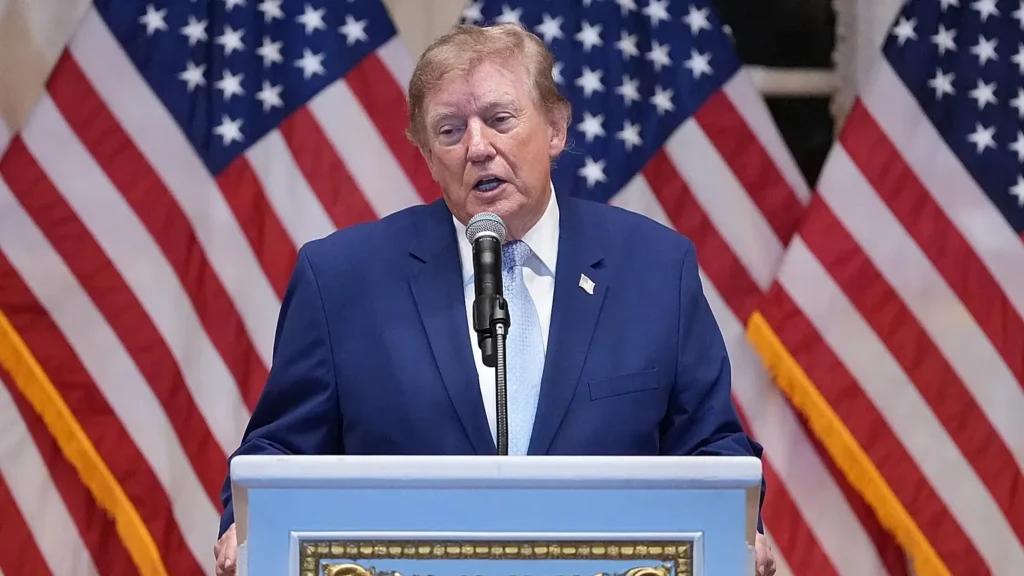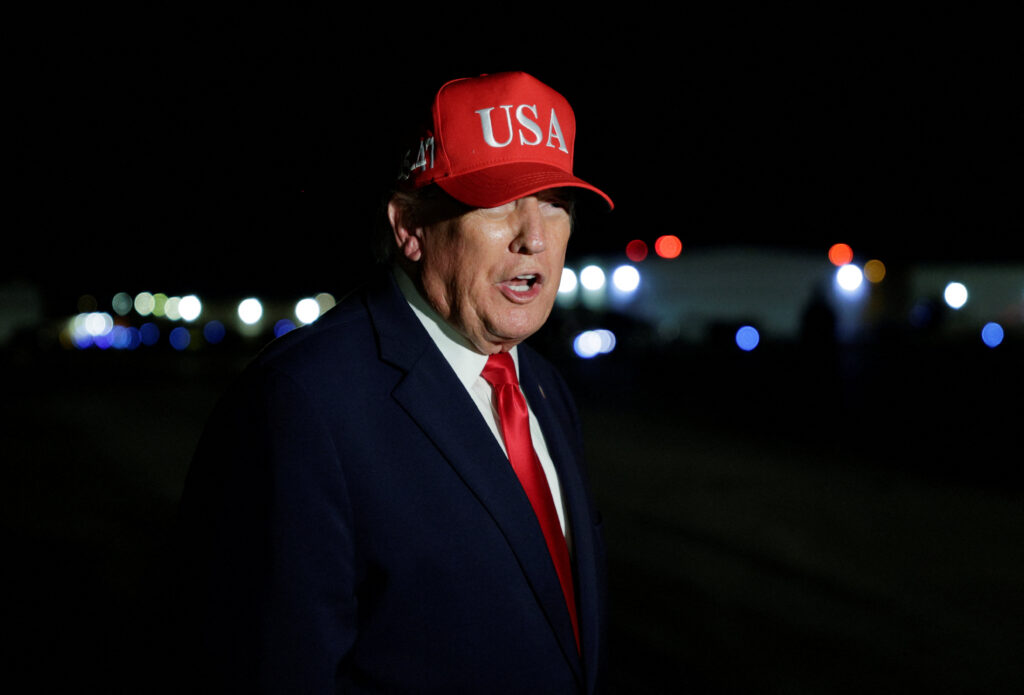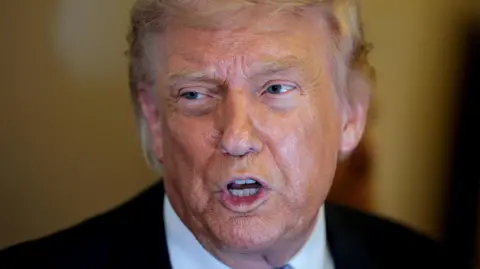
U.S. President Donald Trump warned Iran on Monday that time was running out to reach an agreement to end the ongoing conflict, as negotiations between Washington and Tehran appeared to remain deadlocked.
“They better get moving, FAST, or there won’t be anything left of them,” Trump wrote on his Truth Social platform. “TIME IS OF THE ESSENCE!”
The warning came after Trump held talks Sunday with Israeli Prime Minister Benjamin Netanyahu, according to reports citing Netanyahu’s office.
Iran said Monday that it had responded to the latest U.S. proposal and that communications with Washington were continuing through Pakistani mediators.
“As we announced yesterday, our concerns were conveyed to the American side,” an Iranian foreign ministry spokesperson said during a media briefing, according to AFP.
Iranian state-linked media outlets suggested negotiations remain far apart. The semi-official Mehr News Agency reported that Washington had failed to offer meaningful concessions, warning that the lack of compromise could lead to an “impasse in the negotiations.”
Trump’s latest remarks echoed earlier warnings he made before the ceasefire announced in April, when he said an entire “civilisation” could be destroyed if Iran refused to agree to a deal.
Last week, Trump described the ceasefire as being on “massive life support” after rejecting Iranian demands as “totally unacceptable.” Iran responded by defending its proposals as “responsible” and “generous,” according to foreign ministry spokesperson Esmail Baghaei.
According to Iran’s semi-official Tasnim News Agency, Tehran’s demands include a complete end to military operations across the region, including Israeli strikes targeting the Iran-backed Hezbollah in Lebanon, as well as an end to the U.S. naval blockade of Iranian ports and guarantees against future attacks.
Iran also reportedly requested compensation for war damages and reaffirmation of its control over the Strait of Hormuz.
Meanwhile, Iran’s semi-official Fars News Agency reported Sunday that the United States responded with five conditions, including limiting Iran to a single operational nuclear facility and transferring its stockpile of highly enriched uranium to the United States.
Trump suggested Friday he might accept a 20-year suspension of Iran’s nuclear program rather than demanding its complete dismantlement, signaling what appeared to be a shift in Washington’s negotiating position.
The conflict began after large-scale U.S. and Israeli strikes on Iran on Feb. 28. Although a ceasefire intended to facilitate diplomacy has largely held, occasional exchanges of fire have continued.
Iran has also maintained tight control over the Strait of Hormuz, effectively restricting traffic through one of the world’s most critical energy shipping routes. Roughly 20% of global oil and liquefied natural gas supplies typically pass through the waterway.
The disruption, which Iran says is retaliation for U.S. and Israeli military action, has contributed to sharp increases in global oil prices.
At the same time, the United States has continued enforcing a blockade on Iranian ports as part of its pressure campaign against Tehran.
Pakistan has continued to serve as a mediator between the two sides, though major differences remain unresolved.