The National Democratic Congress (NDC) has reaffirmed its commitment to building what it described as a strong and enduring political institution, declaring that the party will not function as a personality-driven movement or a temporary special purpose vehicle for elections.
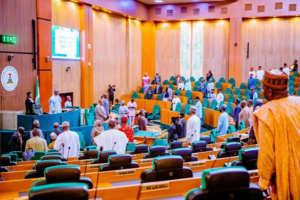
The position was contained in resolutions reached during the party’s second National Executive Committee (NEC) meeting, where leaders outlined measures aimed at strengthening internal governance, accountability, discipline, and party cohesion.
According to the party, the resolutions reflect a deliberate effort to institutionalise its structures and ensure the NDC evolves into a sustainable democratic platform capable of outlasting individual political ambitions.
A major outcome of the meeting was the reaffirmation of the principle of party supremacy. The NEC stated that all programmes, policies, and appointments by governments elected on the party’s platform except for personal staff appointments must be carried out in consultation with established party structures.
The party stressed that elected officials are representatives of the collective will of the NDC and are therefore expected to align their decisions with the party’s ideology and objectives.
“The party remains supreme, and members are expected to align their personal interests and agendas with those of the party,” the resolution stated.
The NEC also declared that the NDC is intentionally being built as a long-term institution rather than a political movement centred around individuals or short-term electoral interests.
To strengthen organisational control, the party resolved that all affiliated groups and non-governmental organisations operating under the NDC platform must function strictly under the supervision and authority of the party and should no longer maintain parallel structures.
The party said the decision would help prevent fragmentation, improve coordination, and promote unified messaging nationwide.
As part of efforts to promote ethical conduct, the NEC approved the development of a comprehensive code of conduct for party officials and candidates. A committee headed by the party’s National Legal Adviser was constituted to draft the framework and operational guidelines.
The party said the proposed code would focus on transparency, integrity, accountability, and responsible leadership.
In addition, the NEC inaugurated a National Reconciliation Committee tasked with resolving grievances and strengthening unity among members, describing internal cohesion as essential to the party’s long-term stability and electoral prospects.
The NDC also announced measures to improve financial accountability, directing that all party funds be used strictly for official party activities and managed transparently.
It further ordered that campaign contributions and all funds raised by aspirants and candidates must be fully disclosed to relevant party organs at the local government, state, zonal, and national levels.
According to the statement signed by the party’s National Publicity Secretary, Osa Director, the resolutions demonstrate the party’s determination to prioritise institutions over personalities, accountability over expediency, and unity over factional interests as it positions itself as a credible political alternative ahead of future elections.