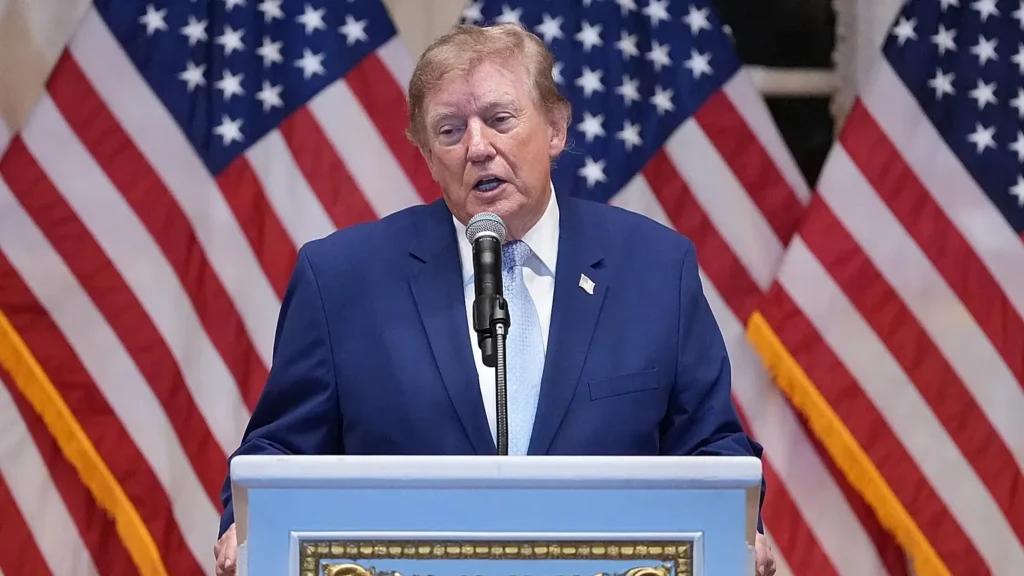
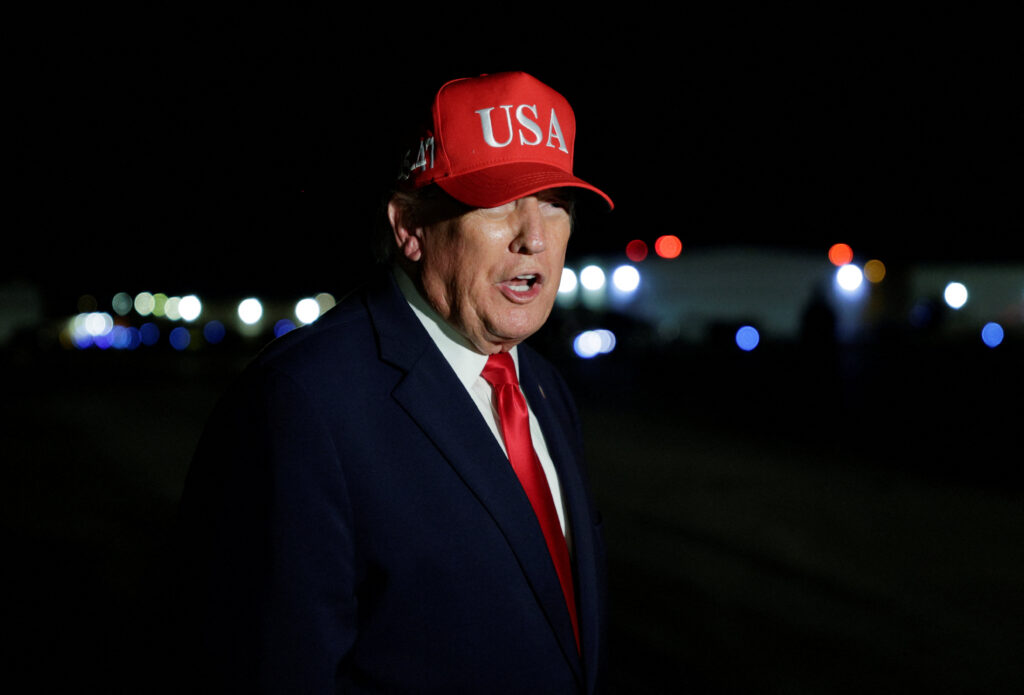
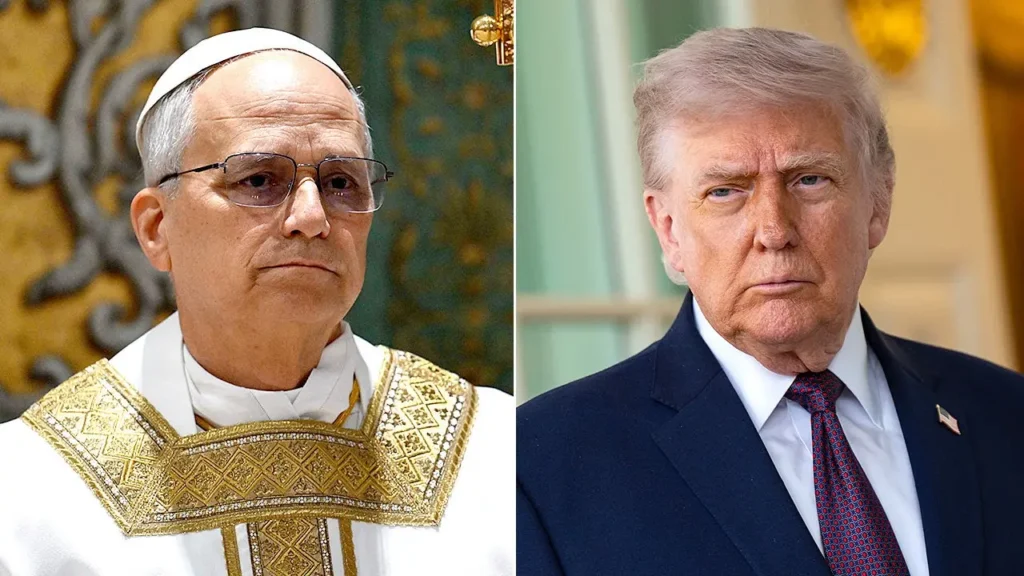
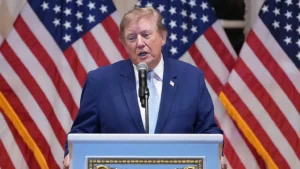
President Donald Trump is set to deliver his first address of his second term before the 80th United Nations General Assembly on Tuesday, as global divisions over the war in Gaza and the question of Palestinian statehood dominate the high-level gathering.
Trump’s return to the world stage comes at a moment of heightened international tension — and growing isolation. The president is expected to face a frosty reception from key allies and more than half of the UN member states over his administration’s stance on Gaza, sharp cuts to foreign aid, and the suspension of U.S. support for multiple UN agencies amid mounting humanitarian crises abroad.
The address will take place a day after France and Saudi Arabia co-host an international peace summit in New York, aimed at jumpstarting efforts toward a two-state solution and recognizing Palestinian statehood. The United States, however, has chosen not to attend the summit and was among just 10 nations to vote against the UN resolution supporting the gathering.
French officials said on Sunday that ten countries will formally recognize a Palestinian state during the summit: France, United Kingdom, Canada, Australia, Belgium, Portugal, Luxembourg, Malta, San Marino, and Andorra. They join over 140 nations that have already recognized Palestinian statehood.
The move is seen by many as a turning point in the global approach to the Israeli-Palestinian conflict, coming in the wake of a devastating war in Gaza that has left tens of thousands dead and triggered widespread famine and displacement.
Leaders from France, Canada, and Britain have issued coordinated calls for an immediate ceasefire, the release of all hostages, and the eventual removal of Hamas from governing authority in Gaza. They have also urged a comprehensive post-war plan that would lead to a sovereign and secure Palestinian state alongside Israel.
The Biden administration and Trump’s current foreign policy team have rejected these initiatives, maintaining support for Israel’s military campaign and expressing strong opposition to unilateral recognition of Palestinian statehood.
Israeli Prime Minister Benjamin Netanyahu issued a forceful response to the planned recognitions on Sunday, warning that such actions would embolden extremists.
“I have a clear message to those leaders who recognize a Palestinian state after the terrible massacre on October 7th, 2023: You are giving a huge reward to terrorism,” Netanyahu said, referencing the Hamas-led attack that triggered the current conflict.
Israeli officials have indicated that retaliatory measures, including possible annexation of parts of the occupied West Bank, are under consideration.
Trump is expected to use his UN speech to reiterate his “America First” doctrine, highlighting his administration’s focus on border security, economic nationalism, and recalibrated global engagement. He is also likely to defend recent cuts to U.S. funding for foreign aid and UN institutions, arguing they no longer align with American interests.
However, critics argue the policies have weakened U.S. credibility abroad and diminished Washington’s traditional leadership role in global peace initiatives.
As the General Assembly unfolds, Trump’s speech will be closely watched for any signals on the future of U.S. foreign policy, particularly in the Middle East — where longtime allies appear increasingly willing to chart their own course.