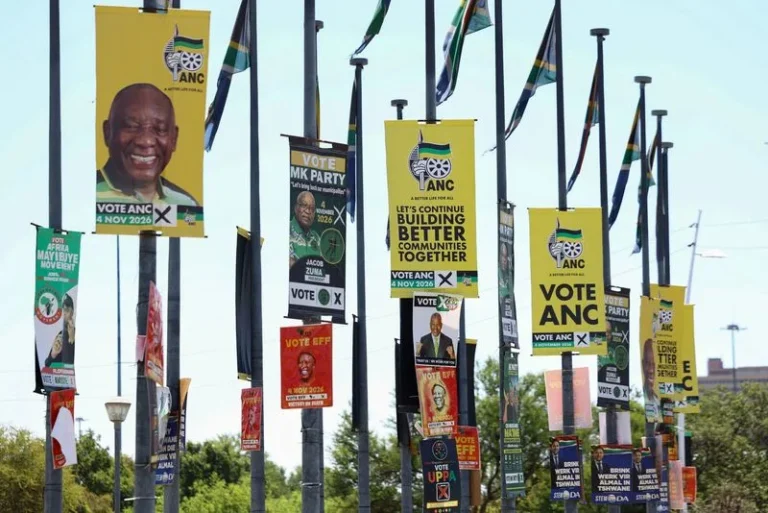
The ruling party, which has historically enjoyed widespread support, is facing mounting pressure as voters increasingly turn to opposition parties in search of better governance, economic opportunities and improved public services.
Among those abandoning the ANC is 38-year-old Mpho Moroka, an unemployed resident of Soweto who first voted for the party in 2008 but has now shifted her support to the opposition Democratic Alliance (DA).
Speaking at a Democratic Alliance campaign rally, Moroka expressed frustration over persistent poverty, unemployment and the lack of meaningful improvement in her community despite years of ANC leadership.
Her decision reflects a broader shift in voter sentiment across South Africa, where political loyalties are becoming increasingly divided and securing outright electoral majorities is proving more difficult.
Recent opinion polls suggest that although the ANC is likely to remain the country’s largest political party, it could suffer substantial losses in the upcoming elections.
Analysts estimate that the party’s support could fall to between 31 and 34 percent, highlighting a dramatic decline from the commanding majorities it enjoyed in previous decades.
The growing fragmentation of South Africa’s electorate means that political parties may be forced into complex coalition negotiations to secure control of major municipalities, including Johannesburg and other key urban centers.
However, forming stable coalition governments could present significant challenges, particularly as rival parties struggle to overcome ideological differences and competing political interests.
The Democratic Alliance is positioning itself as a major alternative to the ANC, but it is not the only party benefiting from declining confidence in the ruling establishment. Other political movements are also attracting voters dissatisfied with the country’s economic and governance challenges.
For many South Africans, the elections are expected to serve as a crucial test of political accountability, with unemployment, deteriorating infrastructure, unreliable public services and limited economic opportunities dominating public concerns.
The outcome could determine whether the country’s major cities experience a shift in political leadership or remain under coalition arrangements involving the ANC.
Beyond electoral victories, analysts say the greater challenge will be establishing effective and stable municipal administrations capable of restoring essential services, rebuilding infrastructure and attracting investment.
As millions of South Africans prepare to cast their ballots, the November 4 elections could mark another turning point in the country’s democratic development, potentially reshaping local governance and further weakening the ANC’s longstanding political dominance.