Rescue teams using search dogs and heavy machinery continued operations across Nepal and China on Tuesday, searching through mud, rocks and debris for thousands of people still missing after catastrophic flooding devastated communities across the Himalayan region.
The combined death toll has now surpassed 1,000.
Nepal’s disaster management agency said at least 987 people had been confirmed dead, while 3,916 remained missing, including 583 foreign nationals. Chinese authorities, in their latest update on Sunday, reported 16 deaths and 546 people missing, including 261 foreigners.
Rescue efforts have been complicated by the enormous scale of the destruction. Landslides, collapsed roads and widespread infrastructure damage have cut off remote communities, forcing emergency crews to navigate unstable terrain and massive piles of debris.
In Nepal, authorities are particularly concerned about hundreds of workers believed to be trapped inside tunnels at hydropower projects damaged by the floods.
About 900 workers are missing from 12 hydropower sites, with approximately 500 believed to be trapped underground, according to Nepalese authorities.
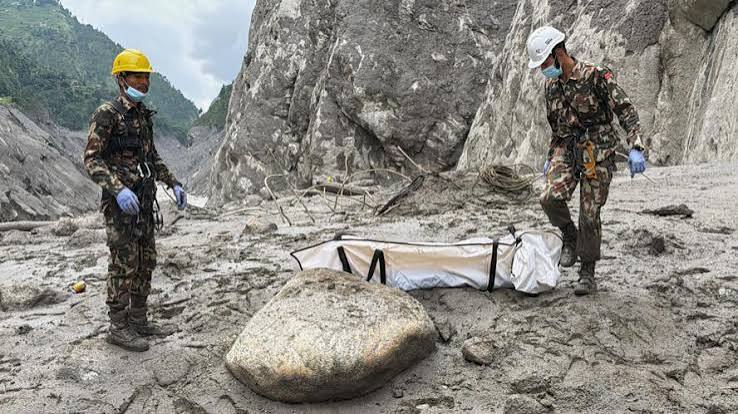
Nepal Army spokesperson Brig. Gen. Raja Ram Basnet said rescue teams, supported by foreign experts, were operating at several of the affected projects. Images released by the military showed rescuers entering dark, debris-filled tunnels, wading through mud and water and climbing over rocks in search of survivors.
Across the border in China, emergency crews continued searching areas devastated by mudslides, particularly around the Gyirong Port border crossing, which was destroyed in the disaster.
Search teams assisted by dogs examined gaps between rocks and debris for signs of survivors, while heavy machinery was deployed to clear a major highway leading to Gyirong Port. Restoring the route is considered crucial for moving rescue personnel, equipment and humanitarian supplies into the affected area.
Nepalese authorities said at least 11,814 people had been rescued as of Tuesday.
Helicopters and other aircraft are being used to reach stranded communities where roads and bridges have been destroyed or blocked by flooding and landslides.
Relief operations have also intensified as authorities work to deliver food, medical supplies and other essential assistance to survivors in isolated areas.
With thousands of people still missing and rescuers struggling to access some of the hardest-hit communities, officials fear the death toll could continue to rise.