The International Monetary Fund has sounded the alarm over the scale of illicit financial flows from Nigeria, warning that the trend is worsening the country’s already fragile revenue situation.
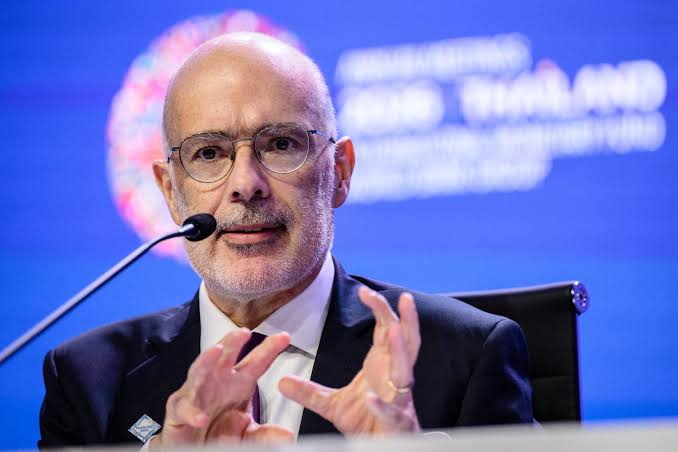
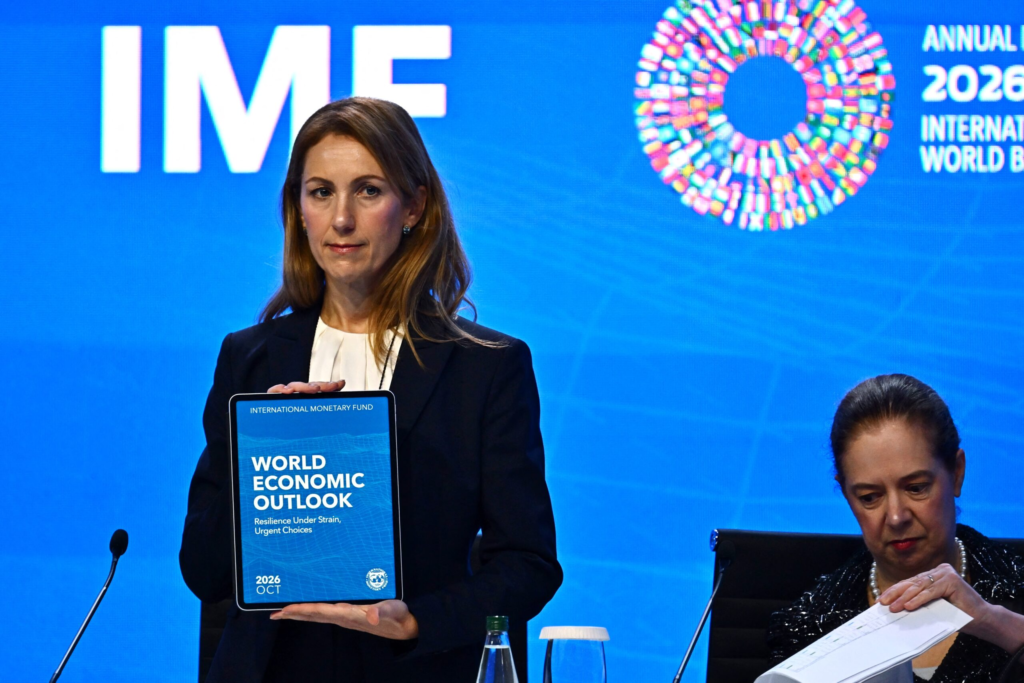
Speaking at the ongoing 2025 IMF–World Bank Annual Meetings in Washington, the Fund’s Managing Director, Kristalina Georgieva, said the organization is intensifying efforts to track and curb illegal money movements that undermine public finances and development.
According to Georgieva, these illicit flows — which include stolen public funds, proceeds from crime, and untraceable digital transactions — have become a global problem, draining national resources and weakening economic stability, especially across developing countries like Nigeria.
She explained that the rise of digital currencies and anonymous online transfers has made tracing such funds increasingly difficult, creating new challenges for financial regulators.
The IMF boss revealed that the institution has strengthened its anti–money laundering and counter–terrorism financing framework to help member countries detect and tackle illicit transactions.
She added that, “Following the money has now become a compulsory part of the IMF’s annual Article IV consultations — the standard economic health check for member countries.
‘’This ensures that the fund routinely assesses each nation’s exposure to illicit flows and financial integrity risks.”
Georgieva said the Fund will also embed lessons from past experiences into its financial-sector evaluations, with any country seeking IMF support now required to include concrete measures to curb illegal capital flight.
Beyond surveillance, the IMF is expanding its technical assistance and training to help governments build stronger financial intelligence systems capable of tracing suspicious activities swiftly.
The Fund’s head stressed that the fight against illicit financial flows is not just about money — it’s about governance, transparency, and institutional integrity. Through its Governance Diagnostics initiative, the IMF is helping countries identify loopholes that enable corruption and recommending structural reforms to close them.
“The governance diagnostic is not an audit, it is about identifying vulnerabilities in the institutional setup, the breeding grounds for problems and proposing reforms to address them,” the IMF boss said.
She encouraged greater collaboration among government agencies, civil society organizations, and international partners in tackling the menace.
Her words: “We ask our teams to engage with civil society and non-government institutions because they often know where the vulnerabilities lie. Working together, we can build trust and achieve more.”
She commended ongoing partnerships with countries, such as Sri Lanka and Kenya, which have embraced collaborative frameworks to combat financial crimes while strengthening governance structures.
Meanwhile, the IMF has revised Nigeria’s economic growth outlook upward to 3.9 per cent, citing stronger domestic fundamentals and improving investor confidence, as well as moderated impact of global tariff war.
The outlook represents a 0.5 percentage point increase from the IMF’s July 2025 update and nearly 1 percentage point higher than earlier April forecasts.
Disclosing this in its October 2025 World Economic Outlook (WEO) titled “Global Economy in Flux”, the IMF projected that Nigeria’s real Gross Domestic Product (GDP) will grow by 3.9 percent in 2025, slightly lower than the 4.1 percent recorded in 2024, but expected to accelerate to 4.2 percent in 2026.
Similarly, the IMF upgraded its forecast for Sub Saharan Africa economic growth to 4.1 per cent and 4.2 per cent in 2025 and 2026 respectively.
However, the IMF revised downward its global economic growth forecast to 2.8 per cent, representing 0.2 percentage points from 3.0 per cent earlier forecast in the April 2025 World Economic Outlook (WEO).
Despite the positive outlook, the IMF emphasized that Nigeria must sustain reforms, maintain policy discipline, and close the gaps that allow public funds to leak abroad if it hopes to achieve long-term, inclusive growth.