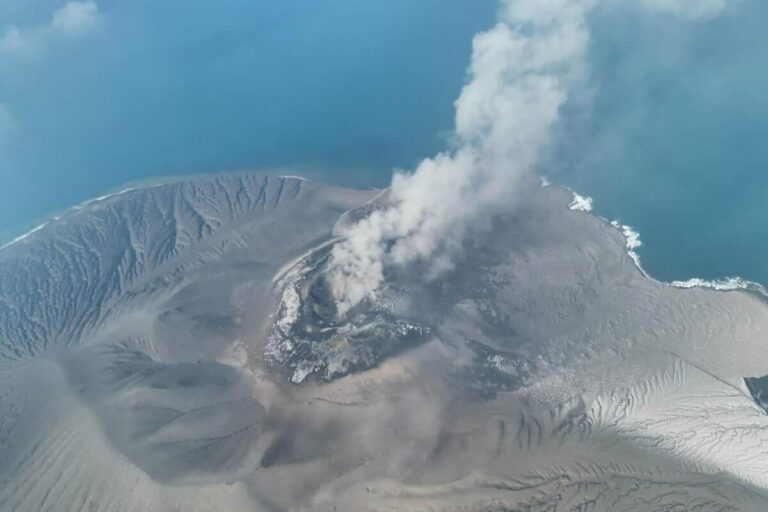
Indonesia has closed several airports after the eruption of Anak Krakatau sent volcanic ash across parts of the country, disrupting more than 2,000 flights and affecting hundreds of thousands of passengers.
The volcano, located in the Sunda Strait between the islands of Java and Sumatra, has been erupting since late Friday, sending smoke and ash tens of thousands of feet into the atmosphere and affecting Indonesia’s two most populous islands.
Eight airports were forced to suspend operations. By Monday morning, 1,397 domestic and international flights had been cancelled or delayed, affecting more than 170,000 passengers, according to Indonesia’s Transport Ministry.
One airport in southern Sumatra resumed operations on Monday, while restrictions remained in place elsewhere.
Another 922 flights at other Indonesian airports were affected by route changes prompted by the spread of volcanic ash.
Jakarta has experienced some of the most significant disruption, with more than 960 flights affected. Soekarno-Hatta International Airport was closed from Sunday into Monday evening.
Transport Minister Dudy Purwagandhi said authorities could not yet determine when the disruption would end because weather conditions remained unpredictable.
Airlines will also be required to inspect aircraft engines before returning planes to service, he said.
Authorities have advised residents in affected parts of Java and Sumatra to remain indoors where possible and wear protective masks. Local media reported cases of respiratory problems as well as skin and eye irritation, while some schools moved classes online on Monday.
Volcanic ash has also been detected in Jakarta and surrounding areas, further worsening air quality in the densely populated capital region.
The eruption comes as parts of Southeast Asia are already experiencing deteriorating air quality from wildfires in Borneo and Sumatra. Smoke from the fires has spread across the region in recent weeks, affecting millions of people in Indonesia, Singapore, Malaysia and the Philippines.
Authorities continue to monitor Anak Krakatau’s activity and the movement of volcanic ash as they assess when normal flight operations can safely resume.