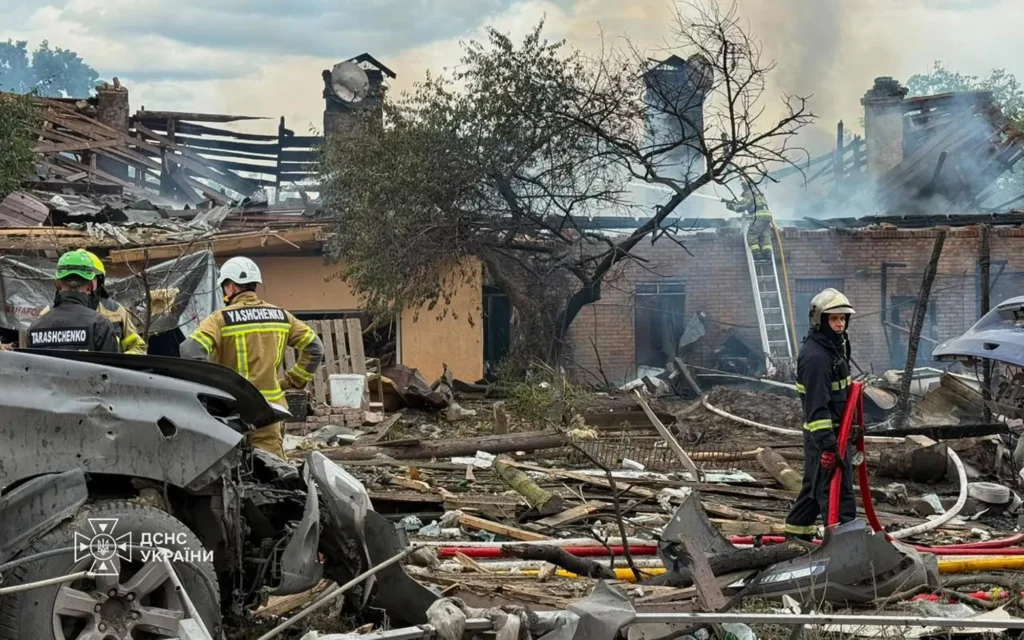
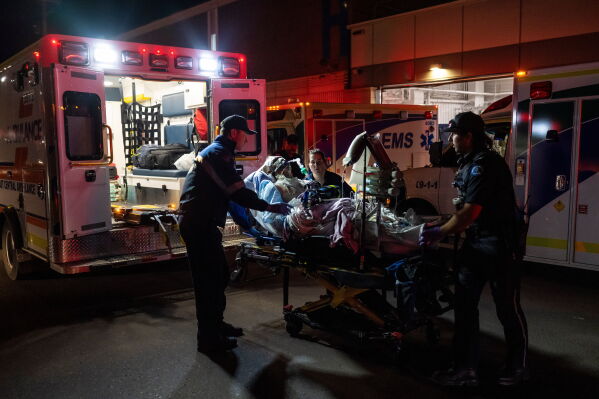
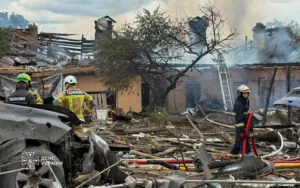
The death toll from Sunday night’s powerful earthquake in eastern Afghanistan has risen to 1,109, with at least 2,938 people injured, according to Shah Mahmood, a Taliban official in Nangarhar Province. The 6.0 magnitude quake struck just before midnight, causing widespread destruction and flattening an estimated 8,000 homes.
Emergency response teams are still working to reach isolated villages, some of which remain cut off. Officials fear the numbers could rise further as assessments continue in remote areas.
The epicenter of the quake was located about 17 miles east of Jalalabad, the U.S. Geological Survey (USGS) reported. The brunt of the fatalities occurred in Kunar Province, with additional deaths confirmed in Nangarhar, said government spokesperson Zabihullah Mujahid and Ministry of Interior spokesperson Mufti Abdul Matin Qani.
The initial quake, recorded at 11:47 p.m. local time, was followed by four significant aftershocks into Monday, registering magnitudes of 5.2, 5.2, 4.7, and 4.6, according to the USGS. These secondary tremors further shook already weakened structures and added to the destruction.
The World Health Organization (WHO) in Afghanistan estimates that over 12,000 people have been directly affected. The worst-hit areas include Chawkay, Nurgal, Chapa Dara, Dara-e-Pech, and Watapur districts in Kunar, with additional structural damage reported in Nangarhar and Laghman provinces.
Afghanistan lies in a seismically active zone where the India and Eurasia tectonic plates meet beneath the Hindu Kush mountain range. Since 1950, the region has experienced 71 earthquakes of magnitude 6.0 or higher, including six magnitude 7.0 or above, according to the USGS.
Sunday’s quake follows a series of deadly tremors in recent years, including a 5.9 magnitude quake in June 2022 and a 6.3 magnitude quake in October 2023, both of which resulted in death tolls exceeding 1,000.
“The scale of devastation from the Afghanistan earthquake is becoming clearer,” said Richard Bennett, the United Nations special rapporteur for Afghanistan, expressing his condolences to victims and their families in a statement on Tuesday.
Humanitarian agencies are mobilizing relief efforts, but damaged infrastructure and ongoing instability in the region are making rescue and aid operations extremely challenging.