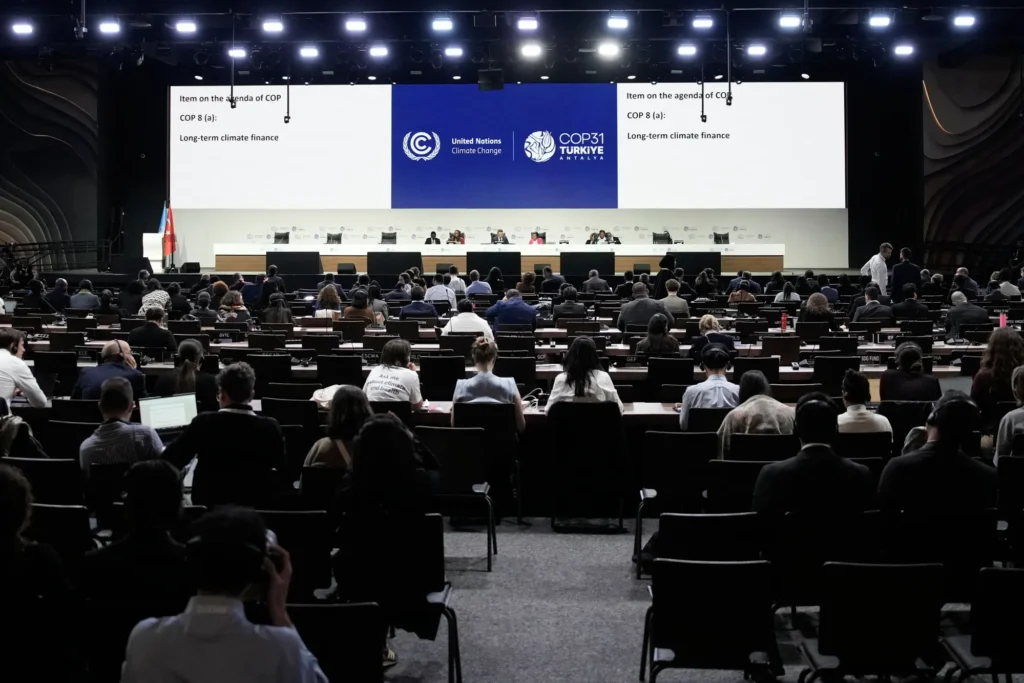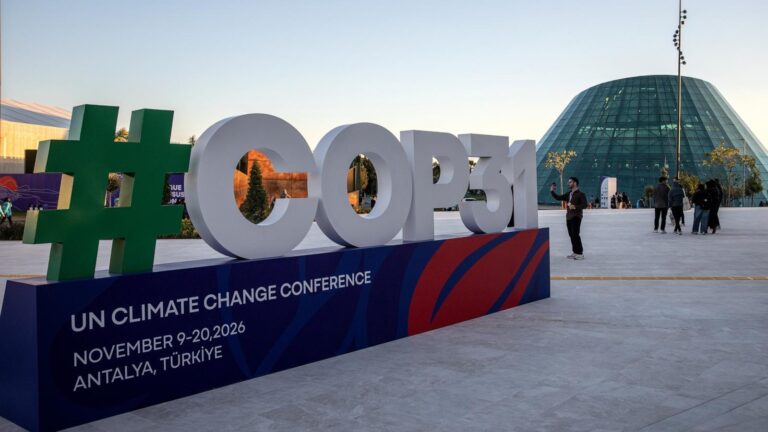
Nearly 200 participating countries concluded the annual conference after repeated attempts to reach a compromise failed, dealing a significant setback to international efforts to address rising global temperatures.
Despite multiple draft agreements and negotiations that continued late into the night and early morning, delegates were unable to approve the summit’s proposed cover decision, a key document intended to summarize the conference’s overall political commitments.
The failure came after several countries rejected the final draft, arguing that it lacked the ambition and concrete measures necessary to confront the worsening climate crisis.
At the center of the disagreement was the proposed agreement’s failure to explicitly mention coal, oil or natural gas, the primary sources of greenhouse gas emissions responsible for global warming.
The final draft also contained no clear commitment to phase out fossil fuel use or accelerate the transition toward cleaner energy sources.
Scientists have repeatedly warned that reducing dependence on fossil fuels is essential to limiting global temperature increases and preventing increasingly severe climate-related disasters.
However, the omission of specific language addressing these fuels prompted strong opposition from several countries and negotiating blocs.
Among those rejecting the proposal were the European Union, the United Kingdom, Belize, the Marshall Islands, Norway, Panama and Vanuatu.
Several delegations also expressed frustration over the absence of concrete financial commitments to help vulnerable countries adapt to climate change and recover from its devastating consequences.
Ireland’s Climate Minister Darragh O’Brien, speaking on behalf of the European Union, strongly criticized the proposed agreement, saying it failed to reflect the urgency and scale of action required to address global warming.
O’Brien argued that the draft fell far short of the ambitions necessary to tackle climate change effectively.
He described the absence of any reference to fossil fuels or the need to transition away from them as unacceptable, emphasizing that the European Union could not support such a weak outcome.
The EU’s rejection highlighted growing frustration among countries seeking stronger climate commitments and clearer measures to reduce global emissions.
Panama also strongly opposed the agreement, calling for greater honesty about the international community’s failure to make sufficient progress toward limiting global warming to 1.5 degrees Celsius above pre-industrial levels.
A Panamanian delegate told the conference that countries must acknowledge their collective shortcomings in meeting the target established under the Paris Climate Agreement.
Panama further argued that nations responsible for the largest share of historical greenhouse gas emissions should bear a proportionate responsibility for financing solutions to the climate crisis.
The position reflects the concerns of vulnerable countries that contribute relatively little to global warming but face some of its most devastating effects.
For many small island and developing nations, rising sea levels, stronger storms, extreme heat and destructive flooding are already threatening communities, infrastructure and economic development.
Beyond the dispute over fossil fuels, negotiations were complicated by demands for stronger financial support from wealthy industrialized countries.
Developing nations have repeatedly called for increased funding to help them adapt to climate-related disasters, protect vulnerable populations and transition toward cleaner energy systems.
However, several delegations argued that the proposed agreement failed to establish sufficiently clear commitments on how such assistance would be provided.
The disagreement underscored persistent divisions between wealthier countries and developing nations over who should bear the financial burden of addressing climate change.
The inability to adopt a cover decision represents a major diplomatic setback following years of international negotiations aimed at accelerating climate action.
Although the outcome does not invalidate existing commitments under the Paris Agreement or decisions adopted at previous climate conferences, it raises concerns about the willingness of governments to strengthen their climate policies.
The deadlock also highlights the growing difficulty of reconciling the economic interests of fossil fuel-producing countries with demands for faster emissions reductions.
For climate-vulnerable nations, the failure to secure stronger commitments creates further uncertainty over financial assistance and long-term protection against environmental disasters.
As COP31 concludes without its central political agreement, pressure is mounting on governments to demonstrate greater commitment to reducing greenhouse gas emissions and addressing the unequal impacts of climate change.
The conference’s outcome reinforces concerns that international negotiations are struggling to keep pace with the accelerating climate crisis.
With global temperatures continuing to rise, scientists warn that further delays in cutting emissions could make it increasingly difficult to meet international climate targets.
The failed negotiations in Antalya now leave governments facing the challenge of rebuilding diplomatic momentum and finding common ground before the next round of United Nations climate talks.
For vulnerable countries demanding urgent action, the message remains clear: stronger commitments, meaningful financial assistance and concrete measures to reduce fossil fuel dependence are essential to preventing further climate-related destruction.
The breakdown at COP31 underscores the widening gap between global climate promises and the political will required to turn those commitments into action.