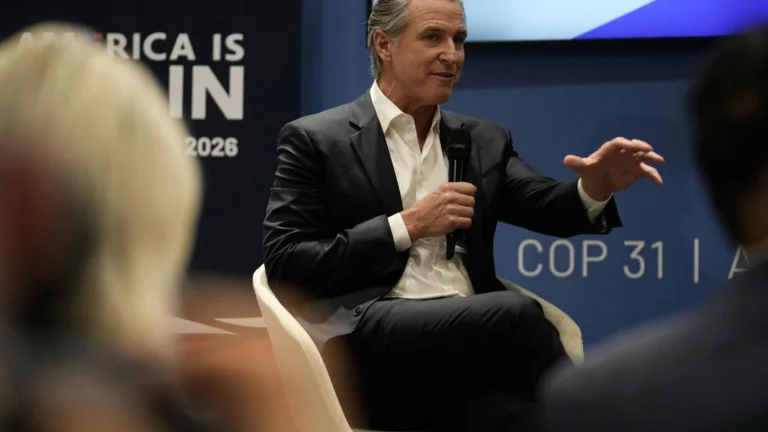
Speaking Thursday at the United Nations COP31 climate summit in Antalya, Turkey, representatives of countries most affected by global warming urged world leaders to move beyond promises and deliver concrete measures to address the escalating climate crisis.
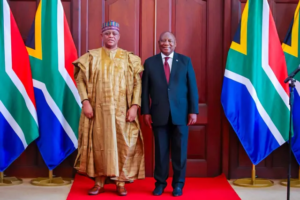
Seychelles Vice President Alix Sebastien Pillay warned that climate change had become an existential threat to his country, an Indian Ocean archipelago comprising 115 islands.
Pillay emphasized that addressing global warming was no longer simply a matter of environmental protection but a question of national survival.
He called on the international community to translate years of climate negotiations into meaningful action, particularly for countries already experiencing devastating consequences despite contributing relatively little to global greenhouse gas emissions.
The appeal came during the second day of the high-level leaders’ summit, where governments are attempting to reach agreements on reducing global emissions and strengthening financial assistance for countries most vulnerable to climate-related disasters.
While rising temperatures are contributing to stronger storms, prolonged droughts, extreme heat and destructive flooding worldwide, small island nations face additional dangers from rising sea levels.
For countries such as Seychelles, coastal erosion, flooding and damage to infrastructure are placing increasing pressure on communities, national economies and essential services.
Pillay said the country was already suffering millions of dollars in climate-related damage, despite its comparatively small contribution to the global emissions responsible for warming the planet.
He urged wealthy nations to strengthen financial support through the United Nations’ Loss and Damage Fund, which was established to assist vulnerable countries experiencing the devastating consequences of climate change.
The Seychelles vice president also warned against financing arrangements that would force developing nations to accumulate more debt while attempting to rebuild damaged infrastructure and protect their populations.
He stressed that climate recovery should not undermine economic development or deepen the financial difficulties already facing vulnerable countries.
The leaders’ warnings coincided with the release of a troubling report by the independent research group Climate Action Tracker, which found that international progress in limiting global warming has effectively stalled over the past five years.
According to the assessment, gains achieved through stronger climate policies have been largely offset by insufficient action elsewhere, leaving the world dangerously behind its environmental commitments.
The report noted that significant progress was made during the first five years following the 2015 Paris Climate Agreement, when government pledges and policies helped reduce projected global warming by approximately one degree Celsius.
However, that momentum has weakened considerably, with little overall improvement in global temperature projections since then.
Researchers warned that current government policies could put the planet on a path toward approximately 2.7 degrees Celsius of warming by the end of the century.
The findings suggest that the world is moving toward exceeding the Paris Agreement’s critical target of limiting global temperature increases to 1.5 degrees Celsius above pre-industrial levels.
Climate Action Tracker cautioned that without immediate and substantial reductions in greenhouse gas emissions, the world risks an overshoot of the 1.5-degree threshold that could prove extremely difficult to reverse.
Exceeding that limit would increase the risks of devastating climate impacts, including extreme weather events, rising oceans, biodiversity loss and worsening economic hardship.
For small island nations, such consequences could be particularly severe, threatening coastal communities, freshwater supplies, tourism-dependent economies and, in some cases, habitable land.
The report underscored the urgent need for governments to accelerate the transition away from fossil fuels, expand renewable energy and adopt stronger emissions-reduction measures.
As negotiations continue at COP31, vulnerable countries are demanding greater accountability from wealthy nations and faster delivery of financial resources promised under previous international climate agreements.
Their priorities include improved access to climate adaptation funding, stronger disaster protection measures and greater assistance for communities already suffering environmental damage.
The growing frustration among developing nations reflects concerns that global climate negotiations have produced ambitious commitments without sufficient implementation.
For Seychelles and other small island states, the stakes are particularly high.
Their leaders maintain that the international community can no longer afford delays, warning that the consequences of continued inaction could permanently reshape their countries and threaten the livelihoods of future generations.
With scientific assessments showing that the world is drifting further from its climate targets, the COP31 summit represents another critical test of whether governments can move beyond diplomatic promises and deliver meaningful action to confront the global climate emergency.