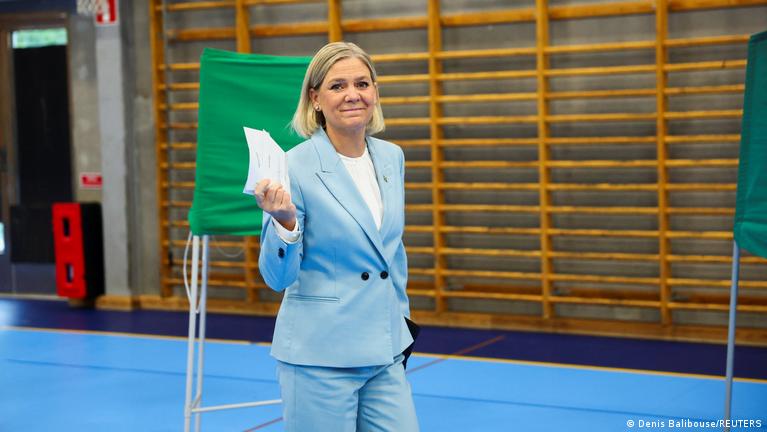
Sweden’s political future remained uncertain Monday as vote counting continued following a closely contested national election, with the left-wing opposition holding a narrow advantage over the governing center-right bloc.
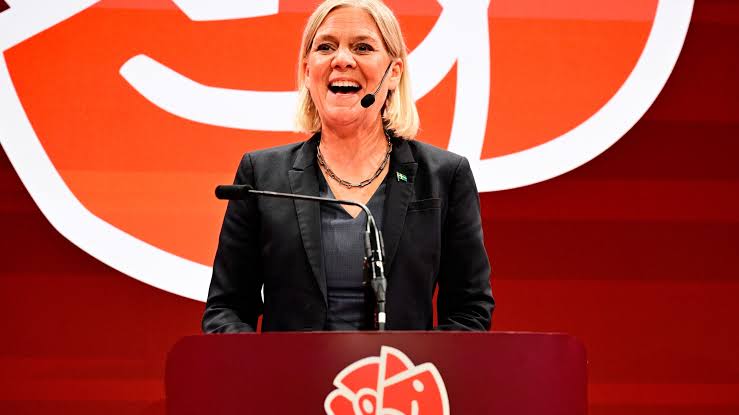
Preliminary results showed former Prime Minister Magdalena Andersson’s opposition alliance on course for a slim parliamentary majority, potentially paving the way for her return to office. However, her center-left Social Democrats lost some support compared with previous results.
With more than 94% of electoral districts counted, Sweden’s Election Authority projected the four opposition parties to secure 176 seats in the 349-seat Riksdag, compared with 173 seats for the four parties that form or support the outgoing government.
A final outcome may not be known until Wednesday, when local election boards are expected to count early ballots that did not reach polling stations by Election Day, including votes cast from overseas.
Andersson urged supporters to wait for the complete results before drawing conclusions.
“We must wait for the final election result,” she said, while noting that her bloc was currently ahead.
Even if the opposition maintains its majority, forming a government could prove complicated because Andersson would need to bring together parties with differing political priorities.
Prime Minister Ulf Kristersson, who has led Sweden since 2022 through a three-party center-right coalition, indicated that he would also examine possible paths to forming a government once the final results are confirmed.
His coalition has relied on parliamentary support from the Sweden Democrats, an anti-immigration party with far-right roots that has moved increasingly into Sweden’s political mainstream. The party had been promised Cabinet positions if the governing coalition retained power.
Kristersson said the close result could lead to a lengthy period of negotiations over the formation of the next government.
“It may take time, but we’re in no rush,” he said.
Sweden, a country of about 10.6 million people, is a member of the European Union and NATO. The final election result will determine the balance of power in parliament and set the stage for negotiations over who will lead the country’s next government.