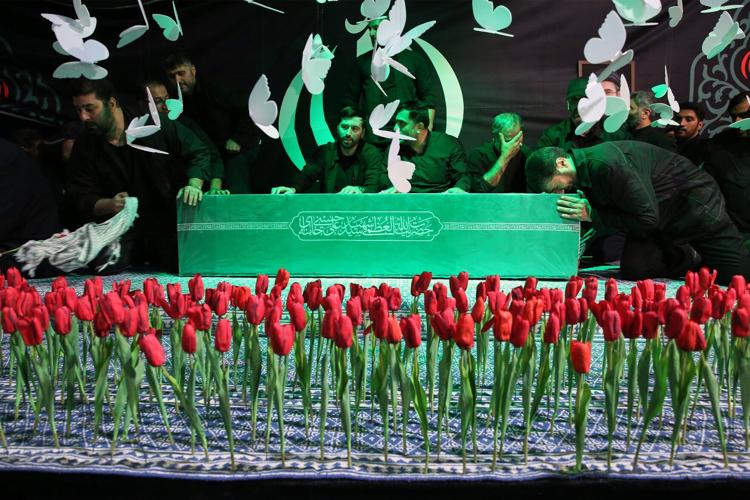
Iran is preparing for a dayslong state funeral for late Supreme Leader Ali Khamenei, with authorities calling on millions of people to take part in ceremonies expected to begin on Saturday.
Across Tehran, banners and public displays have urged citizens to show their support for the Islamic Republic following the conflict that claimed the life of the 86-year-old cleric.
Officials expect large crowds to gather in the capital, with the funeral anticipated to draw scenes reminiscent of the 1989 funeral of Ruhollah Khomeini, the founder of the Islamic Republic.
The ceremonies are expected to serve as a significant show of national unity at a time when Iran is seeking to strengthen its position in negotiations with the United States over a permanent end to the recent conflict.
Iranian leaders are also attempting to leverage their influence over the Strait of Hormuz during ongoing diplomatic talks while remaining alert to the possibility of renewed military action by Israel.
Ahead of the funeral, a senior commander of the Islamic Revolutionary Guard Corps appeared in public for the first time in several months, signaling the continued presence of the country’s security leadership.
Other senior government officials, military commanders and foreign dignitaries are also expected to attend the funeral ceremonies in what analysts see as an effort to project stability and resilience following the war.
Among those preparing for the event was volunteer Mohammad Hossein Rezaei, who said the funeral represented a reaffirmation of the principles of the Islamic Republic.
“As long as these people, who are chosen by God, are on the field, we will continue the same ‘no to humiliation’ policy established by the Islamic Republic,” Rezaei said.
He added that Iran would continue to pursue an independent course and maintain that the country’s future should be determined by its own people.
“We will continue our policy of pursuing independence, and decisions will be made inside the country, and the people will decide their own fate,” he said.
The funeral comes at a pivotal moment for Iran as its leadership seeks to reinforce domestic support while navigating complex regional security challenges and sensitive international negotiations in the aftermath of the conflict.