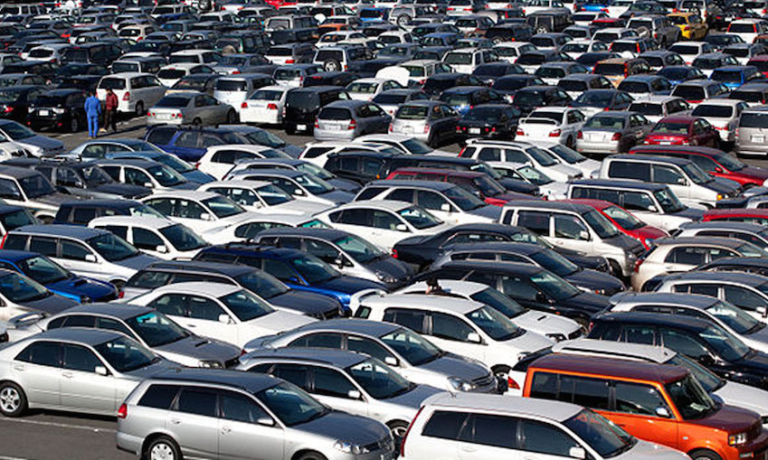
The Federal Government has commenced the implementation of a new tariff regime that significantly reduces Customs levies on imported vehicles, cutting import duties on new vehicles by 50 per cent and used vehicles by about 67 per cent.
The revised fiscal measures, which took effect on July 1, are part of the Federal Government’s 2026 fiscal policy designed to reduce the cost of vehicle importation, ease the burden on importers, and improve consumers’ access to automobiles.
Under the new policy, the import levy on new vehicles has been reduced from 20 per cent to 10 per cent, while the levy on used vehicles has been lowered from 15 per cent to five per cent.
The Nigeria Customs Service (NCS) announced the implementation in a statement published on its website.
“Beginning 1st July, 2026, the Nigeria Customs Service will implement the Green Tax Surcharge as part of the 2026 Fiscal Policy Measures to support environmental sustainability, while also reducing the import levy on new vehicles from 20% to 10% and that of used vehicles from 15% to 5% to ease the cost of vehicle importation,” the statement said.
According to the NCS, the measures form part of a broader review of Nigeria’s import tariff structure and Customs regime aimed at promoting trade and stimulating economic activity.
Reacting to the policy, President of the National Association of Motor Dealers and Chief Executive Officer of Mitchel Automobile Limited, Prince Ajibola, welcomed the reduction in import levies but said the overall impact would depend on how the newly introduced Green Tax Surcharge is implemented.
He explained that it is still too early to determine whether the policy will lead to lower vehicle prices, as the details of the surcharge have not yet been made public.
Ajibola noted that although the reduction in import levies is a positive step, the expected benefits could be eroded if the Green Tax Surcharge is fixed at a rate that offsets the reductions.
“If the levy on used vehicles has been reduced from 15 per cent to five per cent, that is a 10 per cent reduction, which is a good development. However, we need to know what the Green Tax Surcharge will be before we can assess its overall impact.
“If the surcharge is less than the reduction, then it is a plus and we can expect some improvement in vehicle prices.
“But if it is the same as or more than what has been removed, then there will be little or no difference,” he said.