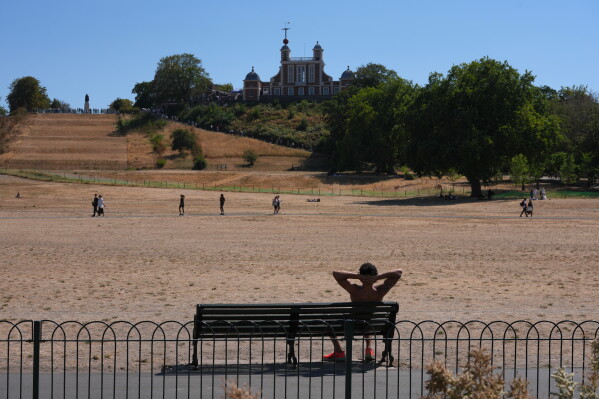
Large parts of western Europe are facing another spell of extreme heat, with Britain preparing for its fifth heat wave of an exceptional summer that could become the country’s hottest on record.
Temperatures across central and southeastern England are forecast to reach as high as 38 degrees Celsius, or 100 degrees Fahrenheit, on Thursday. That would come close to Britain’s August temperature record of 38.5 C, set in 2003.
The Met Office said earlier this week that even average temperatures for the remainder of August could be enough for this summer to surpass the previous record.
The prolonged heat has placed significant pressure on a country where many homes, hospitals and public buildings are not designed for sustained high temperatures.
The Royal College of Nursing said some nurses have collapsed from heat exhaustion, while others have experienced dizziness and nausea or required hospital treatment.
“When nursing staff are collapsing, feeling dizzy, sick or even being admitted to the very hospitals they work in because their workplaces cannot handle the heat, it shows just how badly they are being failed,” RCN chief executive and general secretary Professor Nicola Ranger said.
The extreme temperatures have coincided with widespread drought conditions, putting additional pressure on water supplies, agriculture and the environment.
Southern Water, which supplies parts of southern England, has applied for a rare drought order that would restrict businesses from using water for nonessential purposes, including washing vehicles and filling commercial swimming pools.
The company said exceptionally low rainfall has threatened supplies in Hampshire and the Isle of Wight. Environment Secretary Angela Eagle is expected to decide whether to approve the request. If granted, it would be the first restriction of its kind since May 2006.
Wildfires are also becoming an increasing concern.
A major blaze has been burning in the New Forest in southern England, while data from the National Fire Chiefs Council shows that 1,017 wildfires have already been recorded across England and Wales this year—matching the record total recorded throughout last year.
Although the scale of Britain’s fires remains below the devastating wildfires seen in countries including France, Greece and Spain, officials say the growing frequency of extreme heat and fires highlights the need for greater adaptation to changing climate conditions.
Prime Minister Andy Burnham said his government would consider banning disposable barbecues because of the heightened wildfire risk.
“We need to get the message out loud and clear,” Burnham said, urging people not to use disposable barbecues outdoors while extreme conditions persist.
With heat, drought and wildfires affecting communities simultaneously, authorities are urging residents to conserve water and take precautions as Britain confronts another potentially record-breaking period of summer weather.