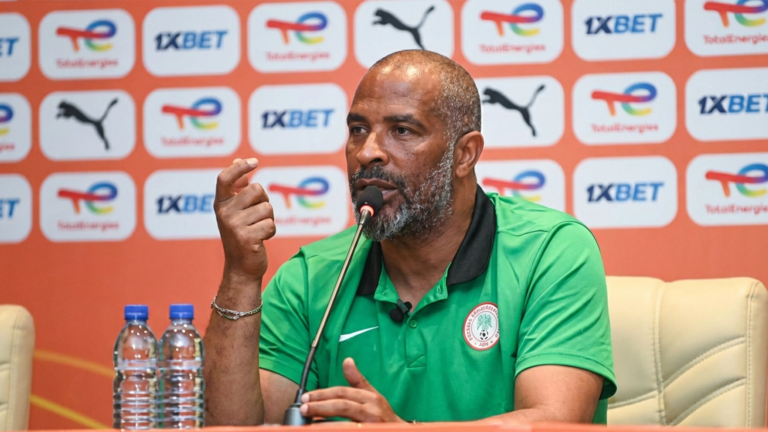
Eric Sékou Chelle has secured a contract extension with improved remuneration and will also assume responsibility for Nigeria’s U-23 national team following an agreement between the National Sports Commission (NSC) and the Nigeria Football Federation (NFF).
The decision was reached at a high-level meeting in Abuja attended by NSC Chairman Shehu Dikko, NSC Director-General Bukola Olopade, NFF President Ibrahim Musa Gusau, NFF General Secretary Mohammed Sanusi, and Chelle.
Dikko revealed that both parties had agreed on revised terms for the Malian coach, whose original two-year contract was due to expire at the end of 2026.
“We have reached new terms with the coach about his new remuneration. We are also going to take care of his assistants, and there are other benchmarks that we have put on the table, and I’m sure the coach will be very excited about it,” Dikko said.
Under the new arrangement, the NSC will take over payment of the salaries of Chelle’s assistant coaches, relieving the burden that was previously borne from the coach’s earnings.
In addition to leading the Nigeria national football team, Chelle has been handed responsibility for the Nigeria national under-23 football team as preparations begin for the men’s football competition at the 2028 Summer Olympics.
According to Dikko, the decision is aimed at creating a clear development pathway for young players transitioning from the U-23 team to the senior national side.
“With the NFF, we also agreed that the coach will take care of the U-23 national team because we have young players coming into the Super Eagles within that age bracket.
“Eric Chelle and his team, plus other people who will support them, will handle the project. The objective is not to give the coach more work but to start building for the future,” he said.
The additional role places greater responsibility on Chelle as he seeks to rebuild the Olympic Eagles and guide them back to the Olympic Games after Nigeria failed to qualify for both the 2020 Summer Olympics and the 2024 Summer Olympics football tournaments.
The move is expected to strengthen continuity between Nigeria’s youth and senior national teams while supporting long-term squad development ahead of future international competitions.