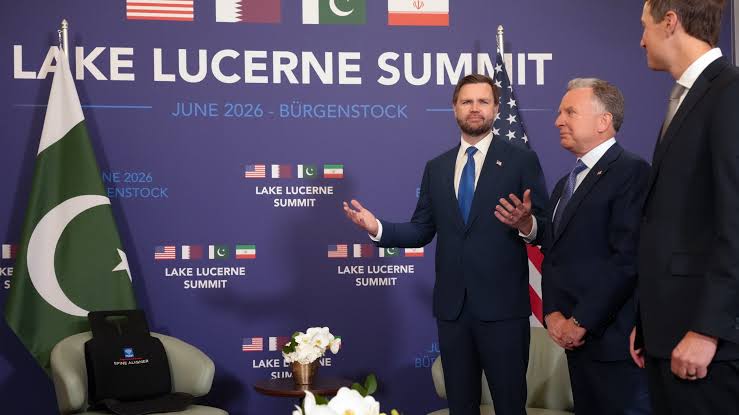
Senior U.S. and Iranian officials gathered in Switzerland on Sunday to formally begin negotiations aimed at shaping a long-term agreement on Iran’s nuclear program, marking a critical next step following last week’s framework deal to end hostilities between the two countries.
Leading the American delegation is U.S. Vice President JD Vance, while top Iranian representatives have also arrived for what is expected to be an intensive round of talks.
The negotiations come after Washington and Tehran signed an interim agreement designed to halt months of conflict and create a pathway toward a broader peace settlement. Under the terms of that framework, both sides have 60 days to resolve key technical and political issues surrounding Iran’s nuclear activities.
Diplomats say the outcome of the negotiations could have far-reaching consequences for global security, energy markets and regional stability.
However, the newly launched peace process is already facing significant challenges.
Just days after the agreement was signed, fighting intensified in Lebanon between Israel and the Iran-backed militant group Hezbollah, raising concerns that broader regional tensions could undermine diplomatic progress.
Further uncertainty emerged when Iran’s military announced the closure of the Strait of Hormuz, one of the world’s most important shipping routes for oil and natural gas exports.
The strategic waterway handles roughly one-fifth of globally traded oil and natural gas supplies, making any disruption a major concern for international markets and energy security.
The talks in Switzerland are expected to focus on the future of Iran’s nuclear program, sanctions relief, verification measures and broader security arrangements intended to prevent a return to conflict.
While both sides have expressed support for continued diplomacy, recent developments highlight the fragile nature of the agreement and the challenges negotiators face in transforming a temporary truce into a lasting peace.
The coming weeks are likely to be crucial as diplomats race against the 60-day deadline to reach a comprehensive accord capable of withstanding growing regional pressures.