President Donald Trump has threatened additional tariffs on the European Union if he determines that a proposal to make Canada the bloc’s first “associate member” is intended as a hostile move against the United States.
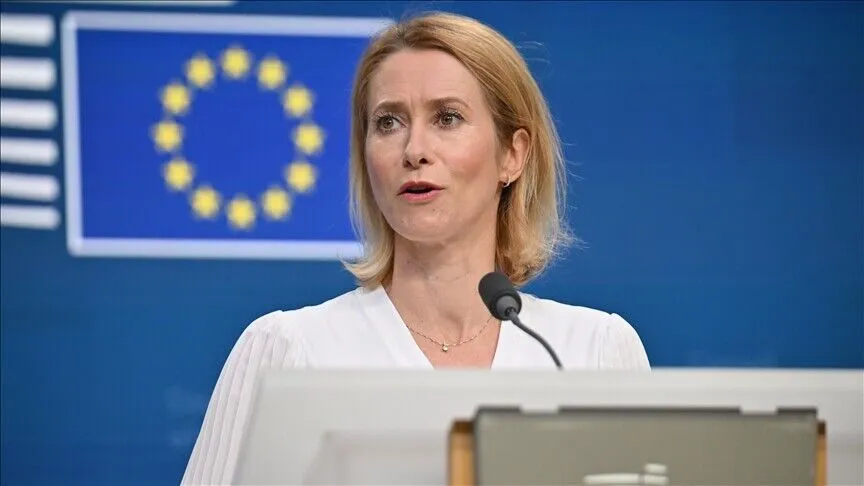
The warning came after European Commission President Ursula von der Leyen proposed significantly deepening ties with Canada during her annual State of the Union address to the European Parliament in Strasbourg, France. Canadian Prime Minister Mark Carney attended the speech.
Von der Leyen said the EU needed to “urgently reimagine” its international partnerships and proposed opening the door for Canada to become the bloc’s first associate member.
The precise legal and political meaning of associate membership has yet to be defined. The EU has no existing membership category of that kind, and questions remain about how such an arrangement would be structured.
Von der Leyen outlined a broader “Alliance for the Future” that could expand cooperation between Canada and the EU in areas including advanced manufacturing, technology, defense, energy, critical minerals, artificial intelligence, cybersecurity and economic security.
She emphasized that the proposed partnership was intended to strengthen Canada and Europe rather than target another country.
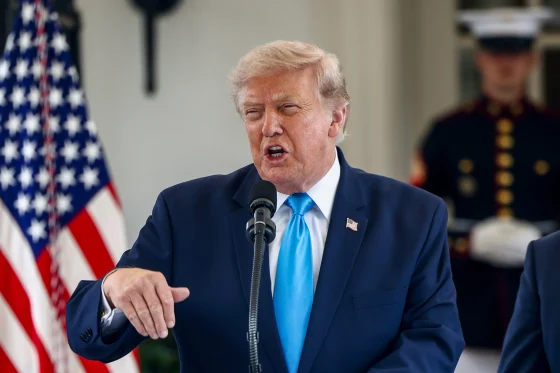
Trump responded by warning that Washington could impose new trade measures against the EU if he viewed the initiative as hostile.
“If it’s a good intention, that’s fine. If it’s a bad intention, we’ll put very heavy tariffs on Europe,” Trump told reporters while traveling to an event in North Carolina. He also raised the possibility of restricting trade with Europe in some sectors.
The proposal comes as both Canada and the European Union seek to broaden their economic and strategic partnerships amid trade tensions with the United States and wider geopolitical uncertainty.
Canada and the EU already have extensive economic ties through their Comprehensive Economic and Trade Agreement, known as CETA. Von der Leyen said trade in goods between the two sides has increased by about 75% since the agreement took effect.
Further negotiations will be needed to determine what associate membership would entail and whether the proposal can secure the political and legal support required within the European Union.