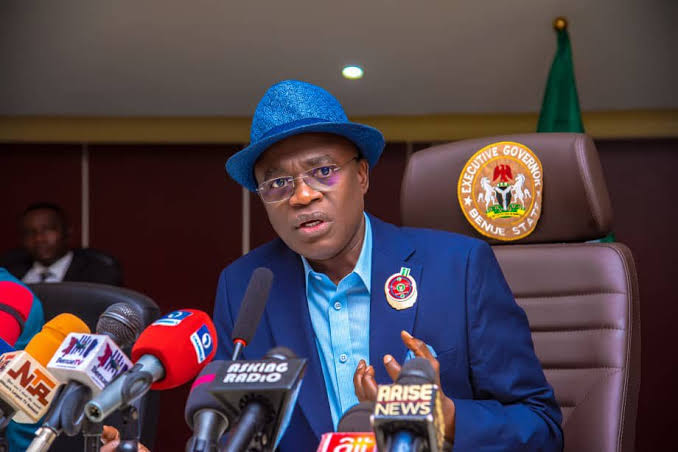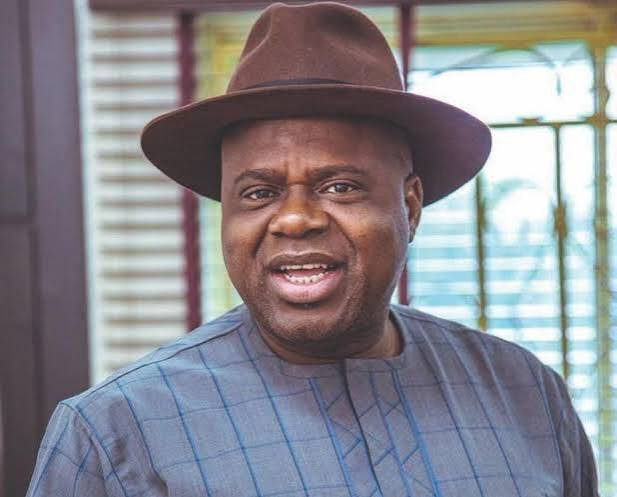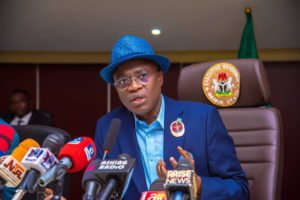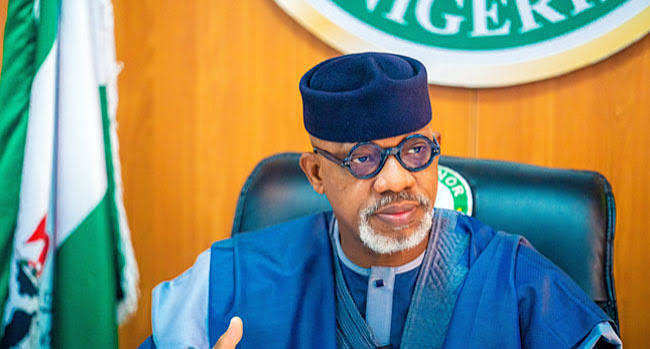
Ogun State Governor Dapo Abiodun has said Nigeria needs an additional 554,353 personnel to establish an effective state police system, calling for sustainable funding to ensure poorer states can maintain adequate security.
Abiodun, who chairs the Southern Governors’ Forum and the Nigeria Governors’ Forum Committee on State Police, spoke on Thursday at a colloquium marking the posthumous 70th birthday of former Ondo State Governor Oluwarotimi Akeredolu at the International Conference Centre, University of Ibadan.
Citing Nigeria Governors’ Forum data and the United Nations ratio of one police officer to 414 citizens, Abiodun said the country would need approximately 184,784 recruits annually over three years.
“The debate is no longer whether Nigeria needs State Police, but how swiftly and sustainably we establish it,” he said.
He argued that centralising policing responsibilities in Abuja was inadequate for addressing local security challenges.
“Security is intrinsically local. You cannot police a community whose language you do not speak, whose terrain you do not know. State policing is not a threat to unity; it is the bedrock of stability and prosperity,” he said.
Abiodun warned that disparities in states’ finances could undermine the reform, noting that Lagos, Rivers, the Federal Capital Territory, Ogun and Enugu accounted for 61.6 per cent of internally generated revenue. He added that 76 per cent of states generated below the national average of ₦13,600 per capita, while half earned less than ₦6,334 per capita.
“Insecurity in low-revenue states spills over nationally. Underfunding one state’s police becomes everyone’s crisis,” he said.
To address the imbalance, the governor proposed a constitutional State Police Take-Off Fund featuring equal-access grants, needs-based support and funding tied to established standards.
He said the proposed system would require transparent recruitment, professional training, adequate personnel welfare, modern technology, community participation and safeguards against political interference and human rights abuses.
“Political opponents, journalists, peaceful protesters and minority communities deserve equal protection,” Abiodun said, adding that disagreements with government must not diminish citizens’ rights.
He also advocated independent complaints mechanisms, legislative oversight, judicial remedies and clear rules governing private contributions to security funding.
Abiodun explained that state police would complement rather than replace the Nigeria Police Force. Under the proposed structure, federal police would focus on national security, inter-state crime and counter-terrorism, while state police would handle intra-state law enforcement, community intelligence and crime prevention.
“This is not an invitation to disintegration. Our framework incorporates federal oversight, constitutional safeguards, independent State Police Service Commissions, and intelligence-sharing protocols,” he said.
The governor linked improved security to economic growth, arguing that insecurity threatens investment, farming, infrastructure and livelihoods.
“We cannot build a $1 trillion economy on fragile security. FDI will not flow where investors fear. Agriculture cannot thrive when farmers cannot access farms. Infrastructure cannot yield returns when corridors are unsafe,” he said.
He credited Akeredolu with advancing decentralised policing through the establishment of the Western Nigeria Security Network, popularly known as Operation Amotekun, on January 9, 2020, in response to kidnapping, banditry and attacks on farmers and travellers.
“The greatest tribute is not to praise his past, but to complete his unfinished work,” Abiodun said.
He commended President Bola Tinubu for supporting state police reform through a constitutional framework and urged stakeholders to ensure its implementation.
“President Bola Ahmed Tinubu, GCFR, has shown the courage to champion and lead this conversation. We must now push this reform across the finish line,” he said.