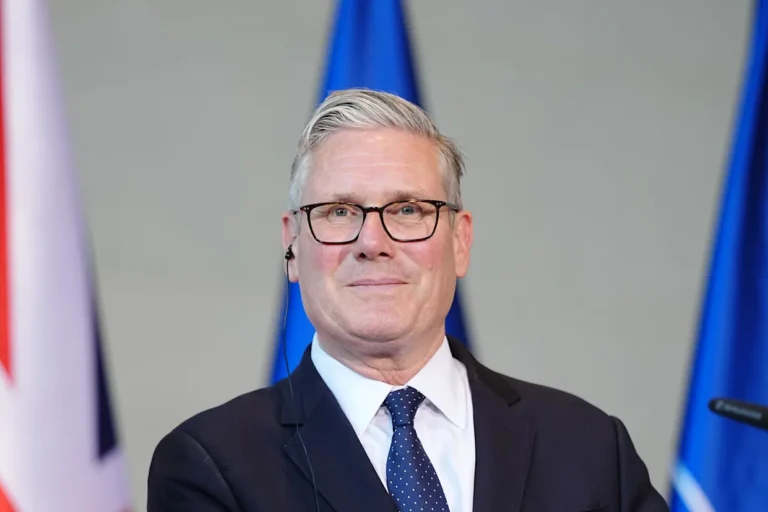
Prime Minister Keir Starmer is set to unveil a long-awaited defence investment plan that commits billions of pounds to modernising Britain’s armed forces, marking one of his final major policy announcements before stepping down from office.
In a speech scheduled for Tuesday, Starmer will present the Defence Investment Plan (DIP), describing it as a long-term strategy to strengthen the nation’s security and ensure the United Kingdom remains prepared for future threats.
According to the Ministry of Defence, the package includes £5 billion in funding to expand the military’s use of drones, autonomous systems and other advanced technologies.
The announcement follows weeks of negotiations between the Treasury and the Ministry of Defence over the scale of the investment. Earlier this month, the government approved an additional £13.5 billion for defence spending—well below the £28 billion originally sought by the ministry.
New Defence Secretary Dan Jarvis has continued to press for additional funding in recent weeks.
His predecessor, John Healey, resigned earlier this month in protest over what he viewed as insufficient financial support for the armed forces.
Opposition parties also criticized the plan, with the Conservative Party describing it as “too little, too late,” while the Liberal Democrats argued it failed to provide the level of investment Britain’s military requires.
Key elements of the Defence Investment Plan
The Ministry of Defence says the strategy will significantly expand investment in emerging military technologies over the next decade.
Major initiatives include:
- A £5 billion investment over four years to create what the government describes as the armed forces’ largest-ever drone capability and an integrated force built around autonomous technologies.
- Plans to transform the Royal Navy into a “hybrid navy” by combining traditional warships and aircraft with autonomous vessels and artificial intelligence, alongside funding for six new warships.
- A £50 million package for the British Army to expand its drone fleet and develop uncrewed ground vehicles.
- Development of autonomous fighter aircraft by the Royal Air Force, as well as the introduction of an uncrewed electronic warfare drone system scheduled to enter service in 2026.
- Continued investment in what the government says will become Europe’s largest drone testing centre in Swindon, together with a dedicated task force focused on advancing autonomous defence technologies.
Despite his imminent departure from Downing Street, Starmer has pressed ahead with the plan after months of difficult negotiations across Whitehall, during which government departments were asked to identify spending cuts to help finance the investment.
The funding dispute contributed to the resignation of two defence ministers, both of whom argued that earlier versions of the package failed to provide adequate resources for the military.
The Defence Investment Plan also outlines how new equipment, infrastructure and modernization projects will be financed over the next ten years.
Originally expected last autumn, the strategy is now being released ahead of the upcoming NATO leaders’ summit in Turkey on July 7.
The plan builds on the Strategic Defence Review published in June 2025, which called for a shift toward greater “warfighting readiness” backed by increased defence spending.
Richard Barrons, one of the authors of the Strategic Defence Review, said the lengthy delay reflected the difficulty of negotiations between the Ministry of Defence and the Treasury.
While he described publication of the Defence Investment Plan as an important step forward, Barrons cautioned that it alone would not fully address the pace and scale of investment needed to strengthen Britain’s long-term defence capabilities.