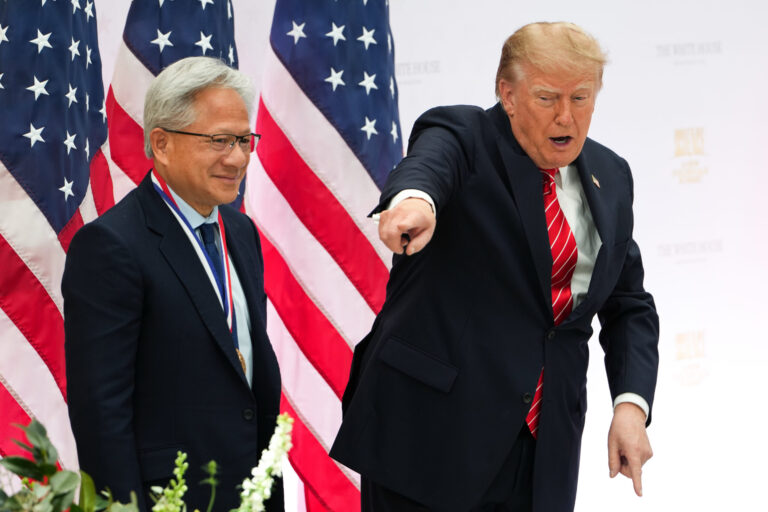
The controversy follows Nvidia’s decision on Monday, November 23, to reinstate Huang less than two weeks after he resigned amid allegations involving extramarital affairs, including a relationship with a woman suspected of having connections to Chinese intelligence.
Nebraska Republican Senator Pete Ricketts strongly condemned the decision, arguing that Huang’s conduct raised serious questions about his suitability to lead one of the world’s most influential artificial intelligence companies.
In a statement posted on social media platform X, Ricketts accused Huang of having multiple affairs, including with subordinates and an alleged Chinese intelligence operative.
The senator also questioned Huang’s credibility, referring to earlier concerns about his candor during Nvidia’s internal investigation.
Drawing on his experience serving on the board of a publicly traded company, Ricketts argued that Huang’s reported conduct did not justify his reinstatement.
Ricketts emphasized that Nvidia’s decision to restore Huang to his leadership position does not eliminate the company’s obligation to address outstanding national security concerns.
He called for answers regarding the handling of advanced semiconductor exports and reports of Nvidia chips potentially reaching China through unauthorized channels.
The senator also stressed that Huang must still appear before Congress to answer questions about his conduct and the company’s business practices.
The Senate Banking Committee has scheduled a public hearing involving Huang for December 3, while a closed-door congressional interview is expected to take place on December 1.
Other Republican lawmakers have also questioned the decision, particularly the role played by senior officials in President Donald Trump’s administration.
Utah Senator John Curtis demanded clarification about which government officials advised Nvidia’s board and what evidence supported its conclusion that reinstating Huang would not threaten national security.
The controversy intensified after President Trump publicly acknowledged encouraging Nvidia’s board to bring Huang back.
Speaking during an interview with CNBC, Trump said he had communicated with the company’s directors and persuaded them to reinstate the executive.
The president defended Huang and expressed confidence in his leadership, describing him as an important figure in America’s technological development.
However, Trump’s involvement has raised concerns among lawmakers about whether political influence played a role in the company’s internal decision-making.
Nvidia announced that its board of directors had unanimously approved Huang’s return following discussions and a review of the circumstances surrounding his resignation.
The company said the board was satisfied with Huang’s candor and ability to lead the organization.
Nvidia also confirmed that it received information from senior US government officials before concluding that Huang’s reinstatement presented no national security risk.
However, the company acknowledged that its independent investigation into the allegations would continue.
The chipmaker has also established a national security and export control oversight committee as part of efforts to strengthen compliance and address concerns involving sensitive technologies.
The controversy centers partly on reports that Huang had a relationship with a woman suspected of acting as a Chinese intelligence asset.
The woman was reportedly employed by Megaspeed, a technology company that US intelligence officials have examined over concerns about possible unauthorized transfers of advanced Nvidia chips to China.
Megaspeed has denied allegations of improper chip diversion.
The allegations have intensified scrutiny of Nvidia because of its dominant position in manufacturing advanced semiconductors used in artificial intelligence systems.
However, Huang has not been charged with any crime, and the espionage allegations have not been established in court.
The reinstatement has also drawn criticism from Democratic lawmakers, who are demanding greater oversight of Nvidia’s export control practices and the Trump administration’s involvement in the decision.
Lawmakers from both parties are now seeking answers about potential national security vulnerabilities and whether existing restrictions are sufficient to prevent advanced American technology from reaching foreign adversaries.
For Nvidia, Huang’s return restores its longtime leader but leaves unresolved questions about corporate governance, accountability and national security.
As congressional hearings approach, attention will focus on the information provided to Nvidia’s board, the extent of government involvement and the findings of the ongoing investigations.
The controversy highlights the growing intersection of corporate leadership, artificial intelligence development and national security as Washington seeks to protect American technological advantages amid intensifying competition with China.