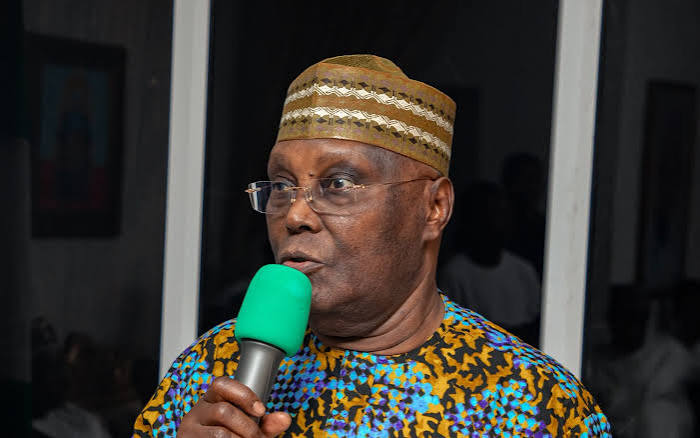
The Presidency has challenged former Vice-President and African Democratic Congress (ADC) presidential candidate, Atiku Abubakar, over his pledge to reopen Nigeria’s land borders if elected president in 2027.
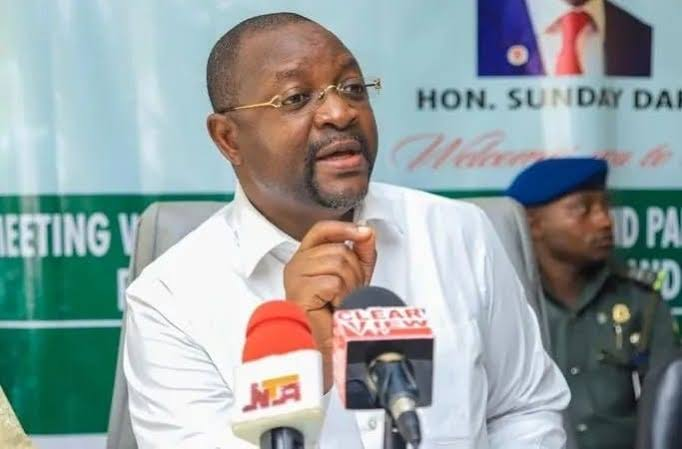
In a statement issued on Friday, Sunday Dare, Special Adviser to President Bola Ahmed Tinubu on Media and Public Communication, said the Federal Government had already reopened most of the country’s land borders on March 14, 2024, and had not reversed the decision.
The response followed Atiku’s recent declaration that he would reopen the borders to revive legitimate trans-border trade and support businesses if elected president.
Atiku had also pledged to develop ports in southern Nigeria to create a more balanced system for importing and transporting goods across the country.
Dare questioned which borders Atiku intended to reopen, saying the government had continued to facilitate legitimate cross-border movement while maintaining necessary security controls.
“On February 14, 2026, President Tinubu opened the Kamba borders in Kebbi state, with attendant economic and diplomatic gains,” he said.
The presidential aide said that if Atiku was referring to relaxing existing border controls, he should identify the specific measures he intended to remove and explain how his administration would address the resulting security risks.
“If he means he would relax existing border controls, then Nigerians deserve to know precisely which controls he intends to remove, why he considers their removal necessary, and what safeguards his administration would deploy against terrorism, arms trafficking, smuggling, human trafficking, and other forms of transnational organised crime,” Dare said.
He stressed that facilitating legitimate cross-border movement and trade must be balanced with national security.
“An open border is not an uncontrolled border. Modern border management is designed to facilitate legitimate movement, trade and economic interaction while preventing criminals and terrorist organisations from exploiting the same channels,” he said.
According to Dare, effective border management requires immigration control, customs administration, intelligence-sharing, surveillance, technology and coordinated security operations.
He also linked border management to Nigeria’s security challenges in the Sahel and Lake Chad Basin, particularly along the country’s borders with Niger, Chad and Cameroon.
Dare warned that weak border controls could be exploited by terrorist and criminal networks operating across national boundaries.
The presidential aide cited the Global Terrorism Index 2026, which he said reported that about 41 percent of terrorist attacks occur within 50 kilometres of an international border, while about 64 percent occur within 100 kilometres.
“The implications for Nigeria are obvious. As domestic insurgencies evolve into increasingly networked and transnational terrorist threats, effective border management becomes an indispensable component of national security,” Dare said.
He argued that Atiku, having previously served as vice-president, should understand the distinction between promoting legitimate commerce and weakening border security.
Dare challenged the ADC presidential candidate to explain how he would improve border surveillance, intelligence-sharing, customs and immigration operations, technology deployment and regional security cooperation if elected.
He said Nigerians deserved a policy debate based on facts and detailed proposals rather than campaign slogans.
“While political contestation is legitimate in a democracy, statements about national security and the Nigerian economy should be grounded in facts, institutional understanding, and a credible alternative policy agenda,” he said.
Dare added that the Tinubu administration remained open to scrutiny but maintained that Nigeria’s borders must facilitate legitimate commerce while remaining secure against terrorists and criminal networks.