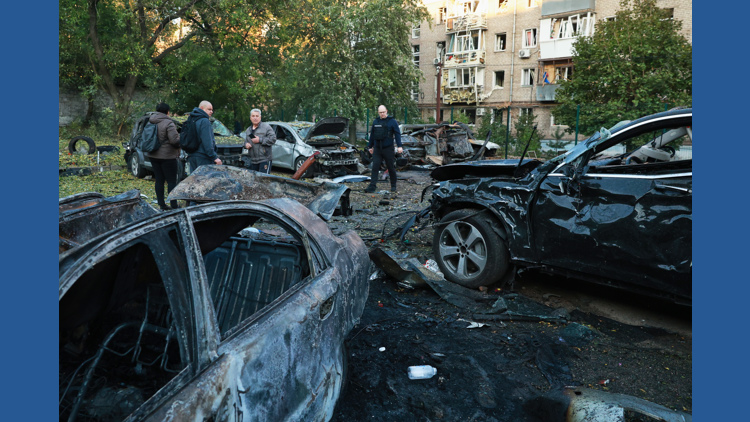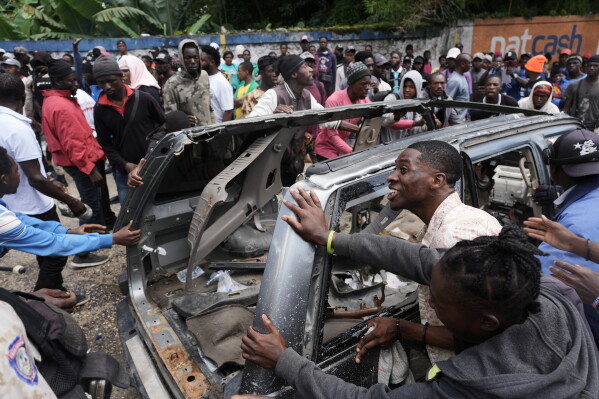
Haiti’s National Police are facing growing criticism over their response to a deadly gang assault on Kenscoff, where 47 people were killed, more than 50 others kidnapped and thousands forced from their homes.
Police spokesperson Garry Desrosiers faced questions from journalists Thursday over why security forces failed to prevent the attack on the once relatively peaceful farming community in the hills near Port-au-Prince.
Asked what authorities were doing to secure the release of those abducted, Desrosiers said operational details could not be disclosed publicly.
“We cannot talk about any plans,” he said.
The hostage crisis has become particularly sensitive after a gang leader threatened to execute those being held if police kill gang members during operations to regain control of Kenscoff.
Desrosiers offered condolences to victims and their families following the violence, which began late Sunday.
The attack has displaced more than 2,600 people, according to the United Nations’ International Organization for Migration. Desrosiers said police were working to help residents return to their homes but provided few details about those efforts.
Questions have also emerged over whether authorities received intelligence warning of the attack. Desrosiers said police had been gathering intelligence but declined to elaborate.
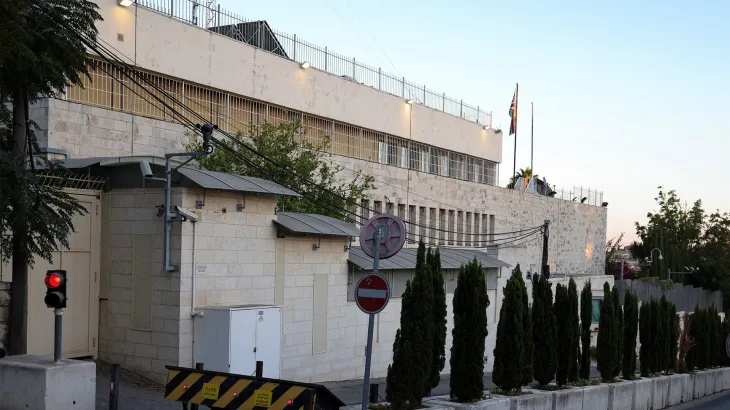
He also confirmed that authorities were aware of threats from a gang leader to attack Tabarre, a neighborhood of Port-au-Prince that is home to the U.S. Embassy.
“I’m not in a position to give you detailed information,” Desrosiers said.
Haiti National Police chief Vladimir Paraison did not attend Thursday’s news conference. He has defended security measures previously implemented in Kenscoff and said an investigation was underway to determine whether negligence or complicity contributed to the latest attack.
Before Sunday’s violence, security operations had helped reduce violence in Kenscoff by 66% between January and August this year, according to data from the nonprofit Armed Conflict Location & Event Data.
The renewed violence comes as Haiti continues to confront widespread gang activity, displacement and political instability.
Meanwhile, the United States deported dozens more people to Haiti on Thursday despite the deteriorating security situation.
Among them was professional boxer Jay Dabelus, who said he was born in the Bahamas and had little connection to Haiti.
“I don’t know anything about Haiti,” Dabelus said. “I wasn’t born here.”
Dabelus said he left the Bahamas at about six years old and had lived in the United States for more than two decades before being detained and deported.