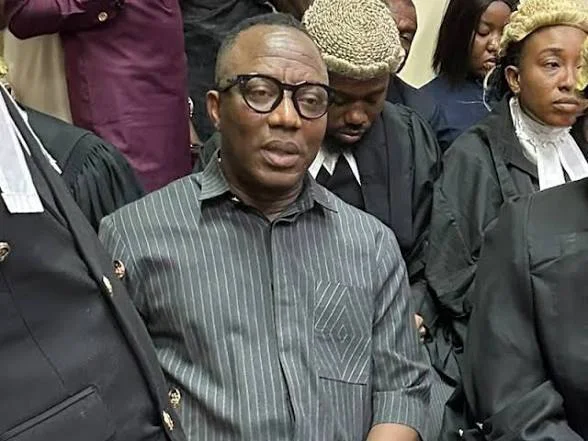
A Federal High Court in Abuja has granted activist and former presidential candidate, Omoyele Sowore, bail in the sum of ₦200 million in his ongoing cybercrime trial.
Delivering the ruling on Tuesday, Justice Mohammed Umar admitted the publisher of Sahara Reporters to bail with two sureties.
The court ordered that one surety must be a traditional ruler from Sowore’s community, while the second must own landed property in Abuja. Both sureties are to be verified by the prosecution.
Justice Umar further directed Sowore to deposit his international passport with the Deputy Chief Registrar of the court before his release to his legal team.
The case was adjourned until July 6 for the commencement of defence.
The Department of State Services (DSS) is prosecuting Sowore over alleged cybercrime offences linked to social media posts made last year in which he allegedly referred to President Bola Ahmed Tinubu as a criminal.
Reacting to the ruling, the Take It Back Movement condemned the bail conditions, describing them as “punitive, oppressive and excessive.”
In a statement signed by its National Coordinator, Juwon Sanyaolu, the group said the conditions amounted to punishment before trial and were intended to intimidate the activist.
It faulted the requirement for two sureties—including a traditional ruler from Sowore’s community and an Abuja property owner—as well as the order for him to surrender his international passport, arguing that they have no reasonable link to ensuring his appearance in court.
According to the group, the conditions reinforce concerns that the prosecution is politically motivated rather than driven by justice. It also noted that Sowore had consistently attended previous court sittings, insisting that the revocation of his earlier bail, his remand at the Kuje Correctional Centre, and the new bail terms raise concerns about the use of state institutions to suppress dissent.
The movement urged the court to review the conditions in line with constitutional principles of fairness, reasonableness, and the presumption of innocence.
“No amount of intimidation, judicial harassment or state-sponsored persecution will extinguish the Nigerian people’s legitimate demand for freedom, justice, accountability and genuine democracy,” the statement said.