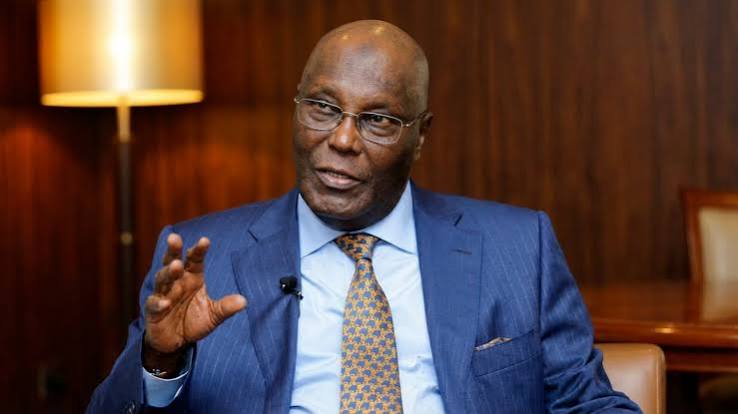
Former Vice President Atiku Abubakar has accused the Bola Tinubu administration of fiscal indiscipline, alleging that its growing domestic borrowing is restricting access to credit for Nigerian businesses and worsening the cost-of-living crisis.
In a statement issued by his Senior Special Assistant on Public Communication, Phrank Shaibu, Atiku said it was alarming that the Federal Government continued to borrow heavily despite crude oil prices rising substantially above the benchmark used for the 2026 budget.
“At the beginning of this fiscal year, the Federal Government budgeted on an oil benchmark of $64.85 per barrel. Today, crude oil prices have risen substantially above that benchmark.
“Yet, instead of this windfall translating into lower borrowing, stronger businesses and relief for Nigerians, the Federal Government went into the domestic market and borrowed a staggering ₦24.7 trillion between January and August 2026 90.5 per cent more than the ₦12.98 trillion borrowed in the corresponding period of 2025,” he said.
Atiku described the development as “dangerous fiscal indiscipline”, arguing that the government had continued borrowing despite the removal of fuel subsidy, naira floatation and increased nominal government revenues.
“This is not fiscal management. This is a government borrowing like drunken sailors in the middle of a revenue windfall,” he said.
He questioned how the additional revenues generated under the Tinubu administration were being utilised, asking, “where is the money going?”
According to Atiku, the government’s increasing demand for domestic credit is also crowding out private businesses.
He cited figures showing that credit to government grew by 43 per cent, compared with 9.6 per cent growth in credit to the private sector. This, he argued, meant government borrowing was expanding about 4.5 times faster than lending to businesses.
The former vice president said the trend was undermining the private sector, which he described as a key measure of the success of any economic reform programme.
“When banks can lend to government at attractive, risk-free rates, why would they lend cheaply to the manufacturer in Aba, the furniture maker in Kaduna, the agro-processor in Kano or the young entrepreneur in Lagos?” he asked.
He said the resulting pressure was translating into higher borrowing costs, delayed business expansion, struggling factories, job losses and increased production expenses.
Atiku accused the government of “borrowing away the future of Nigerian businesses” and pledged to restore greater fiscal discipline if elected president in 2027.
He said his administration would cut waste, prioritise productive expenditure and reduce the government’s reliance on the domestic credit market.
“Nigeria cannot achieve prosperity by allowing government to swallow the credit that should finance production. An economy grows when businesses borrow to build factories, farmers borrow to expand production and entrepreneurs access affordable capital to create jobs not when government becomes the biggest and most voracious customer in the banking hall,” he said.
Atiku also demanded greater transparency over savings from fuel subsidy removal, additional government revenues and increased crude oil earnings.
“Government must make room for the private sector to breathe, invest, produce and employ. After three years of sacrifice, Nigerians deserve to see what happened to the subsidy savings, the additional revenues and the crude-oil windfall.
“You cannot collect more, earn more and still borrow more — while asking hungry Nigerians to sacrifice more. Something is fundamentally wrong with that equation,” he said.