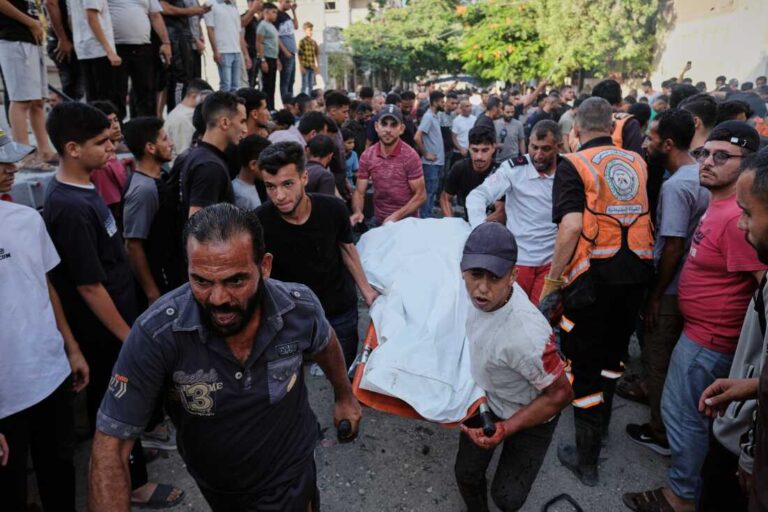
Israel has raised what it describes as “serious security concerns” with the White House over the proposed U.S.-brokered agreement requiring Hamas to disarm, as renewed Israeli airstrikes in Gaza killed at least 17 people, including children, according to local officials.
The comments from Doron Spielman, spokesperson for Prime Minister Benjamin Netanyahu’s office, were among Israel’s first public remarks since U.S. President Donald Trump announced the latest phase of the ceasefire agreement.
Speaking to The Associated Press, Spielman said Israeli intelligence believes Hamas remains focused on rebuilding its military capabilities rather than genuinely abandoning its armed operations.
He stressed that Israel would not withdraw its forces from Gaza—where Israeli troops currently control more than 60% of the territory—until Hamas has fully surrendered its weapons.
“Our assessment is that if we redeploy before Hamas is truly disarmed, it will quickly expand its presence throughout Gaza, rebuild its terrorist infrastructure, once again threaten Israeli communities, and seek to carry out another Oct. 7-style attack,” Spielman said, referring to the Hamas-led assault on Israel in 2023 that triggered the war.
“Disarming means physically giving up the weapons. Nothing less,” he added.
His remarks came days after Hamas announced it would begin disarming under the terms of a U.S.-brokered ceasefire agreement signed nine months ago, a development widely viewed as a potential breakthrough toward ending the conflict.
Despite the announcement, significant obstacles remain before the agreement can be fully implemented.
Trump’s 20-point peace initiative calls for Hamas to surrender its weapons, dismantle its military infrastructure—including its extensive tunnel network—and transfer authority to a new Palestinian technocratic administration.
In return, Israeli forces would withdraw from Gaza in phases, humanitarian assistance would expand, an international stabilization force would deploy, and reconstruction of the territory would begin.
The question of Hamas’ disarmament has remained one of the most contentious issues in negotiations, delaying progress for months.
When announcing the agreement on Thursday, Trump said the plan would be implemented through “carefully structured phases.”
According to a copy of the agreement obtained and verified by The Associated Press, weapons held by Hamas-controlled police forces would be transferred to the U.S.-backed National Committee for the Administration of Gaza once the governing body arrives in the territory.
The agreement also outlines a phased process for decommissioning heavy weapons, dismantling military production facilities and destroying tunnel networks after the Palestinian committee assumes its role and international security forces are deployed.
Those measures would be directly tied to a gradual Israeli military withdrawal from Gaza.
Even as diplomatic efforts continue, fighting has persisted across the territory, underscoring the fragile nature of the ceasefire process and the significant challenges that remain before a lasting peace can be achieved.