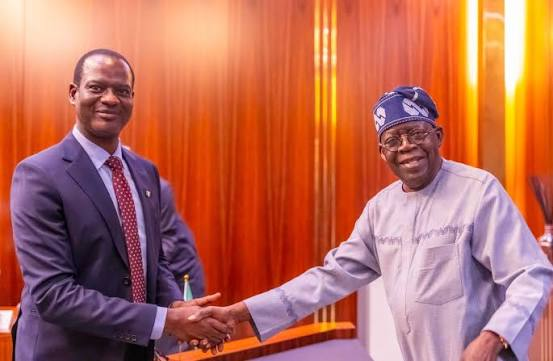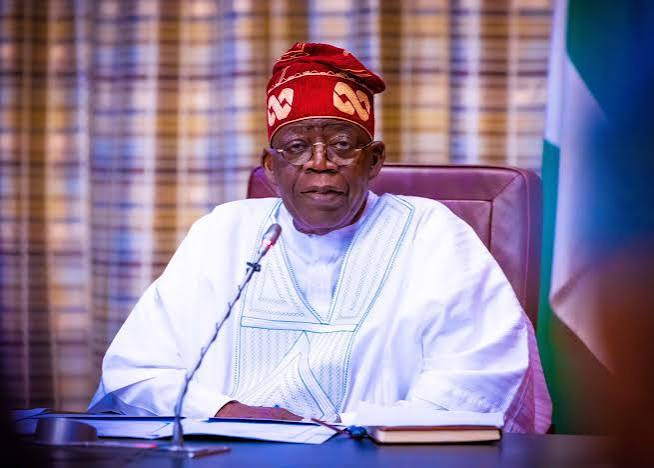
President Bola Tinubu on Thursday unveiled five major social and development programmes valued at approximately $3.05 billion, aimed at reducing poverty, strengthening community resilience and expanding investment in human capital across Nigeria.
Represented by the Minister of Finance and Coordinating Minister of the Economy, Mr. Taiwo Oyedele, the President launched the initiatives at the Presidential Villa in Abuja.
The programmes include the Nigeria Community Action for Resilience and Economic Stimulus Additional Financing (NG-CARES AF), Solutions for Internally Displaced and Host Communities (SOLID), and the Human Capital Opportunities for Prosperity and Equity (HOPE) package, comprising HOPE-GOV, HOPE-PHC and HOPE-EDU.
“This is not just a set of programmes; these are promises kept.
“Today, we act on our pledge by protecting the vulnerable, empowering communities and building the human capital that will carry Nigeria forward,” Tinubu said.
According to the President, the initiatives form a coordinated national strategy designed to translate recent macroeconomic gains into improved living standards through investments in healthcare, education, social protection, livelihoods and support for internally displaced persons and their host communities.
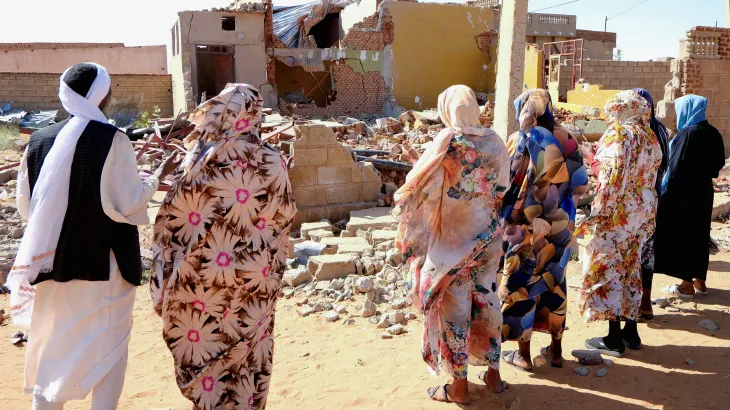
Tinubu disclosed that NG-CARES would receive about $1.25 billion in additional World Bank financing to support smallholder farmers and small businesses, while SOLID would provide $300 million to assist internally displaced persons and host communities.
He added that the $1.5 billion HOPE package would strengthen primary healthcare, foundational education, teacher support and governance reforms within the public education system.
“These five programmes are one coordinated national strategy for poverty reduction, human capital development and community resilience,” he said.
The President also said his administration’s economic reforms had created the foundation for inclusive growth, pointing to rising foreign reserves, declining inflation and improved economic performance.
“These are not abstract figures; they are the foundation for the next phase of our national development,” he said, adding that expanded cash transfer programmes have reached 15 million vulnerable households.
Tinubu urged federal, state and local governments, development partners and implementing agencies to ensure effective execution of the programmes, stressing that accountability and efficient delivery would determine their success.
Minister of Budget and Economic Planning, Atiku Bagudu, described the initiatives as a whole-of-government response to poverty, the rising cost of living and human capital challenges.
“These programmes represent another milestone in translating the Renewed Hope Agenda into concrete interventions that directly touch the lives of poor and vulnerable Nigerians,” Bagudu said.
The Coordinating Minister of Health and Social Welfare, Prof. Ali Pate, said the $570 million HOPE-PHC programme would improve primary healthcare services for about 40 million Nigerians, particularly women, children and adolescents.
According to him, the initiative will reduce maternal and under-five mortality, strengthen primary healthcare facilities and improve service delivery through performance-based financing.
Minister of Education, Dr. Tunji Alausa, said the $562 million HOPE-EDU programme would benefit nearly 30 million pupils, support 500,000 teachers and strengthen 65,000 public schools nationwide.
World Bank Country Director, Matthew Verghis, said the programmes reaffirm that Nigeria’s greatest asset is its people, while reiterating the bank’s commitment to supporting reforms in education, healthcare and social protection.
Also speaking, Minister of Humanitarian Affairs and Poverty Reduction, Bernard Doro, said the interventions would help vulnerable and displaced Nigerians transition from emergency relief to resilience and sustainable livelihoods.
The Nigeria Governors’ Forum and the National Assembly also pledged their support for the implementation of the programmes.
The launch was attended by governors, ministers, development partners, senior government officials and other stakeholders.