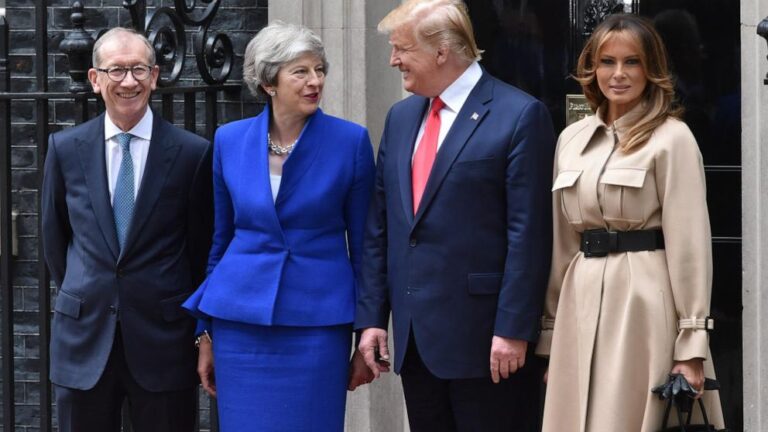
Former British Prime Minister Theresa May has urged Britain’s next leader to focus on the enduring strategic relationship with the United States rather than allowing personal or political differences with President Donald Trump to shape bilateral ties.
Her comments come as the United Kingdom prepares for another change in leadership, with the Labour Party expected to elevate Andy Burnham to the office of prime minister later this month.
Burnham would become Britain’s seventh prime minister in just 10 years, underscoring the prolonged political instability that has followed the country’s 2016 Brexit referendum.
He is set to succeed Prime Minister Keir Starmer, who announced last month that he would step down after losing support among Labour lawmakers following disappointing local election results and growing dissatisfaction within his party.
Although Starmer led Labour to a landslide victory in the 2024 general election, his political standing declined sharply during his time in office.
As prime minister, Burnham will inherit a range of domestic and international challenges, including managing Britain’s long-standing “special relationship” with the United States—a partnership that has faced periodic strains during Trump’s two terms in office.
Trump has already described Burnham, the former mayor of Greater Manchester, as “extremely liberal.”
During Starmer’s premiership, Trump frequently criticized the British government’s positions on energy, immigration, crime and foreign policy.
Speaking to ABC News on the sidelines of a conference hosted by Chatham House in London, May argued that the strength of U.S.-UK relations extends far beyond the personal relationship between national leaders.
“Keir Starmer, actually, on the foreign policy field, by and large, played a good hand,” May said, praising the outgoing prime minister’s management of transatlantic relations, including hosting Trump’s state visit to Britain in 2025.
Reflecting on the so-called special relationship, May emphasized its institutional foundations.
“We talk about it perhaps slightly more than the U.S. does,” she said. “But that relationship is built on a whole set of different levels of relationships. So, it’s not just about the prime minister and the president. It’s also about our security relationships, our defense relationships… It’s not just about the two people at the top.”
May suggested those broader political, military and intelligence ties should remain the cornerstone of relations between London and Washington regardless of changes in political leadership on either side of the Atlantic.