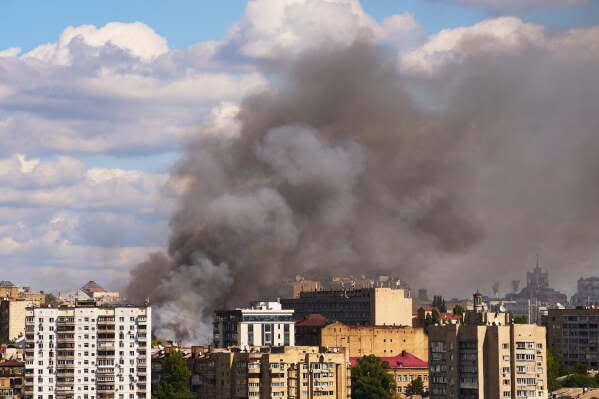
Iran launched retaliatory strikes against U.S. military installations across the Gulf over the weekend after a fresh wave of American attacks, further escalating tensions and casting doubt on the future of a fragile peace agreement centered on the Strait of Hormuz.
The latest exchange has intensified concerns over the interim accord signed last month, which was intended to reopen the strategic waterway and lay the groundwork for ending the conflict through a 60-day diplomatic process.
According to Iranian state media, Tehran targeted U.S. military bases in Kuwait, Bahrain, Jordan, Oman and Qatar in response to renewed U.S. airstrikes.
Authorities in Bahrain activated air raid sirens for the third time on Monday, according to Reuters, citing the country’s Interior Ministry.
Iran’s Islamic Revolutionary Guard Corps (IRGC) said it had struck U.S. military facilities in Bahrain as well as radar installations in Oman during the latest round of attacks.
Meanwhile, United States Central Command (CENTCOM) said American forces carried out coordinated strikes against dozens of Iranian military targets aimed at reducing Tehran’s ability to threaten commercial shipping through the Strait of Hormuz.
According to CENTCOM, the operation targeted Iranian air defense systems, coastal radar installations, missile and drone launch capabilities, and fast attack boats.
The strikes involved fighter aircraft, naval assets, one-way attack aerial drones and, for the first time, one-way attack sea drones, the command said in a statement posted on X.
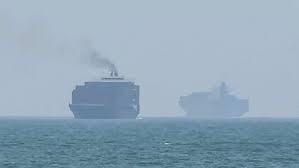
Despite the military escalation, uncertainty remains over the status of commercial navigation through the Strait of Hormuz.
Washington and Tehran have issued conflicting accounts regarding whether the vital shipping lane remains fully open, adding to concerns over global energy supplies and maritime security.
The Strait of Hormuz serves as one of the world’s most important energy corridors, carrying a substantial share of global oil and liquefied natural gas exports, making any disruption a major concern for international markets and regional stability.