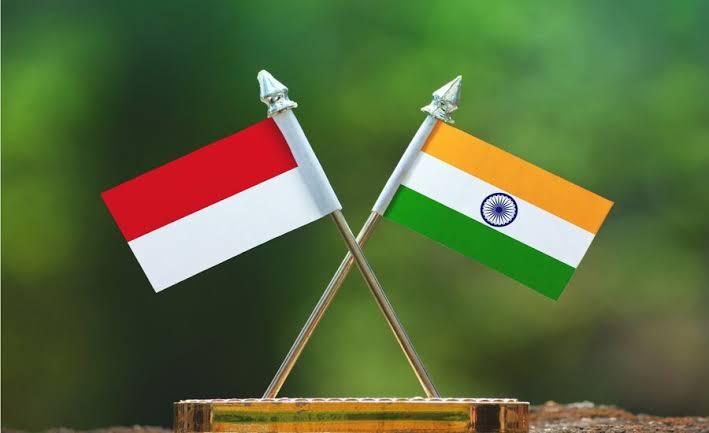
India is expected to strengthen its defense partnership with Indonesia through a major missile export agreement as Prime Minister Narendra Modi began a two-day visit to Jakarta on Tuesday.
An Indian government official said New Delhi will supply Indonesia with BrahMos supersonic cruise missiles and Astra air-to-air missiles, in a deal previously estimated by Indian sources to be worth about $630 million.
If finalized, Indonesia would become the third country to purchase the BrahMos missile system, produced by BrahMos Aerospace.
The agreement would represent another milestone in India’s expanding defense exports while strengthening strategic ties with Southeast Asia’s largest economy amid increasing geopolitical competition in the Indo-Pacific.
Jointly developed by India and Russia, the BrahMos missile is among the world’s fastest operational supersonic cruise missiles and can be launched from land, naval and air platforms.
The Astra missile, designed for beyond-visual-range aerial combat, can be integrated with the Indonesian Air Force’s Russian-made Sukhoi fighter aircraft.
Neither the Indian government nor the Indonesian Embassy in New Delhi immediately commented on the reported agreement.
Indonesia announced in March that it had entered into an agreement with India to procure the BrahMos missile system.
At the time, Indonesia’s Defense Ministry said negotiations were in an advanced stage and estimated the value of the deal at between $200 million and $350 million.
Interest in the BrahMos system has grown significantly since India employed the missile in combat for the first time during its four-day conflict with Pakistan last year.
India has already signed export agreements for the BrahMos missile with Vietnam and the Philippines, while several other countries—including the United Arab Emirates—have reportedly expressed interest in acquiring the weapon.
During his visit, Modi is expected to hold talks with Indonesian President Prabowo Subianto on a range of strategic issues, including maritime security, defense industrial cooperation, regional connectivity and broader coordination across the Indo-Pacific.
The anticipated agreement reflects India’s broader push to expand its defense manufacturing sector and deepen security partnerships with regional allies amid evolving geopolitical dynamics in Asia.