The head of the United Nations’ nuclear watchdog said Wednesday that inspectors will eventually gain access to Iran’s uranium enrichment facilities, underscoring a key element of the interim agreement reached between the United States and Iran to end months of conflict and advance broader nuclear negotiations.
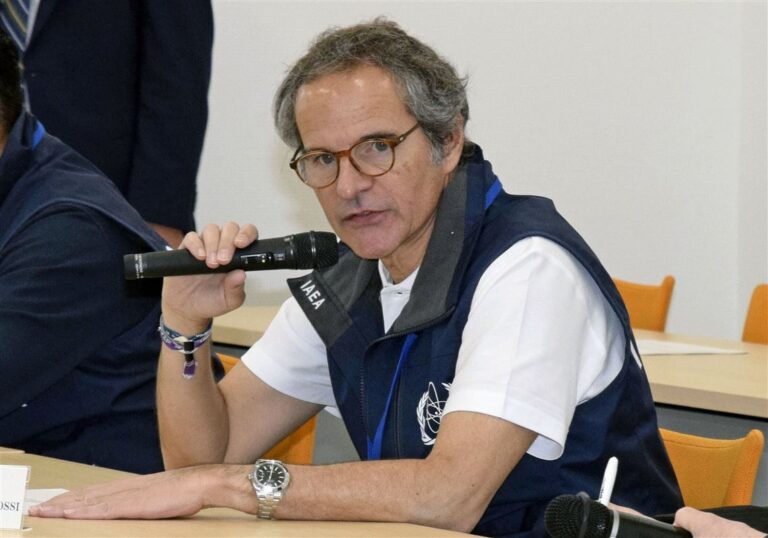
Rafael Mariano Grossi, who leads the International Atomic Energy Agency (IAEA), said the agency is expected to oversee Iran’s nuclear activities as outlined in the memorandum of understanding signed by both countries.
His remarks represent the clearest indication yet that international inspectors will play a central role in monitoring Iran’s compliance with the agreement.
Since Israel’s 12-day conflict with Iran in 2025, Tehran has restricted IAEA access to key uranium enrichment facilities where the country is believed to hold significant quantities of highly enriched uranium.
Western officials and nonproliferation experts have long expressed concern that Iran’s stockpile could potentially provide the material needed for multiple nuclear weapons if the country chose to pursue that path. Iran, however, continues to insist that its nuclear program is exclusively peaceful.
Speaking to reporters during a visit to the tsunami-affected Fukushima Daiichi nuclear facility in Japan, Grossi emphasized that the agreement explicitly requires international oversight.
“I can understand political statements, they are part of reality,” Grossi said. “But the fundamental point is that there is a memorandum of understanding signed by both presidents.”
According to Grossi, the accord clearly states that nuclear activities involving Iranian nuclear materials and facilities will be subject to IAEA supervision.
“To do that, we will have to inspect,” he said. “Whether that happens in a few days or a few weeks is not essential. What matters is that it will happen.”
The inspections are viewed as a critical component of the agreement, which calls for Iran to reduce the concentration of its enriched uranium stockpile through a process known as downblending.
The comments came amid conflicting signals from Washington and Tehran regarding future inspections.
Iranian Foreign Ministry spokesman Esmail Baghaei said Tuesday that inspectors were not currently scheduled to visit nuclear sites damaged during U.S. strikes last year, contradicting earlier remarks from U.S. Vice President JD Vance.
While the IAEA has continued to access some Iranian facilities, including the Bushehr Nuclear Power Plant, inspectors have not yet been permitted to return to key enrichment sites.
Without that access, the agency says it cannot independently verify the status of Iran’s uranium stockpile or inspect the centrifuge systems used in the enrichment process.
Both Iran and the IAEA maintain that enrichment activities have been halted, but some experts remain concerned that nuclear materials could potentially be relocated to undeclared locations beyond international monitoring.
Last week’s agreement between Washington and Tehran provides sanctions relief for Iran in exchange for nuclear concessions and establishes a 60-day timeline for negotiating a broader, long-term settlement.
However, the ceasefire framework has already faced challenges, including tensions surrounding the Strait of Hormuz and renewed clashes involving Israel and the Iran-backed militant group Hezbollah in Lebanon.
Although violence flared again in Lebanon on Tuesday, the situation did not escalate into a wider conflict, allowing diplomatic efforts to continue.
The coming weeks are expected to be crucial as inspectors prepare for potential site visits and negotiators work to transform the interim accord into a comprehensive agreement addressing Iran’s nuclear future.