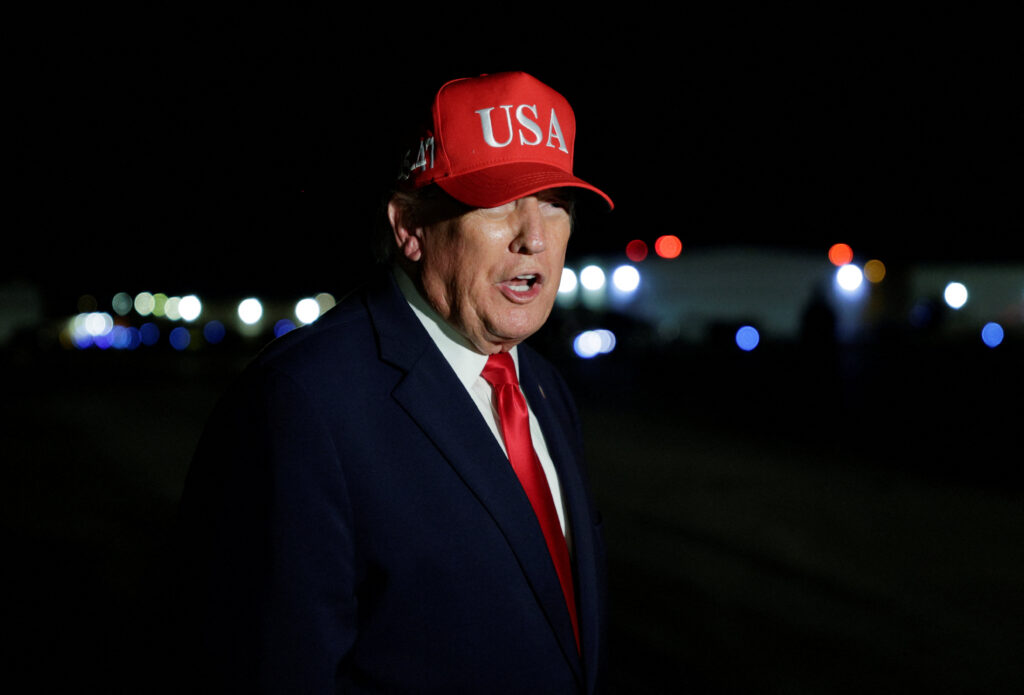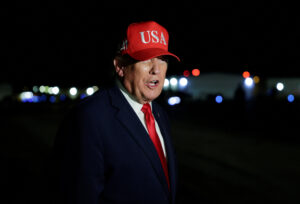
Republicans say President Donald Trump sometimes pursues policies they oppose — but they increasingly insist the problem isn’t Trump himself, it’s the advice he receives.
GOP lawmakers have long been reluctant to criticize Trump directly. But in recent months, many have adopted a familiar strategy: distancing themselves from controversial Trump proposals by arguing he is being misled by poor advisers or isn’t serious about his most provocative statements. The approach allows Republicans to disagree with specific policies while avoiding direct confrontation with the president.
Sen. Thom Tillis of North Carolina has become one of the most frequent users of that tactic. Though he is among the more independent voices in the party and is not seeking re-election, Tillis often couches his disagreements by blaming Trump’s inner circle rather than Trump himself.
He has said the president received “bad advice” on issues including proposals to take over Greenland, attacks on Federal Reserve Chair Jerome Powell, criticism of Sen. Chuck Grassley over judicial confirmations, and pardons for Jan. 6 rioters.
“The president has been given bad advice, and whoever gave him that advice should probably not be in that role,” Tillis said recently, referring to Trump’s comments about Greenland.
The notion of the U.S. acquiring Greenland — potentially against the wishes of Denmark and Greenland’s population — is unpopular among congressional Republicans and even more so with the broader public. Yet few in the party have been willing to directly rebuke Trump. Instead, many say he is joking, exaggerating, or being misinformed.
House Speaker Mike Johnson dismissed the idea of military action over Greenland as unrealistic. Sen. Kevin Cramer said Trump was simply “trolling” the media. Sen. John Kennedy went further, calling an invasion “weapons-grade stupid,” while adding that Trump and Secretary of State Marco Rubio are smart enough not to pursue it — despite Trump repeatedly stating, “One way or the other, we’re going to have Greenland.”
Trump’s dominance over the Republican Party remains strong, and his influence over political careers has made open criticism risky. As a result, when Trump proposes policies that conflict with traditional conservative positions or even his own MAGA base, many Republicans fault unnamed advisers or external influences rather than the president.
Paul Dans, an architect of the conservative Project 2025 agenda now running against Trump-backed Sen. Lindsey Graham, said “America First is experiencing a hijacking,” arguing Trump is “getting bad advice and is being kept in a bubble.”
Similar dynamics emerged last year when Trump faced conservative backlash for supporting expanded H-1B visas and for pushing broad tariffs — positions that run counter to long-standing Republican free-market principles. In that case, Sen. Rand Paul openly blamed Trump’s trade adviser Peter Navarro for steering the president toward protectionist policies.
The pattern underscores a defining reality of today’s GOP: even when Republicans disagree with Trump, many prefer to blame the messengers around him rather than challenge the man himself.