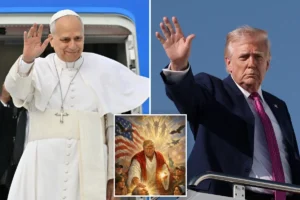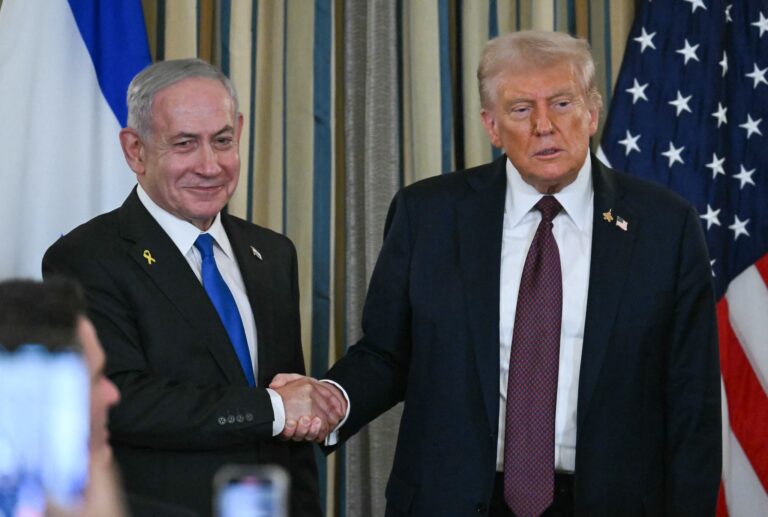
A new U.S.-brokered peace plan for Gaza, unveiled by President Donald Trump alongside Israeli Prime Minister Benjamin Netanyahu, is drawing global support from European and Middle Eastern governments, even as skepticism grows over whether Hamas will accept the deal.
Announced at the White House, the proposal seeks to end the devastating conflict that has gripped Gaza since the October 2023 Hamas attack on southern Israel, which left 1,200 dead and 251 taken hostage. The war’s toll has been staggering, with Gaza’s health ministry reporting over 66,000 deaths and the UN confirming famine conditions in parts of the territory.
The 20-point U.S. peace framework, delivered to Hamas by Qatari and Egyptian mediators, outlines the following:
- Immediate ceasefire
- Release of 20 Israeli hostages within 72 hours, and return of over two dozen others’ remains
- Release of hundreds of Palestinian detainees
- Exclusion of Hamas from future governance of Gaza
- Creation of an international transitional authority, the “Board of Peace”, chaired by Donald Trump, with former UK Prime Minister Tony Blair among its members
- Technocratic Palestinian committee to administer Gaza
- Massive reconstruction aid and no forced displacement of Gazans
Trump hailed the proposal as a “historic day for peace,” warning Hamas that rejection would trigger U.S. backing for an intensified Israeli military campaign. “If they walk away, we finish the job,” Netanyahu echoed, while later reaffirming his opposition to a sovereign Palestinian state—a position that complicates the plan’s long-term ambitions.
Despite Israeli skepticism over statehood, the plan received widespread international endorsement:
- Palestinian Authority called Trump’s plan “sincere and determined”
- Saudi Arabia, Egypt, Qatar, Jordan, Turkey, the UAE, Indonesia, and Pakistan jointly praised Trump’s “leadership” and urged movement toward a two-state solution
- EU Council President Antonio Costa urged all sides to “seize this moment”
- UK Prime Minister Sir Keir Starmer and French President Emmanuel Macron endorsed the plan, with Macron offering French support for implementation
- Italian PM Giorgia Meloni called it a “potential turning point”
The plan envisions Israel’s staged withdrawal, dismantling of Hamas infrastructure, and economic revitalization of Gaza, while explicitly rejecting Israeli occupation or annexation.
Hamas has yet to formally respond, but a senior official expressed doubts, insisting any deal must ensure:
- Total Israeli withdrawal from Gaza
- Recognition of Palestinian statehood based on 1967 borders
- Preservation of Hamas’s weapons, which the official called “a red line”
The group is reportedly reviewing the plan but maintains its position that armed resistance continues until occupation ends.
The peace push follows Netanyahu’s confrontational speech at the UN General Assembly, where he denounced European recognition of Palestinian statehood. His remarks sparked a mass diplomatic walkout and intensified calls for resolution.
The conflict’s humanitarian cost continues to mount. A recent UN commission accused Israel of genocide, a charge Israel vehemently denies. Meanwhile, calls for a ceasefire are growing louder as international fatigue and urgency converge.
Whether this ambitious plan can bridge entrenched divisions remains uncertain. But with pressure mounting, and the Gaza crisis worsening, the world is watching to see whether this latest initiative can deliver a long-elusive peace.