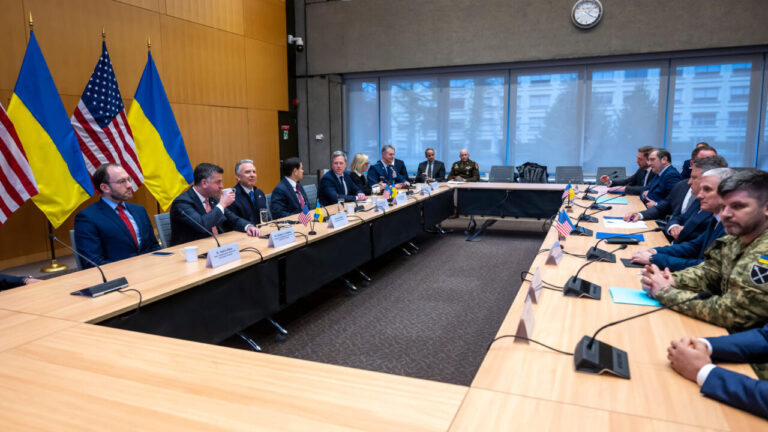
The United States and Ukraine say they have made major progress toward an “updated and refined peace framework” to end the Russia-Ukraine war, following what both sides called “highly productive” negotiations in Geneva. A joint statement released Sunday confirmed that talks on the US-backed proposal will continue intensively in the coming days as diplomats work to resolve remaining disputes.
US Secretary of State Marco Rubio said the Geneva session yielded “a tremendous amount of progress,” reducing the number of unresolved points in the 28-point draft plan. “We had a very good day,” Rubio said, while noting that several issues still need work. Ukrainian President Volodymyr Zelenskyy struck a cautious but hopeful tone, saying there were “signals that President Trump’s team is hearing us.”
Rubio said the immediate goal was to narrow the list of “open items,” and that negotiators had achieved that “in a substantial way.” Any final agreement, however, would require approval from both Zelenskyy and President Trump before being presented to Russia.
The upbeat mood from Geneva contrasted sharply with earlier remarks from Trump, who accused Ukraine of showing “zero gratitude” for American efforts and blasted European nations for continuing to buy Russian oil—purchases he said were indirectly funding Moscow’s war.
Diplomacy was further complicated by media reports claiming the UK, France and Germany had drafted an alternative peace proposal. Rubio denied knowledge of any such plan.
Though the full US draft has not been made public, leaked details have fueled concern in Kyiv and among European allies. Provisions reportedly under discussion include:
- Ukraine withdrawing troops from parts of eastern Donetsk it currently controls
- International recognition of Russia’s de facto authority over Donetsk, Luhansk and Crimea
- Freezing front lines in Kherson and Zaporizhzhia where they stand
- Capping Ukraine’s military at 600,000 troops
- Ukraine abandoning its NATO membership bid in exchange for unspecified “security guarantees”
- Gradual reintegration of Russia into the global economy, including lifting sanctions and even a possible return to the G7
The origins of the draft plan have become a point of political dispute in Washington. Rubio insists the proposal was written by the United States with input from Ukraine and Russia—pushing back on senators who claim he previously described it as Russian-authored. The State Department called those claims “blatantly false.”
Trump initially suggested Ukraine had until Thursday to accept the plan but later said the leaked version was not a “final offer.” Rubio said negotiators are moving quickly and that he is “very optimistic” that an agreement could be reached “in a very reasonable period of time,” possibly as soon as next week.