President Donald Trump issued a tempered response Monday after Iran launched a retaliatory missile strike targeting Al Udeid Air Base in Qatar, the largest U.S. military installation in the region, following U.S. airstrikes on Iranian nuclear facilities over the weekend.
While the attack raised fears of broader escalation, Trump struck a notably softer tone in a series of posts on his social media platform, downplaying the impact of the Iranian response and calling on all sides to pursue de-escalation.
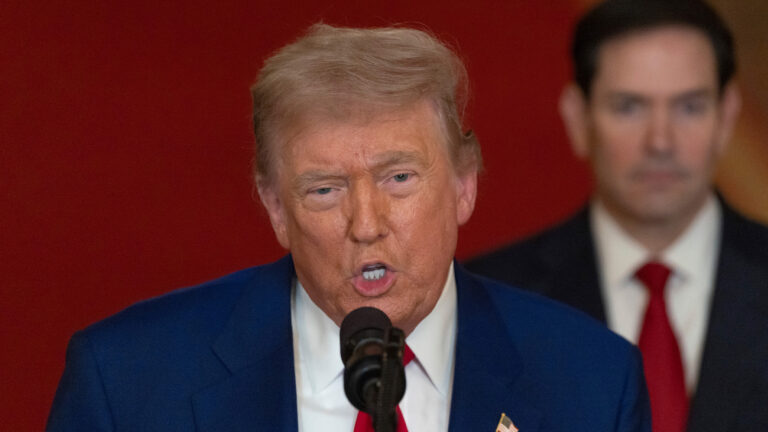
“Iran has officially responded to our obliteration of their nuclear facilities with a very weak response, which we expected and countered effectively,” Trump wrote. “There have been 14 missiles fired — 13 were intercepted, and 1 was allowed through because it posed no threat.”
He emphasized that no U.S. personnel were harmed and damage was minimal. “Most importantly, they’ve gotten it all out of their system,” Trump wrote, adding, “Perhaps Iran can now proceed to peace and harmony in the region, and I will enthusiastically encourage Israel to do the same.”
The president even thanked Iran for what he claimed was advance notice of the strike, which helped prevent casualties. His remarks stood in contrast to his earlier hardline warnings, including a Saturday night address in which he promised overwhelming retaliation for any Iranian response.
In that speech, Trump warned, “Iran, the bully of the Middle East, must now make peace. If they do not, future attacks will be far greater and a lot easier.”
“There are many targets left,” he added at the time. “Tonight’s was the most difficult and perhaps the most lethal. But if peace does not come quickly, we will act again with precision, speed, and skill.”
On social media, Trump echoed that warning in all caps: “ANY RETALIATION BY IRAN AGAINST THE UNITED STATES OF AMERICA WILL BE MET WITH FORCE FAR GREATER THAN WHAT WAS WITNESSED TONIGHT.”
Despite Trump’s recent de-escalatory messaging, Iran’s Supreme Leader Ayatollah Ali Khamenei responded defiantly following the missile launch, declaring, “We will not surrender.”
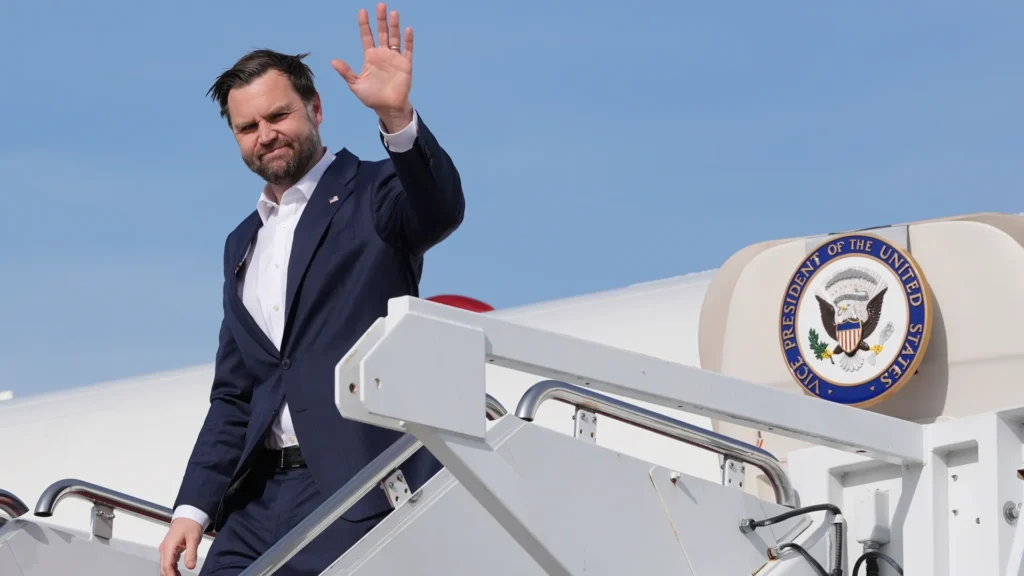
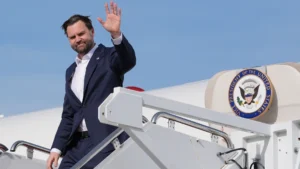
Vice President JD Vance, speaking on ABC News’ This Week, said the next move rests with Iran. “If they’re willing to choose the smart path, they’ll find a willing partner in the United States to dismantle their nuclear program,” Vance said. “But if they attack our troops or continue their pursuit of nuclear weapons, we will respond with overwhelming force.”
A U.S. official confirmed to ABC News that the missile attack on Al Udeid was largely thwarted with help from Qatari defense systems. The situation remains tense as the world watches for signs of further conflict—or a potential return to diplomacy.