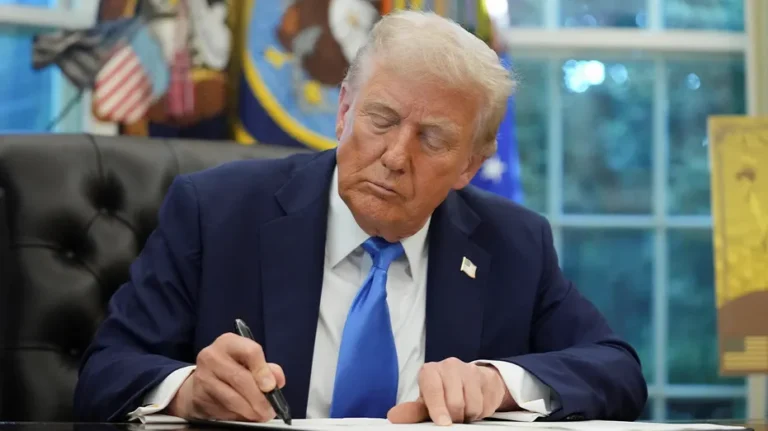
President Donald Trump has signed a controversial executive order that will impose a $100,000 annual fee on new applicants under the H-1B visa program, a dramatic escalation in his administration’s efforts to curb skilled foreign worker immigration.
The order, set to take effect on September 21, cites widespread “abuse” of the program and will require companies to pay the high fee for each H-1B worker for up to six years—a steep increase from the current administrative fee of roughly $1,500.
Commerce Secretary Howard Lutnick, speaking at a press briefing, said the measure is aimed at compelling employers to reconsider hiring foreign workers over Americans.
“The company needs to decide—is the person valuable enough to warrant a $100,000-a-year payment to the government? Or should they head home, and the company hire an American?” Lutnick stated. “All of the big companies are on board.”
The executive order has drawn sharp criticism from immigration lawyers, tech executives, and business groups who argue it will severely undermine the U.S. economy and stifle innovation.
Tahmina Watson, a prominent immigration attorney, called the move a “nail in the coffin” for many small businesses and start-ups.
“Almost everyone’s going to be priced out,” she said. “This $100,000 as an entry point is going to have a devastating impact.”
Jorge Lopez, chair of global mobility at Littler Mendelson PC, warned that the measure could force companies to shift operations abroad.
“It will put the brakes on American competitiveness, not just in tech, but across all industries,” he said.
Major tech firms—Amazon, Microsoft, Google, Meta, Apple, and Tata Consultancy among them—have long relied on the H-1B visa to recruit global talent, particularly in engineering, artificial intelligence, and biotech.
While critics of the program argue that it displaces American workers, supporters—including Tesla CEO Elon Musk—maintain that it fills critical skill gaps and helps the U.S. retain top global minds.
According to U.S. Citizenship and Immigration Services (USCIS), applications for the next fiscal year have already dropped to 359,000, the lowest figure in four years, even before the new fee takes effect.
India, the largest source of H-1B visa holders, has expressed concern over the new restrictions. Business leaders and government officials there warn the policy could severely limit opportunities for skilled Indian professionals.
In a separate move, the Trump administration announced a new “Gold Card Visa” pathway for wealthy immigrants, with fees starting at £1 million. Officials say the program aims to attract “high-value contributors” to the U.S. economy.
The announcement marks a stark shift from Trump’s earlier campaign promises to streamline pathways for foreign talent. Though the president previously floated green card incentives for U.S. college graduates, his administration has tightened scrutiny around visa applications, with H-1B rejection rates peaking at 24% in 2018.
Trump defended the new order during remarks in the Oval Office.
“The American worker must come first,” he said. “If companies really need these people, they can show it with their wallets.”
The policy is expected to face legal challenges and bipartisan scrutiny in Congress. Critics argue the order further politicizes immigration and undermines America’s long-standing status as a global hub for innovation.