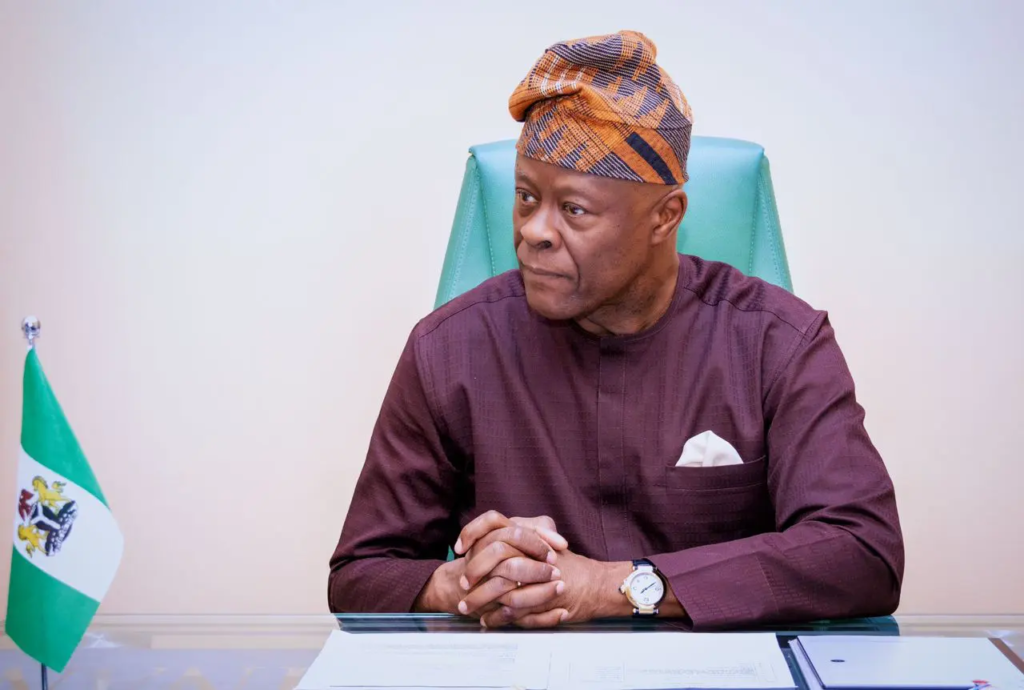
The Social Democratic Party (SDP) presidential candidate in the 2023 elections, Adewole Adebayo, has described President Bola Ahmed Tinubu as a “well-known tax collector,” arguing that while his reforms offer stability, they fall short of delivering long-term economic solutions.
Speaking on Politics Today, a Channels Television programme, on Tuesday, Adebayo said Tinubu’s approach to taxation began during his tenure as governor of Lagos State and has now been extended to Abuja.
“Everybody knows that President Bola Ahmed Tinubu is a well-known tax collector. But that tax collection is an improvement over a disorganised system he met on ground. He did tax collection in Lagos and he came to do tax collection in Abuja. The problem with Hon. Dogara’s speech is that he is overstating it. This reform is not the best but is far better than what we had,” Adebayo stated.
The opposition politician admitted that Tinubu has taken steps to stabilise the economy but argued that the president has yet to identify lasting cures for its underlying weaknesses. He likened the economy inherited from former President Muhammadu Buhari to a “patient in an emergency room.”
“It’s obvious that the economy that President Buhari left was a poorly managed economy, and was an emergency room patient. Like any emergency room patient, the road to recovery will be a good diagnosis by the doctor. So if the doctor is able to know what is the reason why you are ill, he will be able to put you on a solid path to recovery.
“What President Tinubu has done is to stabilise the patient, but I’m not sure that he has managed to know the ailment. So the patient is not going to die imminently, but he hasn’t found a cure,” he said.
Adebayo further noted that while some of Tinubu’s actions have worsened conditions, “one or two wins in two sectors” may give the impression of progress.
On June 26, 2025, Tinubu signed four major tax reform bills into law, overhauling Nigeria’s tax system to simplify collection and ease the burden on low-income earners and small businesses. The new laws take effect from January 1, 2026.