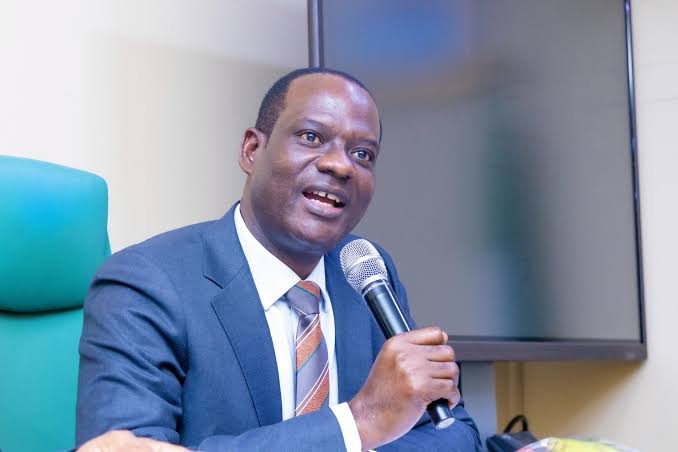
Minister of Finance and Coordinating Minister of the Economy, Taiwo Oyedele, says funds realised from the removal of the fuel subsidy and the unification of the foreign exchange market have been used to meet rising debt obligations, finance the new national minimum wage, support student loans and sustain key government programmes aimed at stabilising Nigeria’s economy.
Speaking during a question-and-answer session at the Seventh Africa Emerging Markets Forum in Abuja on Thursday, Oyedele acknowledged public concerns over the use of the reform savings, describing the questions as legitimate. He said the Federal Government would soon publish a comprehensive report detailing how the funds have been utilised in the interest of transparency.
The minister explained that fuel subsidy and what he described as the “subsidy on foreign exchange” previously consumed about five per cent of Nigeria’s Gross Domestic Product (GDP), stressing that the reforms were introduced to cut wasteful spending while addressing entrenched distortions, corruption and inefficiencies in the economy.
He said the government’s fiscal structure before the reforms depended partly on money creation, with relatively low interest rates and a national minimum wage of ₦30,000. According to him, ending deficit financing through money printing created the need for alternative sources of funding, while rising interest rates sharply increased the cost of servicing existing debt.
“Before the reforms, we were printing money to spend. If you stop printing, the spending doesn’t disappear. You need to finance the money you were printing before,” he said.
Oyedele noted that borrowing costs have risen considerably, with interest rates increasing from about eight per cent to as high as 24 per cent.
“Instead of paying about eight per cent on our debts, we’re paying as high as 24 per cent. When you need to service debt, you don’t debate it. You pay, and you pay on time,” he added.
He said a significant portion of the savings has also been committed to implementing the new ₦70,000 national minimum wage, up from ₦30,000, a development that has almost doubled the Federal Government’s wage bill.
Highlighting investments in the Nigerian Education Loan Fund (NELFUND), the minister disclosed that more than 1.5 million students now receive tuition support and monthly stipends. He said the initiative has eased financial pressure on households by allowing parents to channel funds previously spent on school fees into businesses and other family needs.
Addressing concerns over continued government borrowing despite stronger revenue performance, Oyedele said higher revenue collection does not eliminate borrowing where planned expenditure still exceeds available income.
“If your budget is 10, your revenue target is six, and you eventually collect seven, you have exceeded your revenue target, but you still need to borrow three,” he said.
He maintained that borrowing remains justified when it finances investments capable of generating returns that exceed the cost of the loans.
Responding to criticism that the reforms have worsened poverty, Oyedele argued that the initial hardship was an unavoidable consequence of correcting years of economic imbalances. He said Nigeria recorded nearly 10 per cent real per capita income growth in dollar terms in 2025 and expressed confidence that poverty levels would decline as the reforms continue to take effect.
The minister also disclosed that the Federal Government is shifting away from relying solely on Gross Domestic Product (GDP) to assess economic performance. Future evaluations, he said, will focus on reductions in multidimensional poverty, improvements in real income per capita and lower income inequality.
“Our intention is to make it prosperity for all Nigerians,” he said.
Oyedele further revealed that the government is designing a framework to reduce borrowing costs for businesses without introducing fresh subsidies. He said the initiative is expected to stimulate investment, boost production, create jobs and reinforce the Central Bank of Nigeria’s efforts to curb inflation.
He added that the Ministry of Finance and the Central Bank are strengthening policy coordination by aligning key economic assumptions before major policy decisions are implemented.
Calling on investors to seize emerging opportunities, Oyedele said the government is simplifying regulations, safeguarding investments and removing barriers to doing business in Nigeria.
“Now is not the time to wait for perfect conditions. The greatest opportunities of any generation emerge during periods of structural transformation, and we are living in one right now,” he said.
He added that international investors have historically overstated the risks of investing in Africa despite the continent’s vast economic potential, stressing that Nigeria’s ongoing reforms are intended to attract long-term investment.