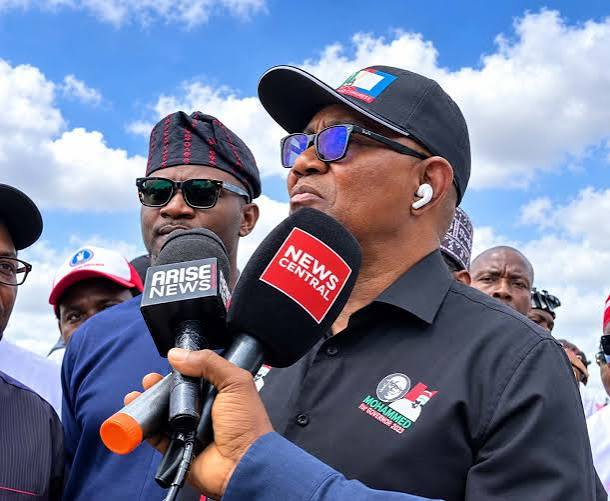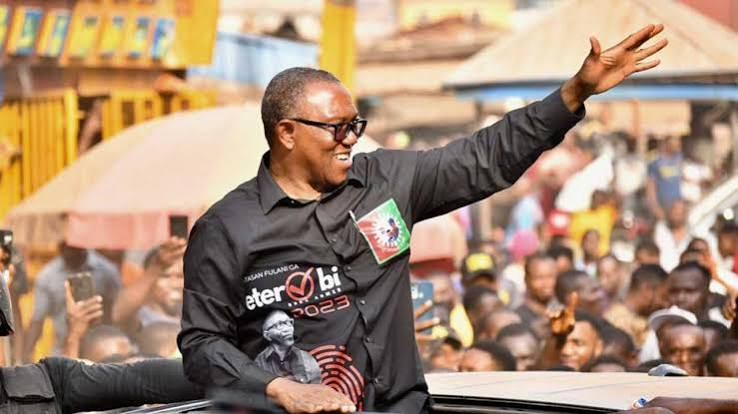
Presidential candidate of the Nigeria Democratic Congress (NDC), Peter Obi, has maintained that he won the 2023 presidential election despite acknowledging that he has no evidence to substantiate the claim.
Obi spoke in a recent interview with the BBC African Service while explaining his decision to contest the 2027 election and his continued rejection of the outcome of the 2023 poll.
Asked whether he had evidence that he won, the former Anambra State governor said, “There’s no evidence. Everything is not based on evidence.”
He nevertheless reaffirmed his position, saying, “I won the election and that’s where I will end. I don’t like going back to the past. I won the election (2023). Well, there’s no evidence but I won the election.”
On his continued claim that the election was rigged despite the dismissal of his legal challenge, Obi said, “I don’t like going back to the past. I sustain what I said.”
Obi contested the February 25, 2023 election on the Labour Party platform and finished third, behind Bola Tinubu of the All Progressives Congress (APC) and Peoples Democratic Party (PDP) candidate Atiku Abubakar.
The Independent National Electoral Commission (INEC) declared Tinubu winner with 8,794,726 votes, followed by Atiku with 6,984,520 and Obi with 6,101,533 votes.
Obi and the Labour Party challenged the result at the Presidential Election Petitions Court, which dismissed their petition on September 6, 2023. The Supreme Court subsequently dismissed their appeal on October 26, 2023, upholding the election result.
Despite the court decisions, Obi has continued to maintain that the result did not reflect the wishes of voters.
In the same interview, Obi pledged to fulfil his anti-corruption promise if elected president in 2027.
He said former President Muhammadu Buhari failed to fully deliver on his anti-corruption pledge because he was not in complete control of his administration.
“He was not in charge. The difference is this: I will be in charge,” Obi said.
He said his approach would begin with ensuring that neither he nor members of his family were involved in corrupt practices.
“If you are not stealing, if you are not involved, your wife and family are not involved, you reduce it by 50 percent,” he said.
On the opposition coalition, Obi rejected the idea of one presidential candidate stepping down for another, arguing that opposition parties should focus on increasing voter turnout.
“In the last elections, Sokoto had over 2 million registered voters. Opposition should be talking about how do we get additional 25 million people to come in and vote. We don’t need to step down,” he said.
Obi also maintained his position on petrol subsidy, saying his objection had always been to the corruption associated with the policy.
“I have not changed on fuel subsidy. What has changed is that whenever I talk about methodology, people say, ‘Oh, he has changed.’ From day one that I talked about subsidy, I talked about corruption. Corruption is the problem of subsidy,” he said.
Asked whether he would restore the subsidy if elected, Obi replied: “Yes, but not with the corruption associated with it. That’s why I said I will remove the corruption and retain the subsidy.”