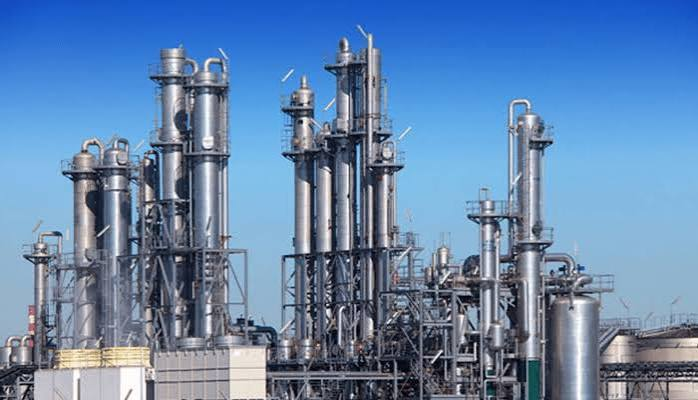
Oil refiners and upstream operators have called for increased crude oil exploration and production to sustain Nigeria’s growing domestic refining capacity and reduce dependence on petroleum-product imports.
The stakeholders, including the Crude Oil Refinery Owners Association of Nigeria (CORAN), Independent Petroleum Producers Group (IPPG) and Dangote Refinery, made the call at the third Nigeria Oil Refining Summit (NORS) in Lagos.
They stressed that expanding refining capacity would remain difficult without reliable and commercially viable access to locally produced crude, urging Nigeria to move away from exporting crude while importing refined products.
Crude receipts by domestic refineries rose to about 683,000 barrels per day (bpd) in August 2026, highlighting the increasing role of local refineries in meeting domestic fuel demand.
However, CORAN Chairman, Momoh Oyarekhua, said continued product imports and challenges in securing affordable crude were undermining the gains being made in domestic refining.
“Despite our abundant crude resources, some domestic refineries continue to face difficulties accessing crude oil on commercially viable terms.
“At the same time, fuel imports persist while local refining capacity remains under-utilised,” Oyarekhua said.
He called for a gradual reduction in petroleum-product imports, with imports increasingly restricted to objectively established supply gaps and strategic stock requirements.
Oyarekhua also urged the full institutionalisation of the naira-for-crude arrangement, with transparent access for qualifying domestic refineries, including modular plants.
“Our crude must increasingly power our refineries. Our refineries must increasingly supply our market. And Nigeria must ultimately become a refining hub for Africa,” he said.
Representing Dangote Group President, Aliko Dangote, Chief Economist Dr Hassan Mahmud said rising refining capacity made increased upstream exploration and production critical.
Mahmud said Nigerian crude and condensate production reached about 1.7 million bpd in June 2026, while refinery crude receipts climbed to about 683,000 bpd in August.
“At the present production level, though the CEO of Aradel gave the numbers from NUPRC, Nigeria alone, crude supply, full complement, cannot feed Dangote Refinery alone in Africa. So, the need for expanding the exploration of the upstream side of the industry is extremely critical,” he said.
IPPG Chairman, Adegbite Falade, said Nigeria’s refining ambitions were equally dependent on converting its substantial hydrocarbon reserves into actual production.
He said the country had approximately 37.01 billion barrels of crude oil and condensate reserves and 215.19 trillion cubic feet of natural gas reserves as of January 1, 2026.
“The challenge, therefore, is not whether the hydrocarbons exist underground; it is whether we can convert reserves into production, production into secure supply, and secure supply into domestic refining competitiveness,” Falade said.
He called for dedicated crude evacuation corridors, secure pipelines, adequate terminal and storage capacity, functional jetties and efficient marine logistics to strengthen crude supply to domestic refineries.