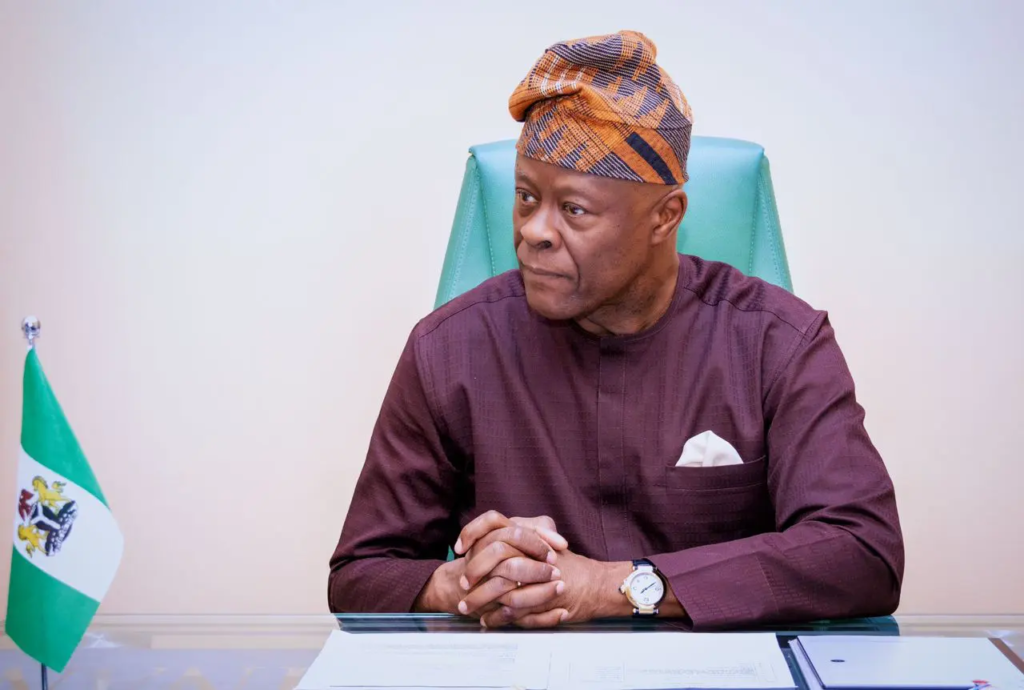
A lawyer and rights activist, Inibehe Effiong, has sued the federal government, Malami, Lai Mohammed over the suspension of Twitter operations in Nigeria.
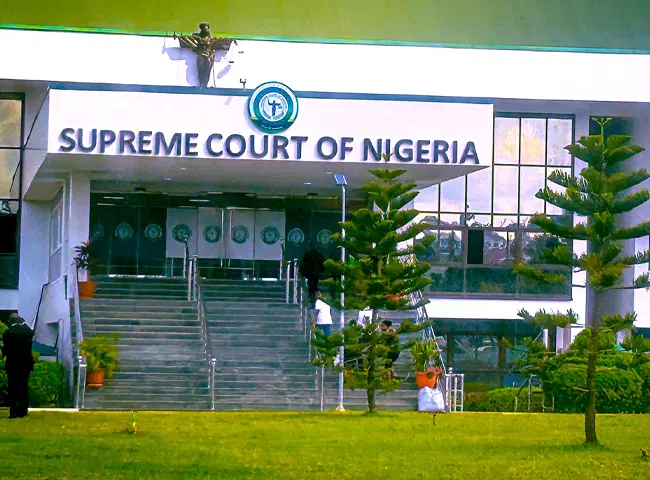
In his suit filed at the Federal High Court in Lagos on Tuesday, Mr. Effiong sued the Minister of information and Culture, Lai Mohammed, and the Attorney-General and Minister of Justice, Abubakar Malami, along with the federal government.
The lawyer, in his originating motion, marked FHC/L/CS/542/2021, asked the court to grant his nine prayers, including an order of perpetual injunction restraining the respondents from further suspending, deactivating, or banning the operations and accessibility of Twitter or any other social media service in Nigeria.
He also asked the court to declare as illegal the threat by the federal government to prosecute citizens who ‘violate’ the suspension or ban of Twitter in the absence of any written law.
The lawyer argued that “…suspending the operation and accessibility of Twitter in Nigeria without any written law that is reasonably justifiable in a democratic society enabling the said suspension is unconstitutional, unjustifiable, undemocratic, arbitrary, null and void and amounts to a violation of the right of the applicant and other Nigerians to use Twitter for expression, reception of information and impartation of ideas.”
“It is therefore contrary to Section 39 of the Constitution of the Federal Republic of Nigeria, 1999 (as amended) and Article 9 of the African Charter on Human and Peoples’ Rights (Ratification and Enforcement) Act, Cap. A9 L.F.N. 2004. Laws of the Federation of Nigeria, 2004,” he said in the court papers seen by our correspondent on Wednesday.
#TwitterBan infringes on the right to freedom of expression
Mr. Effiong in his supporting affidavit said he has consistently used Twitter and other microblogging platforms to express his views on the failure, inadequacies, and performance of the government at all levels, including the Federal Government of Nigeria and its agencies.
The federal government, through the information minister, had banned Twitter in Nigeria on June 4, two days after a controversial tweet by President Muhammadu Buhari, viewed as threatening violence against Igbo people in the South-east was taken by the microblogging site.
In Mr. Buhari’s tweet, Mr. Effiong said it was a known fact that every Twitter user had agreed to abide by the rules of the platform before being allowed to use it.
“The decision of the respondents to suspend Twitter has gravely infringed on my freedom of expression and that of broadcast stations and other Nigerian citizens who depend and rely daily on Twitter for information, expression, and impartation of ideas. This has caused me emotional trauma and distress and limited my capacity to connect with the global community.”

Background
Mr. Mohammed had, on June 4, announced a ban on the operations of the microblogging platform, Twitter, in Nigeria.
He also disclosed that the federal government had ordered the National Broadcasting Commission (NBC) to “immediately commence the process of licensing all OTT and social media operations in Nigeria.”
On his part, the AGF, Mr. Malami, directed the Director of Public Prosecution of the Federation (DPPF) in his office, “to swing into action and commence, in earnest, the process of prosecution of violators of the Federal Government De-activation of operations of Twitter in Nigeria.”
Owing to the ban, Nigerians have been denied access to Twitter and can only access it by bypassing domain restrictions through alternative platforms
The suspension was a sequel to Twitter’s deletion of President Muhammadu Buhari’s controversial tweet about the civil war after some Nigerian users flagged it.
The government, in its response, accused the platform of bias against President Buhari and undermining Nigeria’s corporate existence.
Controversy
Although the presidency says the ban is temporary and an attempt to curb fake news and Twitter’s alleged roles in fueling activities that threaten Nigeria’s corporate existence, human rights activists and foreign missions have criticized the ban as an attack on Nigerians’ right to freedom of expression and called for its reversal.
Despite the ban and prosecution threat, many Nigerians continue to dominate the microblogging platform.
Ada Peter