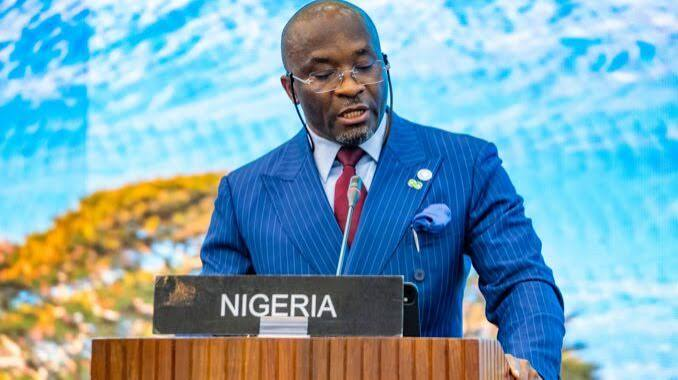
Deputy Speaker of the House of Representatives, Benjamin Kalu, has urged lawmakers worldwide to strengthen climate legislation and develop policies that attract investment, protect vulnerable communities and address climate-related disasters.
Kalu made the call on Thursday during a debate on urgent parliamentary action against climate disasters at the 153rd Assembly of the Inter-Parliamentary Union (IPU) in Arusha, Tanzania.
He urged parliaments to move beyond climate commitments by enacting laws that translate them into investment-ready projects in clean energy, agriculture, transportation and resilient infrastructure.
“Legislation must not remain a statement of intent. It must become an instrument of delivery,” he said.
Kalu proposed creating a pipeline of priority climate projects ready for investment and establishing a project-preparation platform to move initiatives from conception to financing and implementation.
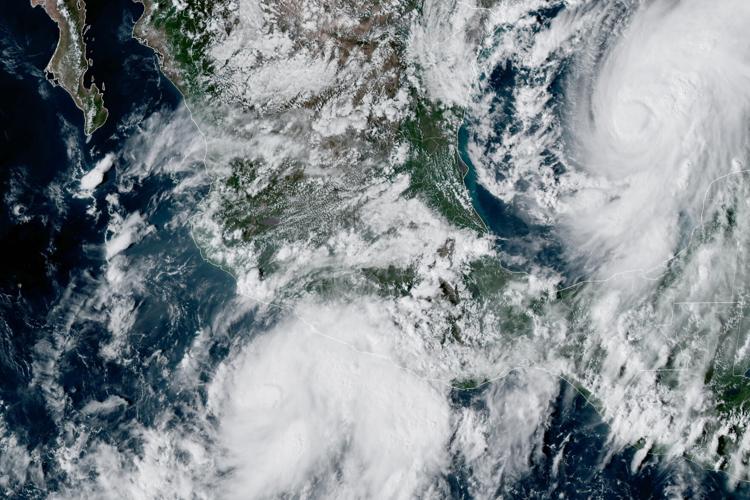
He identified irregular rainfall, declining agricultural yields, coastal erosion, rising water levels and urban flooding as growing threats to livelihoods and economies.
Citing global estimates, Kalu noted that disasters cause more than $2.3 trillion in annual economic losses when direct damage, wider economic disruptions and ecosystem losses are included. The World Meteorological Organization has also reported that weather-, climate- and water-related disasters caused approximately $4.3 trillion in losses between 1970 and 2021, with developing countries accounting for more than 90 per cent of reported deaths.
The Deputy Speaker said Nigeria must treat climate change as both an environmental and economic challenge, stressing that difficulties accessing affordable climate finance were delaying projects designed to protect vulnerable communities.
He said Nigeria was ready to work with investors to co-finance viable initiatives that would strengthen climate resilience and support the transition to a greener economy.
Kalu recalled Nigeria’s commitment to achieving net-zero emissions by 2060 under its Energy Transition Plan, which estimates that about $500 billion in additional capital investment beyond business-as-usual spending would be required.
Priority areas, he said, include solar mini-grids, battery storage, clean cooking, electricity infrastructure, climate-smart agriculture, irrigation, electric mobility, mass transit, waste-to-value projects and green manufacturing.
He also called for investment in flood control, resilient drainage, coastal protection, climate-resilient housing and other adaptation measures.
Kalu urged lawmakers to strengthen oversight of climate-related public spending and enforce existing laws, while promoting transparent project approvals, investor protection, effective contract enforcement and credible carbon and green-finance frameworks.
He added that Nigeria’s emerging state electricity markets could create further opportunities for private investment in clean energy and resilient infrastructure.
“Our message is simple; Nigeria’s green transition must be a just transition,” he said, stressing that the shift to a greener economy must protect livelihoods and ensure communities benefit from new investments.
He urged IPU delegates to use their legislative powers to turn climate commitments into practical projects, jobs, investment and more resilient communities.