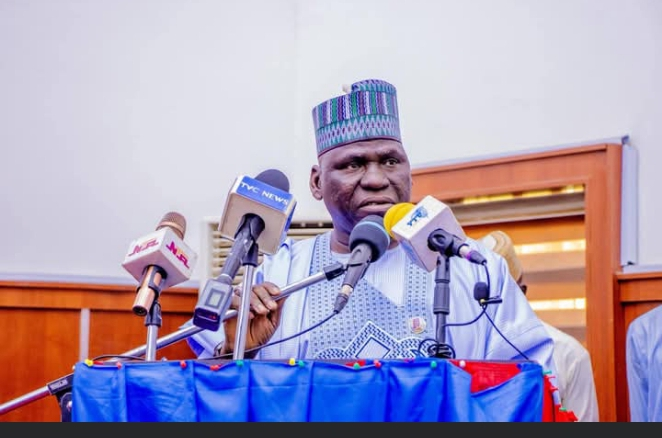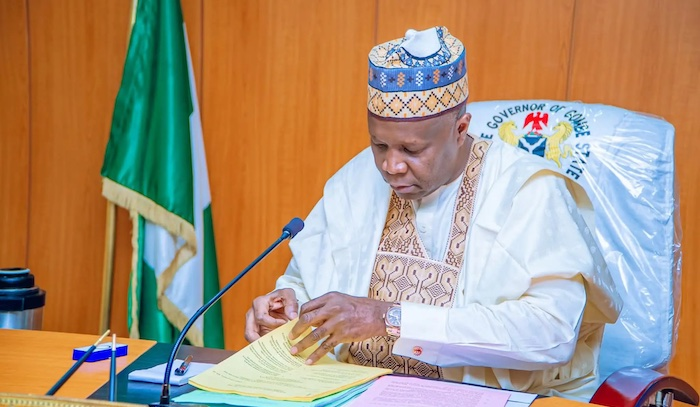
Vice-President Kashim Shettima has announced the launch of the federal government’s ‘Back to Farm’ initiative, aimed at resettling displaced farmers and strengthening food production nationwide.
Shettima made the disclosure while speaking at a panel session themed “When Food Becomes Security” during the 56th annual meeting of the World Economic Forum (WEF) in Davos, Switzerland. The development was contained in a statement issued on Thursday by Stanley Nkwocha, Senior Special Assistant to the President on Media.
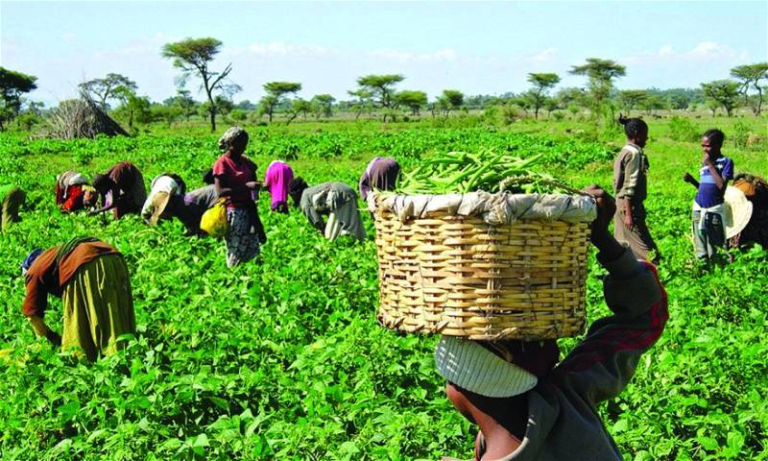
According to the vice-president, the initiative is designed to help conflict-affected farmers return to agricultural activities by providing critical support, including farm inputs, insurance coverage, and access to capital to restart food production.
He noted that insecurity remains one of the most significant challenges to food production in Nigeria, stressing that many of the country’s major food-producing areas are also grappling with security threats.
“Most of the food baskets of our nation are security-challenged; That is why we are creating food security corridors and strengthening community-based security engagements so farmers can return safely to their land,” Shettima said.
The vice-president explained that the federal government now views food security beyond agriculture, describing it as central to governance, economic stability, and national cohesion.
“In Nigeria, we don’t look at food security purely as an agricultural issue. It is a macroeconomic, security and governance issue,” he said.
“Our focus is to use food security as a pillar for national security, regional cohesion and stability.”
Shettima also highlighted Nigeria’s response to climate change and global food challenges, noting that the country is developing resilient food systems adapted to its diverse ecological zones.
“Nigeria is a very large country, and there is an incestuous relationship between economy and ecology,” he said.
“In the Sahelian North, we are dealing with desertification, deforestation and drought. In the riverine South and parts of the North Central, flooding is our major challenge.”
He added that the government is promoting drought-resistant, flood-tolerant, and early-maturing varieties of staple crops such as rice, sorghum, and millet, while food systems in flood-prone regions are being redesigned to better withstand climate shocks.
The vice-president said these measures are part of broader efforts to strengthen national food security, restore livelihoods, and ensure long-term stability across the country.