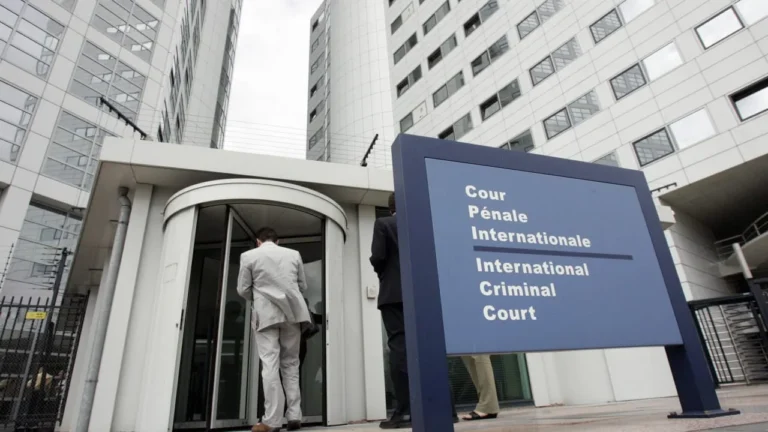
A U.S. federal judge on Friday struck down a key provision of former President Donald Trump’s executive order that authorized sanctions against individuals working with the International Criminal Court (ICC), ruling that it violated constitutional protections for free speech.
The decision stems from a lawsuit filed in April by two human rights advocates who challenged the February 6 executive order. The order had granted the U.S. government broad authority to impose economic and travel sanctions on anyone assisting ICC investigations involving American citizens or key allies, including Israel.
In her ruling, U.S. District Judge Nancy Torresen found that the executive order was overly broad and infringed on Americans’ First Amendment rights. “The executive order broadly prohibits any speech-based services that benefit the prosecutor, regardless of whether those beneficial services relate to an ICC investigation of the United States, Israel, or another U.S. ally,” Torresen wrote. She concluded that the order “appears to restrict substantially more speech than necessary to further that end.”
The ruling is a major legal setback for the Trump-era effort to isolate the ICC and deter cooperation with its investigations. Neither the White House nor the ICC immediately commented on the decision.
Under Trump’s directive, the U.S. imposed sanctions on ICC Prosecutor Karim Khan, a British national, placing him on the Treasury Department’s sanctions list. The order warned that U.S. citizens or organizations providing any form of assistance to Khan or other sanctioned ICC officials could face civil and criminal penalties.
The move was widely condemned by international legal organizations and dozens of governments, who viewed it as a direct attack on the ICC’s independence and an attempt to intimidate individuals cooperating with war crimes investigations.
Judge Torresen’s decision now blocks the enforcement of those measures, marking a legal victory for free speech advocates and a potential shift in how the U.S. approaches international legal institutions moving forward.